Pages

Showing posts with label intel. Show all posts

Nov 9, 2012

Why would Apple move Macs to ARM processors?

Apple ARM processor mac intel

Rumors have Apple moving away from the Intel chips currently used in Macs to the ARM-based chips used in mobile devices like the iPhone and iPad. But would such a seismic shift make sense?

Apple’s Macintosh computers rely on processors from chipmaking giant Intel – just like the vast majority of the world’s PCs, notebooks, and servers. However, Apple’s iOS device line, such as the iPhone, iPads, and iPod touch, rely on processors based on designs from ARM. These chips aren’t as fast or powerful as mainstream Intel processors, but they’re cheaper and they consume far less power, making them ideal for mobile devices like smartphones and tablets.

Now, Bloomberg is citing three unidentified sources saying Apple is seriously investigating shifting Macs from Intel to ARM chips, and new developments from ARM are adding fuel to the fire.

Could Apple move Macs away from Intel to ARM-based processors? What hurdles would Apple face, and how would ARM-based Macs stack up?

Here we go again
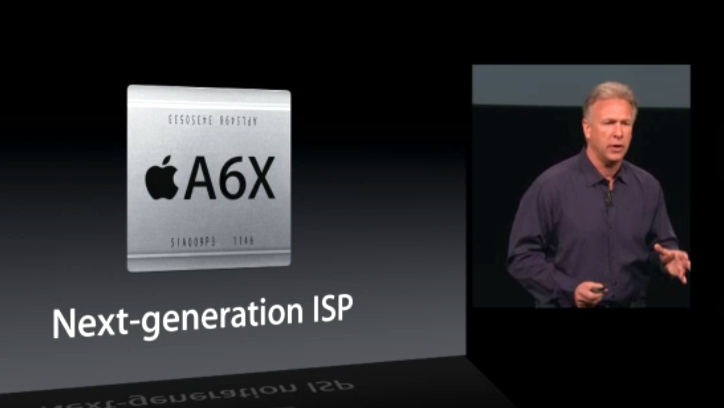
Apple Phil Schiller A6X processor

With the original iPad back in 2010, Apple revealed it was designing its own ARM processors rather than relying on chips designed by Samsung or other manufacturers. (That first chip was the Apple A4, which quickly moved to power the iPhone 4 as well.) With Apple designing its own chips, speculation immediately mounted that the company might one day move its Macintosh computers away from Intel to its own ARM-based processors. After all, it wouldn’t be the first time Apple has changed the Mac’s processor architecture. Apple has already shifted the Mac’s processor architecture three times: from Motorola 68000s, to PowerPC, and then to Intel. If there’s a company with experience managing these transitions, it’s Apple. And each time Apple has unveiled a new processor, that speculation has started anew.

What’s different this time around?

ARM 64-bit architecture

Current ARM-based chip designs use 32-bit architectures. For now, that’s ample for most mobile and tablet applications, but one significant ramification for desktop computing is that these processors can only handle about 4GB of memory. Macs today ship with a minimum of 4GB of RAM, and many ship with  8GB, so using a 32-bit architecture just isn’t feasible for today’s desktop computers. However, last week ARM Holdings took the wraps off its Cortex-A50 series, the first ARM processors designs with a 64-bit architecture. (One of them also can claim the title as the world’s smallest 64-bit processor.) Suddenly, managing the amount of memory common in today’s desktop computers—and even high-end servers and workstations—is within reach.

ARM doesn’t make chips; it designs then, and licenses those designs to companies like Samsung, Qualcomm, and (of course) Apple. It will take time for firms to implement 64-bit designs of their own. Nobody is expecting 64-bit ARM chips to be a reality on the market for another year or 18 months. But the market is no longer holding its breath for ARM to release 64-bit designs: now, the work can begin.

It’s also worth noting Apple’s relationship with ARM is much older than its relationship with Intel. It goes all the way back to the 1980s, and Apple collaborated in early stages of ARM processor development. That resulted in Apple owning a over 40 percent of ARM, and that stake helped Apple weather its mid-1990s death spiral as it repeatedly padded its bottom line by selling ARM shares to lower its losses.

Apple is getting results

Apple’s work to design its own processors isn’t just a vanity project: It’s about getting performance and capabilities that can’t be matched by other mobile device makers using stock parts. Apple has invested heavily in acquiring chip design expertise (in part through the acquisition of PA Semi and Intrinsity. Apple has consistently been increasing the clock speed of its processor and graphics cores and getting improvements through architectural adjustments. Unveiling the latest iPad, Apple also revealed its latest A6X processor was laid out by hand, rather than trusting the details to CAD tools. The company is clearly willing to sweat the details and design processors that specifically support things like its Retina displays without sacrificing battery life compared to previous, lower-powered products. That expertise can directly translate to notebook and desktop PC designs.

New Technology group

Part of Apple’s recent executive shakeup (which saw the ouster of iOS chief Scott Forstall) was the creation of a new Technologies unit under Bob Mansfield, including Apple’s semiconductor teams, described as having “ambitious plans for the future.” Although the Technologies group is tasks with unifying all of Apple’s wireless efforts, as VP of Mac Hardware Engineering, Mansfield oversaw the development of things like Apple’s iMac and MacBook lines. While the industrial design of Macs remains the province of Jonathan Ive, actually getting them built still seems to fall on Mansfield’s shoulders, in addition to being in charge of chips.

Thinner and lighter

When Apple introduced the MacBook Air back in 2008, it was deemed almost impossibly thin, and the line continues to set the bar for ultraportable notebooks. Apple built the original MacBook Air using a custom Intel processor; one of the reasons Apple was able to beat other PC makers to the super-slim form factor was that it wasn’t using off-the-shelf parts. Apple has continued to demonstrate with the Retina MacBook Pros, ongoing MacBook Air line, and the latest iMac that its obsession with thin-and-light computer designs continues unabated. Although Intel has acknowledged Apple has has provided valuable input into its chip designs, Intel is not making custom processors for Apple, which poses a problem moving forward. It will be difficult for Apple to keep its PC products in front of the rest of the market if it’s forced to use the same off-the-shelf processors as everyone else. Design considerations alone might be incentive to Apple to start seriously looking at alternatives to Intel.

Would OS X run on ARM?
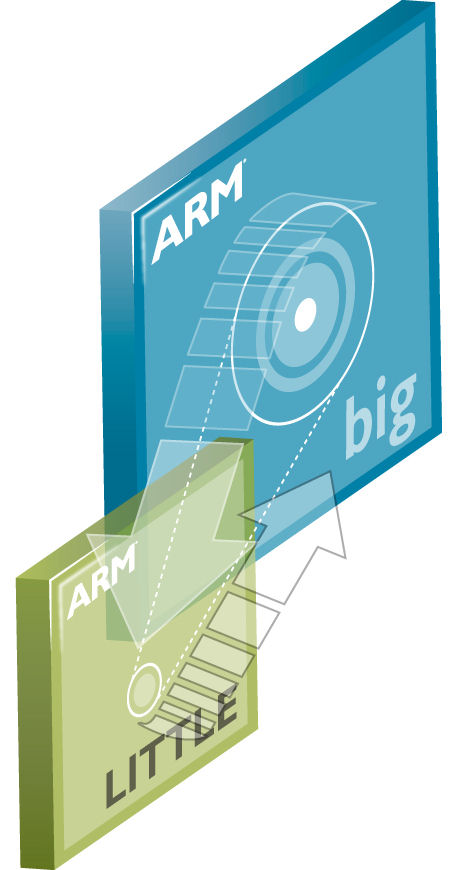
ARM Cortex A50 Big-Little

Apple bringing its OS X operating system to ARM might seem like the equivalent of Microsoft bringing Windows 8 to ARM devices in the form of Windows RT: a potential seismic shift in the product landscape. However, Apple has a head start. Its iOS operating system is based on Mac OS X, meaning the two share a large number of core technologies. Much of the groundwork for running OS X on an ARM chip already exists, and there’s long been speculation Apple has been bringing up most of OS X on ARM systems for years just as a proof of concept.

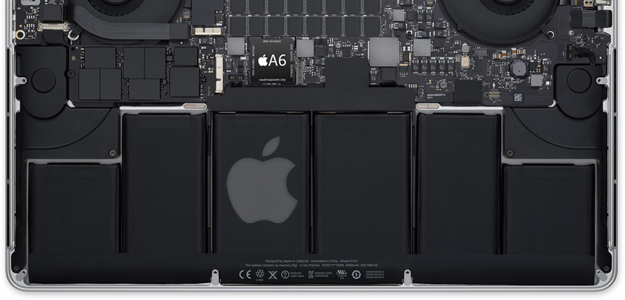
A bigger question is how well OS X would run on ARM processors: Would it deliver a reasonable desktop experience? By some benchmarks, the A6 processor Apple uses in the iPhone 5 already substantially outperforms any PowerPC notebook Apple ever made, and the A6X in the latest iPad scores even higher. And with the power available in notebooks and desktop computers (as opposed to phones and tablets), Apple could push the processors to significantly higher clockspeeds. Apple could also improve performance and keep heat levels down by adding more processor cores. That would increase the cost of each processor, but Apple’s chips are so much less expensive than Intel’s mainstream CPUs that Apple could afford to eat a bit of expense there.

(Doubt that? Intel’s published price lists (PDF) run from $117 for a low-end Core i3 chip to $999 for a high-end Core i7. Bulk customers like Apple, Dell, Lenovo, and HP presumably get a significant discount, but the contrast is stunning: iSuppli estimates Apple pays under $20 for its A6 processor.)

Given how many people find Apple’s iOS devices totally acceptable for lightweight gaming, Web browsing, email, managing photos and entertainment like movies and music, it’s fair to guess hypothetical ARM-based Macs would be able to meet those same sorts of needs easily. On consumer notebooks and desktop systems, the real performance constraints are usually memory, storage, and networks, not the processor.

However, once one gets beyond mainstream computing needs, ARM chips aren’t going to be able to stand up to Intel in the foreseeable future. That means folks who rely on their Macs for content creation, high-end gaming, software development, and compute-intensive applications like large databases, software development, real-time digital signal processing (think musicians and DJs), would suffer from a switch to ARM processors. These are the same users who purchase Apple’s highest-priced, highest-margin Macintosh computers and constitute many of Apple’s most loyal and lucrative Macintosh customers. It seems unlikely Apple would kick them to the curb, so if Apple does move Macs to ARM-based processors, higher-end Macs are likely to stay with Intel.

Barriers to OS X on ARM
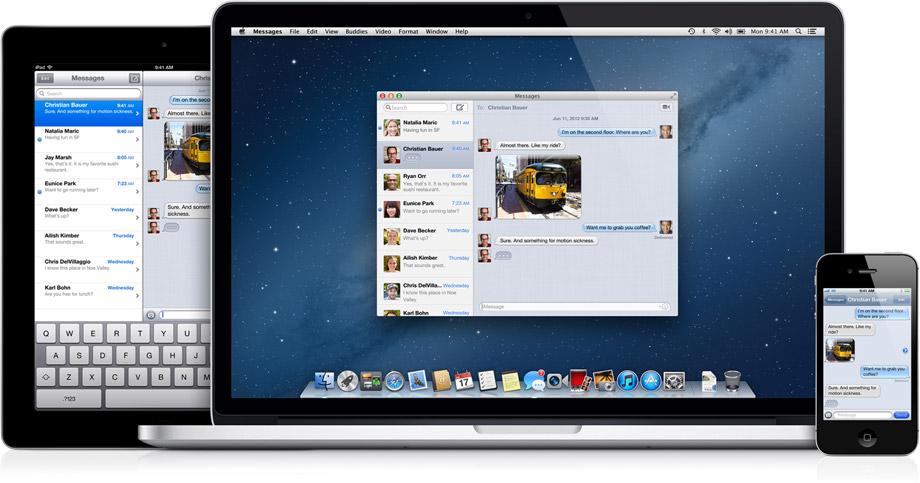
OS X Mountain Lion Messages

This doesn’t mean making OS X practical on ARM chips would be a cakewalk. Assuming Apple can indeed overcome possible performance hurdles with its own 64-bit designs down the road. Other barriers include:

Backward compatibility

Just as Windows RT can’t run old Windows software, a hypothetical ARM-based Mac wouldn’t be able to run old OS X software. In the past, Apple has always provided an emulation layer that let old software continue to run, albeit slower. Apple’s cleanest transition was from PowerPC to Intel: Its Rosetta PowerPC emulators let Mac users transition the vast majority of their existing PowerPC software to their new Intel Macs without batting an eye, letting them continue to use their software, then upgrade to new Intel versions over time.

It’s not clear that Apple could manage a transition from Intel to ARM so easily. Russia’s Elbrus Technologies recently announced an x86 emulator for ARM that can let ARM chips run software compiled for Intel processors, but it can only deliver about 40 percent of the ARM processor’s performance through emulation. Elbrus thinks it can bring that level up to 80 percent by the end of 2014, but considering ARM chips are already slower to begin with, that may still mean sluggish performance. The alternative is Microsoft’s approach: Bar legacy software outright.

A desktop version of iOS?

The Mac used to be Apple’s market-leading product… but then it was eclipsed by the iPod, and then by the iPhone, and then by the iPad. Where Apple customers used to come to iOS devices with a knowledge of Mac OS X, now it’s much more likely Apple customers come to the Mac after getting into the Apple ecosystem on an iOS device. Apple’s “back to the Mac” emphasis in Lion and Mountain Lion is about taking elements of iOS and taking them back to OS X so iOS users feel more at home. The Mac App Store, Notifications, and full-screen mode all arose from this effort.

If Apple can’t support legacy Intel apps, would it make sense to essentially make a version of iOS for the desktop? It have the advantage of being instantly familiar to millions of existing iOS users, with hundreds of thousands of existing apps available on launch day. However, apps originally designed for smartphones and tablets generally would not translate well to a notebook or desktop computer. After all, Apple CEO Tim Cook was quick to criticize Microsoft for the sacrifices made by its own hybrids. Apple would also have to make some changes to iOS to match desktop users’ expectations. For instance, multitasking under iOS is currently limited to a handful of tasks that can be delegated to the operating system, all in the name of power management and maximizing battery life. Many desktop users would expect more robust multitasking, without a significant impact on battery life.

What about Intel’s stranglehold?
intel core i7

Apple likes to control its own destiny. Part of that fierce independence comes from total control of product design from the ground up, from the silicon in the chips to the finish on the case to the pixels on the screen. With its Macintosh computers, Apple doesn’t control two key parts of the package: the processor and the graphics chip, which it relies on Intel and Nvidia for. If Apple were to make its own ARM processors, it would liberate Apple from dependence on Intel’s rigid upgrade schedule, which controls the rest of the PC industry.

Of course, putting ARM chips into Macs – or threatening to – could simply be a clever way to exert leverage on Intel. Intel scored a tremendous public relations coup back in 2005 when Apple switched from PowerPC to Intel processors. Although Intel can certainly afford to lose Apple as a client on purely financial level, the damage to Intel’s reputation could be substantial – after all, Apple is one of the most-watched and most-respected companies on the planet. Toying with the idea of a switch to ARM chips could give Apple significant negotiating chips with Intel, maybe even enough to get the chipmaking giant back to making custom processors only available to Apple, like it did with the original MacBook Air.

Apple did not respond to a request for comment.


Source : digitaltrends[dot]com

Nov 5, 2012

Apple reportedly considering replacement for Intel chips in future Macs

It looks like there might be a divorce between Apple and Intel in the making. Report has emerged that the Cupertino giant is considering a replacement of Intel silicon in future Mac offerings for its own chips.

Such a move should hardly be a surprise as Apple has amassed quite a lot of expertise already in developing the chips for its iOS devices. As they grow more and more powerful with each product cycle, it is only logical that it won’t be long before they pack enough oomph to power a Mac with all the bells and whistles.

Another benefit from such a move from Apple would be the company’s ability to unify the experience which its mobile and desktop devices have to offer – much like Microsoft has done with Windows 8. Currently, there is a significant difference between OS X and iOS.


Source : blog[dot]gsmarena[dot]com

Oct 19, 2012

Google and Samsung shun Intel, announce Exynos-powered Chromebook

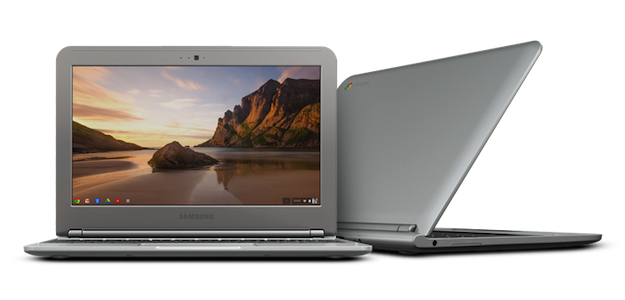
Samsung Chromebook

Samsung has once again partnered with Samsung to produce a laptop running Chrome OS. The new model shuns Intel's chips, and has a very attractive price tag too.

Google has once again collaborated with Samsung to release a laptop with Chrome OS installed. The new model is simply called Chromebook, and is smaller and lighter than the Chromebook 550. It also marks a departure from Intel’s chips, as it’s based on ARM architecture instead.

The new Chromebook has an 11.6-inch screen, smaller than previous models, but with a higher (and more traditional) 1368 x 768 pixel resolution. The Atom processor has been removed and Samsung has installed its own dual-core Exynos 5 Dual chip.

This is exciting for several reasons. Samsung’s Exynos 5 Dual was the first chip to use ARM’s Cortex A15 architecture — the same as Qualcomm’s quad-core Snapdragon S4 Pro — and the Chromebook marks its first appearance after being announced in August. It’s also expected to appear in Samsung ’s next generation tablets and although no clock speed is mentioned for the Chromebook, the chip can run at up to 1.7GHz.

Samsung and Google’s move to ARM is also good news for our wallets, and the Chromebook has been priced at a very competitive $249 in the US and £229 (if purchased online) in the UK.

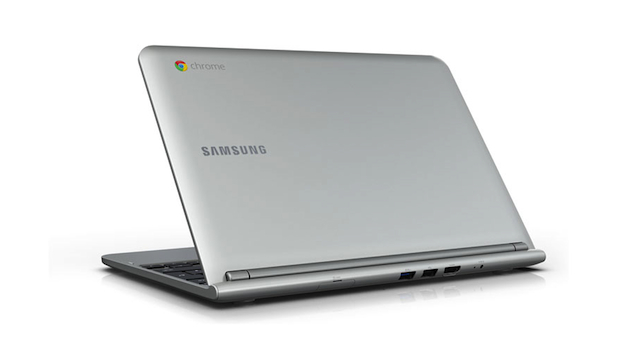
Samsung Chromebook Rear

For this you get a 16GB SSD that provides a 7-second boot up time, 2GB of RAM, a memory card reader, a pair of USB ports, an HDMI-out, Wi-Fi, a VGA camera, Bluetooth 3.0 and a battery that promises more than 6 hours of use before needing a recharge. The chassis weighs 2.5lbs, or 1.1kg, and measures 20mm thick.

As the whole point of the Chrome OS is to work in the cloud, Google will make up for the pathetic 16GB of onboard storage space by providing a complimentary 100GB chunk of Google Drive space. The small print points out that this is only valid for 2 years, after which time it’ll revert back to standard and you’ll have to pay.

So, the price is good and the spec is interesting, and to help introduce buyers to Chrome OS, Google will promote the new laptop in stores through special “Chrome Zones.” However, with the impending introduction of Windows 8 and all its associated hardware, will the Chromebook get a look in, regardless of its low price?

The new Chromebook is available as a pre-order from Best Buy, Amazon, TigerDirect.com and Newegg.com, or from PC World in the UK right now. According to the latter, it’ll be released on October 19.


Source : digitaltrends[dot]com

Oct 18, 2012

Acer preps affordable XC and ME desktops for Windows 8 launch

Acer's no-frills XC and ME desktops will offer the latest Intel Core processors, Windows 8, and start at $400 and $650, respectively.

The torrent of Windows 8 related announcements continues with Acer’s announcement of its mainstream Windows 8 desktops in the consumer market. These products, which replace earlier desktops like the Acer Aspire M, will be broken up into the XC Series and ME Series.

Budget buyers will be interested in the XC Series (pictured above). These small form factor desktops include Intel processors (up to the Core i3 2130) and up to 1TB of hard drive space. They do not, however, offer USB 3.0. That’s the sacrifice necessary for the extremely low starting price of $399.99.

Most mainstream consumers will turn their attention to the ME Series, however. These mid-towers can be equipped with Intel Core i5 and i7 processors, up to 2TB of hard drive space and up to 16GB of RAM. They also include four USB 3.0 ports, two of which are located in what Acer is calling a “recess desk” at the front of the case. It’s an area coated with a non-slip surface on which users can place devices that are charging via the front USB ports. Pricing of the ME Series begins at $649.99.

Both of these desktops will of course ship with Windows 8 and will also come with Acer Cloud, the company’s proprietary cloud storage service.  

Consumers can look for these new products to hit store shelves on October the 26.


Source : digitaltrends[dot]com

Oct 10, 2012

Motorola RAZR i battery life test concludes, results are inside

We’ve just concluded our in-depth review of the Motorola RAZR i and its Intel Atom Medfield chipset inside and now it’s time to shine a light on its battery performance.

The Motorola RAZR i achieved some pretty good scores in all of our tests, but its talk time endurance was partucularly impressive.

Here we go – the call test is where the new Intel-designed modem really shines. The Motorola RAZR i got a whopping 20 hours and 7 minutes, climbing to third spot in our call test chart and making top 3 a Moto exclusive territory. More impressively it managed to match the achievement of its MAXX siblings with a battery that has a 1300 mAh smaller capacity.

Talk time

  • Motorola RAZR MAXX (ICS)
    21:18
  • Motorola DROID RAZR MAXX
    20:24
  • Motorola RAZR i
    20:07
  • Samsung Galaxy Note II N7100
    16:57
  • Huawei Ascend P1
    12:30
  • Samsung Galaxy Note
    12:14
  • Samsung I8530 Galaxy Beam
    11:58
  • Samsung Wave 3 S8600
    11:07
  • HTC One X (AT&T, LTE)
    10:35
  • Samsung I9300 Galaxy S III
    10:20
  • Samsung I9300 Galaxy S III (JB)
    10:15
  • HTC One V
    10:00
  • Meizu MX 4-core
    10:00
  • HTC One X
    9:57
  • HTC One S
    9:42
  • Samsung I9103 Galaxy R
    9:40
  • HTC Sensation XL
    9:30
  • Nokia Lumia 710
    9:05
  • Motorola Atrix HD
    9:04
  • HTC Vivid
    9:02
  • HTC Rhyme
    8:48
  • Apple iPhone 5
    8:42
  • LG Optimus 3D Max P720
    8:42
  • Sony Ericsson Xperia neo V
    8:41
  • Meizu MX
    8:39
  • Samsung Galaxy S II
    8:35
  • Nokia Lumia 800
    8:25
  • Samsung Galaxy Nexus
    8:23
  • HTC Desire V
    8:20
  • Samsung Captivate Glide
    8:20
  • Sony Xperia T
    8:15
  • HTC Rezound (LTE)
    8:10
  • Samsung Galaxy Note (LTE)
    8:02
  • LG Optimus Vu
    7:57
  • LG Optimus 4X HD
    7:41
  • Apple iPhone 4S
    7:41
  • Samsung i937 Focus S
    7:25
  • HTC Evo 4G LTE (LTE)
    7:21
  • Samsung Galaxy S Blaze 4G
    7:14
  • Sony Xperia acro S
    7:09
  • Samsung Rugby Smart I847
    7:09
  • Sony Ericsson Xperia Pro
    6:57
  • Nokia N9
    6:57
  • HTC Radar
    6:53
  • Samsung Galaxy Ace Duos
    6:53
  • BlackBerry Curve 9380
    6:52
  • Samsung Galaxy Pocket
    5:54
  • Nokia Lumia 900 for AT&T (LTE)
    5:53
  • Sony Xperia ion LTE
    5:52
  • Sony Xperia P
    5:33
  • Nokia 808 PureView
    5:16
  • LG Nitro HD (LTE)
    5:16
  • HTC Titan II (LTE)
    5:10
  • BlackBerry Bold 9790
    5:00
  • Pantech Burst
    4:46

The RAZR i got stellar results in the web browsing department as well. The 2000 mAh Li-Ion battery under the RAZR i’s Kevlar vest was able to pump out 7 whole hours of non-stop browsing, which is not particularly kind to smartphones with AMOLED Screen.

Web browsing

  • Apple iPhone 5
    9:56
  • Motorola RAZR MAXX (ICS)
    9:12
  • Samsung Galaxy Note II N7100
    8:48
  • Motorola DROID RAZR MAXX
    7:23
  • HTC Radar
    7:17
  • Motorola RAZR i
    7:06
  • Apple iPhone 4S
    6:56
  • HTC One V
    6:49
  • Motorola Atrix HD
    6:40
  • BlackBerry Curve 9380
    6:40
  • Samsung I9300 Galaxy S III (JB)
    6:27
  • Samsung i937 Focus S
    6:15
  • Sony Xperia ion LTE
    5:56
  • Samsung Rugby Smart I847
    5:53
  • Pantech Burst
    5:51
  • Samsung Galaxy S Blaze 4G
    5:45
  • HTC Desire V
    5:44
  • HTC Evo 4G LTE
    5:41
  • Samsung Wave 3 S8600
    5:34
  • Sony Xperia T
    5:33
  • Samsung Captivate Glide
    5:33
  • Samsung I8530 Galaxy Beam
    5:28
  • Samsung Galaxy Note LTE
    5:24
  • HTC Sensation XL
    5:20
  • Meizu MX 4-core
    5:19
  • Samsung I9300 Galaxy S III
    5:17
  • Sony Xperia acro S
    5:16
  • HTC Rezound
    5:16
  • HTC Rhyme
    5:08
  • Samsung I9103 Galaxy R
    5:07
  • HTC One X (AT&T)
    5:03
  • Sony Ericsson Xperia Pro
    4:50
  • LG Optimus Vu
    4:49
  • HTC Vivid
    4:46
  • Samsung Galaxy Ace Duos
    4:45
  • Meizu MX
    4:35
  • Nokia N9
    4:33
  • Samsung Galaxy S II
    4:24
  • Sony Ericsson Xperia neo V
    4:20
  • HTC One X
    4:18
  • Nokia 808 PureView
    4:14
  • LG Optimus 3D Max P720
    4:10
  • Nokia Lumia 900 for AT&T
    4:10
  • Nokia Lumia 800
    4:07
  • HTC Titan II (LTE)
    4:05
  • HTC One S
    4:03
  • BlackBerry Bold 9790
    4:02
  • LG Nitro HD
    4:00
  • LG Optimus 4X HD
    3:59
  • Sony Xperia P
    3:59
  • Nokia Lumia 710
    3:51
  • Samsung Galaxy Pocket
    3:47
  • Samsung Galaxy Note
    3:35
  • Huawei Ascend P1
    3:23
  • Samsung Galaxy Nexus
    3:01

And finally the video test for all those people who spend a lot of time traveling and like watching videos on their smartphones during the trips. The Intel Atom-sporting RAZR’s got you covered with 8 solid hours and 11 minutes of video playback, which isn’t a top score but definitely one to be respected.

Video playback

  • Motorola RAZR MAXX (ICS)
    16:35
  • Motorola DROID RAZR MAXX
    14:17
  • Samsung Galaxy Note II N7100
    11:27
  • Apple iPhone 5
    10:12
  • Samsung I9300 Galaxy S III
    10:01
  • Nokia 808 PureView
    9:53
  • Samsung I8530 Galaxy Beam
    9:42
  • Samsung Rugby Smart I847
    9:34
  • HTC One S
    9:28
  • Samsung I9300 Galaxy S III (JB)
    9:27
  • Apple iPhone 4S
    9:24
  • HTC Evo 4G LTE
    9:07
  • Nokia N9
    8:40
  • Samsung Galaxy Note
    8:25
  • Motorola RAZR i
    8:11
  • Samsung Galaxy S II
    8:00
  • Samsung i937 Focus S
    7:55
  • Samsung Wave 3 S8600
    7:52
  • Sony Ericsson Xperia neo V
    7:45
  • Huawei Ascend P1
    7:38
  • Samsung Galaxy S Blaze 4G
    7:33
  • Samsung Galaxy Note LTE
    7:30
  • Meizu MX 4-core
    6:33
  • HTC Desire V
    6:26
  • HTC One X (AT&T)
    6:26
  • Samsung Galaxy Ace Duos
    6:25
  • LG Optimus Vu
    6:23
  • Samsung I9103 Galaxy R
    6:21
  • HTC Sensation XL
    6:12
  • Samsung Galaxy Pocket
    6:06
  • Samsung Captivate Glide
    6:04
  • Sony Xperia ion LTE
    6:03
  • Samsung Galaxy Nexus
    6:02
  • Sony Xperia T
    6:01
  • Motorola Atrix HD
    6:01
  • HTC Vivid
    6:00
  • HTC Radar
    5:54
  • Nokia Lumia 800
    5:52
  • HTC Titan II
    5:50
  • BlackBerry Bold 9790
    5:47
  • HTC One X
    5:45
  • Sony Ericsson Xperia Pro
    5:44
  • Sony Xperia acro S
    5:38
  • Pantech Burst
    5:38
  • Meizu MX
    5:27
  • HTC Rhyme
    5:23
  • HTC One V
    5:20
  • Nokia Lumia 900 for AT&T
    5:18
  • BlackBerry Curve 9380
    5:09
  • HTC Rezound
    5:03
  • Sony Xperia P
    4:30
  • LG Nitro HD
    4:17
  • LG Optimus 4X HD
    4:14
  • LG Optimus 3D Max P720
    3:28
  • Nokia Lumia 710
    3:27

At the end the Intel-designed modem got another chance to shine and it took it. The RAZR i turned out to be excellently efficient at stand-by, which allowed it to get an endurance score of 64h.This means that if you were to use the smartphone for an hour of talking, an hour of web browsing and an hour of video playback per day, you’d need to charge it once every 64 hours.

Still, the breakdown shows that if you use your smartphone for web-browsing and video playback more than you do for actual telephony, than you are probably going to get shorter discharge times.


Source : blog[dot]gsmarena[dot]com

Oct 1, 2012

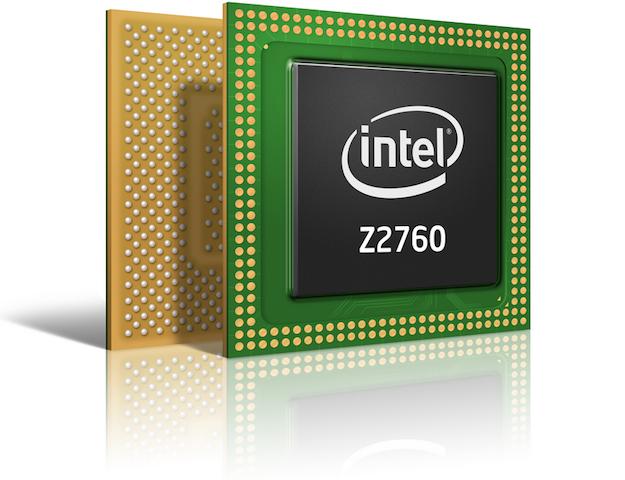
Intel details its low-power, next-gen tablet processor, the Atom Z2760 Clover Trail

Intel Atom Z2760 Clover Trail

Intel has launched the Atom Z2760 processor, also known as Clover Trail, which is destined for use in power efficient tablets with Windows 8.

Intel has already waged war on ARM with its Medfield Atom processors, and it has now revealed more details on its attempt to derail ARM’s move into Windows 8 tablets too — the Atom Z2760 Clover Trail processor.

Microsoft developed Windows RT, a slightly cut-down version of its new desktop operating system, expressly for use on ARM-based tablets, which in turn was a response to the popularity of cheap-to-buy, long-battery-life Android tablets and the iPad. The full version of Windows 8 also has a home on tablets, but it needs Intel’s X86 architecture to operate, which comes with a considerably higher price tag than Windows RT machines.

The Atom Z2760 is Intel’s answer, and it was the star of an Intel showcase event last week. Intel says the new processor allows manufacturers to build the thinnest and lightest Intel tablets yet, measuring as little as 8.5mm thick and weighing 680 grams. Complete specs are still foggy concerning Windows RT tablets, so as a comparison, the new iPad is 9.4mm thick and weighs 652 grams.

Low power consumption

This isn’t the important part though, as what counts here is the Clover Trail’s ability to provide the full Windows 8 and Windows 8 Pro experience on a tablet, with a quoted three weeks of “connected standby” and “more than 10 hours of HD video playback.” Low power consumption, and therefore longer battery life, is a staple feature of ARM-based devices, and Intel has taken a while to catch up.

With Windows 8 onboard, Clover Trail-powered tablets will offer a greater degree of software support, remote access, Intel’s security features and secure booting too. In other words, these are potentially business-level tablets with ARM-based power benefits at a similar price point.

The Atom Z2760 is built using the 32nm manufacturing process, has dual-cores with a potential clock speed of up to 1.8GHz and Intel’s Burst and Hyper-Threading technology; plus features such as NFC, GPS, 3G and 4G connectivity and the ability to support a pair of cameras.

Considerable manufacturer support

Asus, Lenovo, Dell, Hewlett Packard and Acer have all signed on to produce Clover Trail tablets. We’ve already seen the ElitePad and the Envy X2 from HP and the Samsung 5 Series, but as with everything Windows 8-related, no firm prices have been made public yet.

So, while the features and battery standby time certainly seem to be a match for ARM-based Windows RT tablets, the full Windows 8 support and all the business-use garnish will make Clover Trail tablets attractive to customers who want the best of both worlds. It’s going to be fascinating to compare the two, side-by-side, once all the products and software go on sale.


Source : digitaltrends[dot]com

Sep 28, 2012

A BlackBerry partnership could help Intel battle ARM

Intel Offices

Motorola's Razr i is a good start for Intel's attack on the mobile chip market, but it'll need a few more big-name partners if it wants to succeed.

Recently, Motorola announced its first smartphone powered by Intel’s Medfield processor, the Razr i, and it’s an important device for both companies. For Intel, it represents the very first Atom-powered phone to come from a “big-name” manufacturer, and for Motorola it marks a return to Europe, a market it has neglected in recent years. Motorola signed a “multi-year, multi-device” partnership with Intel in early January and so far it has the best end of the deal, as the Razr i is not only good-looking, but it’s capable too.

Intel however, doesn’t seem to be making in-roads into the ARM-controlled mobile chipset market, and thanks to the Razr i’s limited initial release — it’s out in the UK, Germany, France, Brazil, Argentina and Mexico next month — the only Intel phone that people might actually want to buy may not be available where they live.

What Intel needs is a new best friend — someone who is also trying to break into a market with which it has lost touch. Right now, that company is Research in Motion, which is doing a decent job of talking up BlackBerry 10, but neatly avoiding the subject of the accompanying hardware. Both it and Intel have challenging times ahead and a partnership could be mutually beneficial.

A huge mountain to climb

One could argue that it’s still early days for Intel, but is it? Intel shouldn’t have missed the smartphone boat. We’re talking about the best known PC chip manufacturer on the planet, with decades of experience here. Medfield wasn’t announced yesterday either. Intel has been chatting about its Lenovo and Motorola partnership as far back as CES in January and MWC in February.

If Intel wants its processors to challenge the dominant ARM mobile chips, then it needs to get its act together, because the mountain it needs to climb is huge. ARM controls 95-percent of the mobile market and more than 270 companies are licensed to use its architecture. Its performance reflects this, and its 2011 revenue climbed 24-percent over 2010 to $785 million, exceeding expectations.

To make matters worse for Intel, ARM is slowly but surely pushing its way into the PC market too, thanks in no small part to Microsoft’s decision to support ARM architecture with Windows 8 RT. ARM’s CEO has stated he wants to own between 10 and 20-percent of the notebook market by 2015.

Unsurprisingly, ARM has played down Intel’s move into its primary business, saying it expects the company to take only about 5 to 10-percent of the smartphone market share “within a few years.” Intel has remained tight-lipped concerning its own expectations, but as forecasters are predicting a downturn in its PC business over the coming years, mobile is only going to become more important.

Intel dominates the PC processor market in the same way ARM does with mobile, with estimates putting Intel’s share at around 80 percent; however, analysts are predicting tough times ahead, with an Endpoint Technologies researcher quoted as saying “the outlook looks grim right now through the new year.” Smartphone and tablets though, are experiencing considerable growth.

So, it’s clear that one device from one manufacturer, plus a few others scattered around the globe, probably won’t bring the success Intel desires. Motorola is a great partner to have, especially because of its new owner, but Intel needs to split the Atom between a few other big companies too.

Samsung and LG were linked with Intel last year, but nothing has come of it, and HTC has remained quiet as well. Research in Motion has always used a variety of processor manufacturers, so why not Intel? After all, it needs all the help it can get right now.

Could Intel save RIM, and vice versa?

Research in Motion is nervously treading water ahead of BlackBerry 10’s eventual release. If it’s not in talks with Intel, or at the very least considering a switch, then it should be.

A long time ago, RIM used Intel 386 chips in its early BlackBerry 950 and 957 handsets, then in 2005 trumpeted another deal with Intel, where it would use its XScale architecture (which is ARM-based anyway) and “Herman” chips in future BlackBerry devices. BlackBerry 10 phones are expected to use ARM architecture and chips from Texas Instruments or Qualcomm, but imagine for a moment the impact of the news that RIM had switched to Intel.

The relationship is there, it just needs to be reinvigorated. The mobile industry thrives on partnerships, from Sony and Ericsson to Microsoft and Nokia. Right now, a new friend would go a long way to helping Research in Motion overcome public perception, and Intel to add another big name to its list.

It makes good sense for Intel too, as RIM is placed third — and rising — in terms of market share in India — an important emerging market — behind Nokia and Samsung. It also made it very clear during BlackBerry 10 Jam that emerging markets were high on its list of priorities, and as Intel has already partnered with Lava to produce the Xolo Android phone in India, we’re assuming it is for Intel too. The combination of both Atom-powered BlackBerrys and Android phones could see them on their way to a significant slice of the market.

RIM on the other hand, needs a differentiator, something to make its BlackBerry 10 phones standout in amongst iPhone 5s, Jelly Beans and Windows Phone 8. Packing in a 2GHz Atom chip could do exactly that. Plus, with Texas Instruments taking a step back from the mobile market, a gap has opened up at RIM into which Intel could neatly slip.

Yes it would be a risk for both parties, and would require plenty of adjustment on RIM’s side, but that could be exactly what’s needed to push forward in today’s fiercely competitive mobile market.


Source : digitaltrends[dot]com

Sep 24, 2012

Intel working on new SoC, which will bring dual-core a Atom CPU and LTE, coming soon

Intel currently has only one smartphone-ready SoC on the market, but it’s already found its way inside six phone models, the most recent (and high-profile) of which is the Motorola RAZR i. The chipset packs a single Atom CPU core (with Hyper-threading enabled) but it does lack LTE, which is a big buzz word recently (especially in the US, where the RAZR i won’t be available).

Well, things are about to change as Intel confirmed it’s developing its own line of LTE modems that will become a part of an upcoming chipset.

The SoC in question is likely the Z2580, which also features two Atom cores and a better GPU too, PowerVR SGX544MP2.

Speaking to TechCruch, Intel’s Director of Product Marketing, Sumeet Syal, explained why the company decided to go with a single-core, two-thread design first and are now moving to a two-core, four-thread processor.

Syal says that while other chipmakers are “throwing cores at the issue in terms of getting more performance”, while Intel wants to deliver higher performance through executing more instructions per clock, which is where Hyper-threading comes in.

The single-core Atom has shown very good performance against dual-core Cortex-A9 designs, so the dual-core version should catch up to the Tegra 3s and Exynos 4 Quads out there. As we saw with the RAZR i, upping the clock speed isn’t the way to go, so a second core will be welcome (though Qualcomm isn’t impressed with the Atom at all).

Intel is supposed to put out a low-end Atom SoC, the Z2000, but Syal made no mention of it and refused to talk about quad-cores.

Anyway, a more pressing issue is app compatibility. Surprisingly, the Chrome for Android browser proved to have issues running on a x86 Android, but Motorola has promised to fix it before the RAZR i comes out. Syal would only say that the “majority” of apps Intel has tested did work fine.

There are no hard dates and no hints when and what we might see come with Intel’s new SoC.


Source : blog[dot]gsmarena[dot]com

Sep 21, 2012

Qualcomm latest ad targets Intel’s new Atom processor

Following Intel’s recent foray into mobile processing with the Motorola RAZR i, Qualcomm has released a video comparing it to their Snapdragon CPU.

What’s more, Qualcomm are comparing the Atom processor to the Snapdragon S2 architecture, which was first announced back in 2010.

First thing’s first, the video:

While the Qualcomm device of choice is not new, the phone running the Intel Atom processor is not the newest either. In fact, it is the Intel Medfield reference design smartphone, which we first glimpsed back at CES 2012 about 9 months ago.

In case you need a refresher, the reference phone runs a single core Intel Atom Z2460 Medfield processor, alongside a PowerVR SGX540 GPU on a 4 inch screen of 1024×600 pixels resolution. All of this on Android 2.3 Gingerbread.

The Snapdragon device is the Sony Ericsson Xperia Arc S (that’s the old Sony Ericsson logo blurred out along the top), running on a Qualcomm MSM8255T CPU and Adreno 205 GPU. The Arc S was released with Gingerbread as well, but has since received an update to Android ICS 4.0.4.

Now, we won’t go too much into the performance tests, but it’s safe to say that they’re skewed slightly, as one device is a development device which didn’t see much life in terms of consumer availability, while the other is a phone that has received some great support from Sony since its release.

If you’d like a more relevant comparison, check out our hands on of the Motorola RAZR i, complete with benchmarks of the newest Intel Atom processor.


Source : blog[dot]gsmarena[dot]com

Sep 14, 2012

Hunger Games: Apple stagnates while Intel innovates

Intel IDF 2012 san francisco innovation technology conference

The iPhone 5 sees Apple easing up off the gas and coasting, but with threatened companies like Intel revving away at wide open throttle to survive, Apple had better keep an eye in the rearview mirror.

Hunger, pure and simple, drives innovation like no other. A company that’s hungry and battling just to stay alive is a lot more motivated to push the envelope and come up with cutting-edge products than a company in a safe, comfortable position.

That was never more evident than this week. Apple’s iPhone 5 launch and Intel’s annual Developer’s Forum were a study in contrasts, the tale of two billionaire kings in two very different positions. Apple sits pretty atop the mobile heap, raking in obscene amounts of cash and brand awareness; Intel commands the desktop computer world with an iron fist, but the rapid rise of mobile technology — more specifically, ARM’s energy-efficient processors — and the global cooling of the PC market threatens the company’s very future.

Two companies, two very different positions, two very different events. The results?

The iPhone 5 and everything else Apple announced Wednesday may be beautiful, but they’re stagnant; several updated products, a handful of incremental upgrades, and not a fresh idea to be found. Meanwhile, Intel and its partners were busy rethinking the entire concept of mobile computing and innovating their asses off — but since the world was busy being distracted by Apple’s ho-hum hype circus, nobody noticed.

Intel: A $54 billion company with a lot to lose

The overall consensus on the iPhone 5 is in and it’s pretty much unanimous: this is an astonishingly good product that was so totally expected that no one was surprised or even that impressed. Maybe we expect too much from the company that brought us Siri, Retina displays, and the ultraportable form factor. Or maybe Apple’s stunning success has made it fat, happy, and no longer hungry. When you’re selling umpteen bajillion units, there’s little incentive to rock the boat.

In contrast, the 2012 edition of IDF San Francisco shows just how aware Intel is that it needs to make inroads into the mobile marketplace, and it needs to do it fast.

Intel IDF 2012 san francisco tablet pc mobile innovation technology conferenceIntel’s command of the PC x86-based processor market is overwhelming to the point of possible illegality, but traditional PC sales are slowing down just as mobile device sales are starting to skyrocket — and ARM processors already have an Intel-like stranglehold on the mobile market thanks to their low cost and energy-efficiency. A full 95 percent of smartphones are estimated to ship with ARM processors inside.

ARM’s dominance threatens Intel in more than just the smartphone arena, however. The mobile market is so crucial and ARM’s presence there is so overwhelming that for the first time ever, Microsoft is allowing non-x86-based CPUs to power a Windows operating system: ARM-based Windows RT tablets. ARM is also working on a 64-bit ARMv8 architecture for future processors, which could help the company seize a chunk of the server market, yet another Intel bedrock.

Intel isn’t sitting idle though. IDF San Francisco is typically a desktop- and server-centric affair, but this year’s conference has focused on laptops and tablets almost to the point of exclusivity.

Innovation shines brightly at IDF 2012

Here are just a few of the innovations on display or being discussed at IDF this week:

A charging system for next-gen Ultrabooks that will provide juice wirelessly and let auxiliary devices like phones power up simply by being placed next to a notebook; an all-in-one desktop with a detachable touchscreen that doubles as a tablet; the NFC-enabled Toshiba Satellite U925T, an Ultrabook that lets you pay for items by placing a MasterCard PayPass card next to the touchpad; voice and gesture controls that will soon come stock in many Ultrabooks; complex software that takes information from a myriad of sensors and information databases to offer personalized recommendations for various things; Intel’s vision of using HTML5 apps and the Cloud to provide a seamless cross-platform mobile experience; several notebooks in new, touch-friendly hybrid-type form factors; Jelly Bean 4.1 running on Intel’s x86 Medfield smartphone processor despite Android’s preference for ARM; and a whole lot more.

intel idf 2012 san francisco voice control gestures laptop innovation technology conferenceThen there were Intel’s next-gen “Haswell” CPUs, which are scheduled to start shipping in mid-2013 and sip just 10W of electricity. That’s still a decent amount compared to ARM chips, but it’s downright stingy for a PC processor; Intel claims Haswell processors are a whopping 20 times more energy efficient than last year’s Sandy Bridge Core processors, and its 2014 line should be even more battery-friendly, as they’ll be the first chips built from the ground up with Ultrabooks in mind. Plus, vast improvements to the integrated graphics in Intel’s Haswell CPUs reduce the need for discrete GPUs — which will make Ultrabooks even more powerful, long-lasting and light.

But what if integrated graphics don’t cut it for you? Lucid showed Laptop Magazine three prototype notebook technologies that could woo desktop-loving curmudgeons over to the mobile side: Power Stretch improves energy use while gaming by over a third, Dynam X slightly reduces image quality to greatly enhance frame rates, and a third technology lets you connect a full-blown desktop graphics card to a notebook using a Thunderbolt port — giving you the ability to get top-end visuals on your laptop, but only when you need it.

High-level graphics are one of the last bastions tying curmudgeons (like me!) to desktop PCs, and even those weren’t safe at IDF.

Meanwhile, the new iPod nano has a pedometer, the updated iTunes includes iCloud integration and Siri can now post your tweets. Yawn. (That iPod touch redesign is purdy, though.)

A word of warning

It’s hard to fault Apple for resting on its laurels for a couple of years. (Remember, aside from Siri, the iPhone 4S was another placeholder — hence the placeholder name.) Tim Cook and co. are on top of the world and when you’re selling millions of units, major alterations can upset a big chunk of your customers. People don’t like change.

But Apple needs to be careful in its quest for homogenous excellence; the iPhone 5 may be one of the best smartphones ever made, but it doesn’t bring anything new to the table. What does a path of stagnation bring? Just look at Intel: years of incremental tick-tock CPU improvements have made it the unquestioned king of the desktop, but that complacence now has the chipmaker fighting to secure its ongoing survival in the rapidly changing world of technology.

Pay heed, Apple. Stay hungry.


Source : digitaltrends[dot]com

Sep 13, 2012

Android 4.1 Jelly Bean ported to Intel’s smartphone Atom processor

Intel is busy with IDF and while it’s mostly focusing on its next generation CPU architecture, Haswell, there was some good news about Android too. Namely, that Android 4.1 Jelly Bean has been ported to work with the smartphone-oriented Atom processor.

There are a number of devices that use the Z2460 chip, including the Lenovo K800, Orange Santa Clara, Lava XOLO X900, ZTE Grand X IN and soon, a brand new droid from Motorola.

As usual, the update is not instantly available – it first has to pass carrier acceptance testing before it’s pushed out to users. Once that’s done Jelly Bean should be seeded as an over-the-air update.

So, there’s a good chance that the Motorola phone will run Jelly Bean at launch. If rumors are to be believed, the device that will be announced on September 18 will be a RAZR M version with an Atom CPU. It will also be the first Atom-powered phone from a mainstream maker, so Intel might actually start claiming some market share.

There are a couple of new Atom processors on the way, codenamed Merrifield, which will use a 22nm manufacturing process (vs. 32nm for the current Medfield chips). That will improve power efficiency, but the first Merrifield devices are expected in early 2013, so we’re most likely looking at a standard Medfield for the new Motorola smartphone.


Source : blog[dot]gsmarena[dot]com

Aug 31, 2012

Intel cranks up the pressure, as ZTE and Motorola prepare to release Atom-powered Android smartphones

ZTE Grand X IN

ZTE has announced the Grand X IN, an Intel Medfield-powered Android phone, while Motorola prepares to join the party in September.

Intel is continuing to push its way into the mobile processor market with its Medfield platform, ready to take on Nvidia, Qualcomm and Texas Instruments. Although Medfield has been around since the beginning of 2012, it has yet to make much of an impact, but as more manufacturers explore its potential, this is beginning to change.

ZTE has announced it has joined Intel’s merry band with the unveiling of the new Grand X IN. Well, we say new, but we really mean an older phone with one very important tweak.

The Grand X has already done the rounds several times, having been revealed earlier this summer as an “advanced gaming phone,” and before that as the Mimosa X; but this new version ditches the Tegra 2 and replaces it with Intel’s Atom chip, hence the addition of “IN” at the end of the phone’s name.

ZTE’s Grand X IN uses Intel’s single-core Z2460 Atom processor, the same as that found in the Orange San Diego, a UK-only, network-branded re-badging of the original Intel reference device. Although ZTE doesn’t mention it, we presume it shares the same 1.6Ghz clock speed too.

The screen measures 4.3-inches and has a 960 x 540 pixel resolution, there is 16GB of internal memory, 1GB of RAM, GPS and support for HSPA+ networks. For what will be priced as a mid-range phone, it’s good to see features such as NFC, DLNA, Wi-Fi Direct, Dolby Mobile and HD Voice make it onboard.

Google Android 4.0 Ice Cream Sandwich is the standard operating system, and the Grand X IN is the first Medfield phone to have this almost-new version installed from the factory, as previous Intel phones have used 2.3 Gingerbread.

Besides the processor change, ZTE has also swapped the ordinary 5-megapixel camera from the first Grand X out in favor of an 8-megapixel camera, which can also shoot 1080p video.

Motorola Intel InvitationMotorola gets in on the Intel action

ZTE isn’t the only manufacturer backing Intel either, as none other than Motorola is almost certainly preparing to announce its own Atom-powered smartphone.

The Google-owned company has sent out invitations to a special event to be held in London on September 18, which bore both Motorola’s and Intel’s logos.

Motorola’s tagline for the event is “Let us take you to the edge,” and VentureBeat.com discovered a Twitter hashtag, #motoedge, linked to the forthcoming event, hinting that this could be the name of the new device. A supposed Intel-powered Motorola phone was leaked way back in February, but we’ve heard nothing since.

The partnership between Motorola and Intel was announced at the beginning of the year, and the cache of a true “big name” manufacturer is exactly what Intel needs to kickstart its assault on its competitors market share.

For now though, Intel fans have the ZTE Grand X IN to look forward to, and it should hit European store shelves in September. A price has yet to be confirmed, but if ZTE has any sense, it will keep the £190/$299 SIM-free cost of the existing Grand X in place.


Source : digitaltrends[dot]com