Pages

Showing posts with label sprint. Show all posts

Oct 15, 2012

Softbank’s $20 bln Sprint takeover: Everything you need to know

new sprint softbank wireless carrier

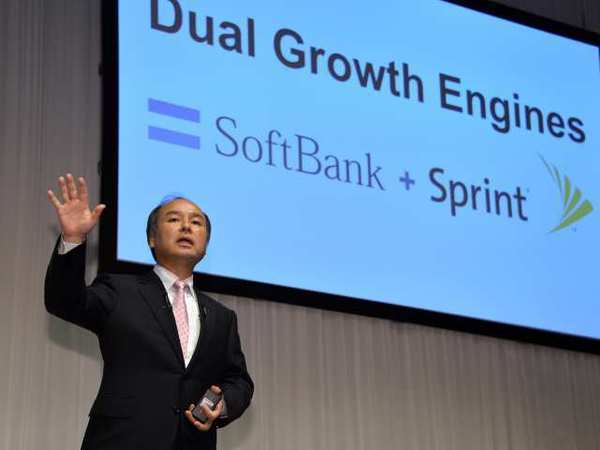
Japan's Softbank, a telecom and Internet giant, is taking a 70 percent stake in Sprint for $20.1 billion. What is it thinking? Can Sprint customers expect anything from the deal?

In a surprise move, Japanese mobile operator Softbank has made a deal to acquire a 70 percent stake in Sprint, the United States’ number-three mobile operator. At $20 billion, the takeover represents Softbank’s largest overseas acquisition to date — and the biggest deal inked by a Japanese company in the United States in something like three decades. Acquiring Sprint gives Softbank a major entry point into the still-growing U.S. mobile market — perhaps a welcome move, since Japan’s mobile market is mostly stagnant.

However, for Sprint customers the takeover brings uncertainty. What will change at Sprint once Softbank is holding the reigns? Given that Sprint has lost money in its last 19 quarters (nearly 5 years) — with a 20th on the way — is Softbank out of its mind to sink $20 billion in cash into the company? And, most importantly, can Sprint customers — and potential customers — expect any benefits from the deal?

How the Softbank takeover will work

Sprint CEO Dan Hesse (July 2010)

Like many other high-profile deals, Softbank’s takeover of Sprint is complicated, but it’s also an example of one of the fundamental axioms of business: cash talks. Softbank is putting a total of $20 billion in cold hard cash into Sprint. Softbank will be spending a total of $12.1 billion on Sprint stock: the bulk will go toward buying up about 55 percent of current Sprint shares for $7.30 each, with some $3.1 billion of that money earmarked for buying shares in a new publicly-traded company dubbed “New Sprint,” for the time being. On top of that, Softbank will be pouring another $8 billion in cash into the new company, providing it with substantial operating capital.

Taken at face value, Softbank putting $20.1 billion into Sprint means it valued Sprint at about $28.6 billion — some two-thirds higher than Sprint’s total market capitalization as of the markets’ close last week.

Softbank Sprint structure

That operating capital will likely be all about fueling Sprint’s 4G LTE expansion. Right now, Sprint has LTE service up and running in a couple dozen markets, but that pales in comparison to the hundreds of markets where Verizon Wireless currently offers LTE service. The new Sprint will most likely use that $8 billion in cash to not only accelerate its planned rollout of LTE services, but quite possibly to make additional acquisitions to bolster its spectrum holdings and reach. The most likely candidate there is Clearwire, where Sprint already has a 48 percent stake, but MetroPCS may not be out of reach either, even through it’s agreed to a reverse merger with T-Mobile.

Softbank’s cash is coming from its own bank accounts, plus financing from three Japanese banks (Mizuho Corporate Bank, Sumitomo Mitsui Banking, the Bank of Tokyo-Mitsubishi UFJ), along with Deutsche Bank. The $7.30 in cash Softbank is offering for Sprint shares represents a 27 percent premium over the company’s stock price when the deal was announced. Softbank expects the stock purchases to be completed by mid-2013. Once the deal is complete, Softbank will hold 70 percent of “New Sprint,” while Sprint’s existing shareholders will retain about 30 percent of the new company.

For all these changes, there will be some continuity. Sprint’s current CEO Dan Hesse will stay on as the CEO of the new company, and Sprint’s headquarters will stay in Overland Park, Kansas. “New Sprint” will have a ten-member board of directors, with at least three of those members coming from Sprint’s existing board (and that includes Hesse himself on the board).

What is Softbank thinking?
Masayoshi Son Softbank

Softbank’s decision to put $20 billion into Sprint may seem like folly. After all, Sprint has been a money-losing proposition since 2007 and it’s far behind competitors Verizon Wireless and AT&T in rolling out 4G LTE. What’s more, Sprint has been losing subscribers, it’s saddled with $15 billion in debt, and the company is still trying to crawl out from under a near-disastrous merger with Nextel in 2005. Sprint doesn’t seem like a good takeover target.

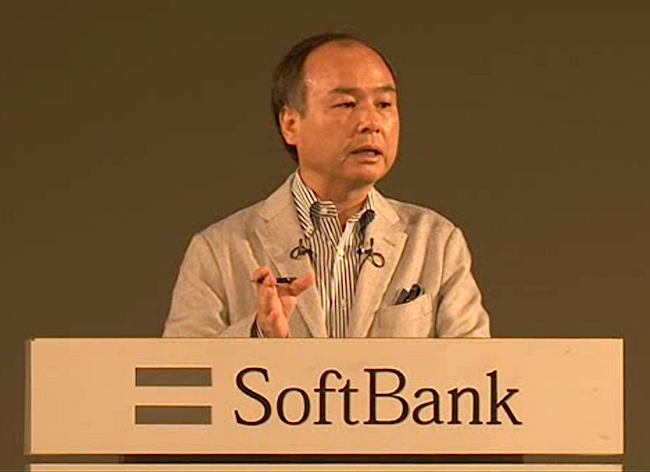
But that’s not the way Softbank sees it. Softbank’s CEO Masayoshi Son isn’t cut from the risk-averse, conservative cloth of many other Japanese business magnates: he’s a risk-taker who isn’t afraid to do something seemingly crazy he believes will pay off in the long run. And he’s done it before. Back in 2006, Softbank sunk $15.5 billion into acquiring Vodafone’s Japanese unit—and, as with the Sprint deal, most industry watchers thought Softbank overpaid and was utterly out of its head. And, at first, the deal did not seem to go well, costing Softbank a billion a year for the next four years. The 2008 financial crisis also hit Softbank hard: the company had poured ¥75 billion into an investment based on credit-default swaps, some of which defaulted in the financial meltdown. Softbank incurred tremendous debt, but the bet in acquiring Vodafone was sound, and Softbank bolstered its core business by (for a while) being the exclusive Japanese carrier of the Apple iPhone. Son had pledged to retire Softbank’s debt by early 2014, but had recently backpedalled a bit on that, saying that the company only needed to get its debt to manageable levels before looking at new acquisitions.

In Japan, Softbank has been very aggressive about deploying LTE service — and, moreover, Softbank’s flavor of LTE is Time-Division Long-Term Evolution (TD-LTE), which is similar to the LTE technology currently being rolled out by Sprint partner Clearwire. Although some of Softbank’s experience building out LTE in Japan is not directly applicable to the United States — the geographies are radically different, after all — the company’s experience with both network management and offering differentiated services that capture subscribers from other carriers are well-established. In many ways, Softbank’s bet on Sprint is very similar to its bet on Vodafone six years ago. And, on average, Japan’s mobile networks have long offered far more bandwidth than those in the United States. U.S. mobile operators are still learning what it means to offer high-bandwidth services to consumers: Softbank has been doing it for years.

But the Japanese mobile phone market is almost stagnant, and has almost no growth prospects, particularly with Japan’s population growth near zero. That means Softbank’s only way to grow in Japan is through acquisitions. Softbank has just announced a $2.3 billion effort to acquire Japanese mobile provider eAccess in a bid to become Japan’s number-two mobile operator, but Sprint is far more tempting. The United States’ mobile market is still growing, and only about half of the United States’ 320+ million mobile users are carrying a smartphone. That means half are still using feature phones; Softbank sees this as a tremendous growth opportunity.

Moreover, the time is right for Softbank to move. Japanese interest rates are at record low levels and the yen is near all-time highs against other world currencies. There may never be a cheaper time for a Japanese company to make a major play in the U.S. market.

How could things go wrong?
Sprint

Softbank’s bet on Sprint is not without significant risks. The new company is not going to be able sit back and watch the dollars roll in.

Market experience: Softbank has zero experience in the U.S. market. None. Although Softbank is determined to keep Sprint CEO Dan Hesse on board along with (it seems) a portion of Sprint’s existing management, there’s no telling if Softbank will be able to develop working strategies to differentiate Sprint’s service to consumers and grow its business.

Overextended management: Softbank just bought eAccess in Japan in a bid to become Japan’s second-largest mobile operator: that was ambitious in itself. Taking over the much-larger Sprint may be more than Softbank’s management can handle. Moreover, Sprint already had its hands full: Sprint is in the middle of a $15 billion+ commitment to Apple to carry the iPhone and spending billions to bring LTE to its network as part of its Network Vision plan. The good news is that the $8 billion in cash from Softbank should help Sprint carry through on both those initiatives; the bad news is that Sprint is now adding a corporate restructuring to its already daunting to-do list.

“There’s a huge risk that the deal will not go to plan and could weaken both companies at critical times,” noted Informa Telecoms & Media principal analyst Mike Roberts.

Debt: Softbank’s takeover of Sprint will have Softbank once again swimming in debt: Sprint already has $15 billion in outstanding debt, and Softbank is still carrying about $10 billion in debt. Those numbers push Softbank’s debt-to-capital ratio into dangerous territory, and could place significant pressure on Softbank’s operating cash in the next few years as it’s forced to work on retiring debt rather than growing its business. Softbank may wind up owning Sprint but unable to do much with it — particular if the world economy takes another downturn.

Who could win?

clear clearwire logo

All that said, Softbank’s bet on Sprint may be risky, but many parts of it make sense.

Clearwire: Sprint and Softbank emphasized that their deal does not require Sprint to take any actions with Clearwire. However, the deal could leave Clearwire sitting in a very nice spot. Clearwire has been moving its network away from WiMax 4G service it debuted in 2009 to LTE. (Sprint and other investors had bet that getting out the door first with WiMax 4G services in 2008 or 2009 was a better bet than waiting until 2012 or 2013 for LTE to become a reality, though it doesn’t seem to have helped much.) Clearwire has a substantial portfolio of spectrum licenses in the 2.5GHz range — that’s well above the building-penetrating 700GHz range preferred by AT&T and Verizon Wireless, but would still add significant coverage to Sprint’s LTE efforts. However, Clearwire hasn’t been able to capitalize effectively on those licenses due to a lack of money to invest in its network. The bulk of its users are actually from Sprint, thanks to a wholesale agreement, so the tighter Clearwire becomes with Sprint, the better.

The $8 billion in operating capital Sprint is receiving from Softbank would go a long way toward building out LTE services in Clearwire’s spectrum. Moreover, Softbank’s LTE services in Japan are also built in the similar 2.5GHz spectrum blocks, and use the same TD-LTE service that Clearwire is deploying on its network. Some industry watchers expect Sprint to invest even more heavily in Clearwire, or move to purchase it outright.

Clearwire had no comment on Softbank’s acquisition of Sprint.

Sprint: Being acquired by Softbank makes Sprint more directly competitive with AT&T and Verizon Wireless in one important way: subscriber numbers. In the second quarter of 2012, Verizon and AT&T sported 105 and 102 million subscribers, respectively, accounting for 33 percent and 31 percent of the U.S. mobile market. Sprint is in a distant third place with 56 million subscribers. However, Softbank boasts some 34 million subscribers in Japan, meaning once Softbank acquires Sprint it will have an effective customer base of about 90 million people. That’s not far behind Verizon and AT&T, and should help the new Sprint negotiate more advantageous deals with equipment and handset providers. Softbank ought to be able to pay less for networking gear than Sprint, and have access to a better deals and a broader range of gear and handsets from equipment manufacturers. That may include Apple, since Softbank probably wants to keep Japan’s NTT Docomo from getting the iPhone.

The upshot could be a wider range of handsets, tablets, and other mobile gear available on Sprint at the same time they launch on other major U.S. carriers.

Upshot

Bringing the iPhone on board has helped Sprint gain subscribers and revenue. (Just ask T-Mobile how it feels to not have the iPhone.) Unfortunately, it hasn’t swung the company back to profitability. After 19 straight quarters of losses, Sprint needs a turnaround.

Sprint’s kind of turnaround seems to be Masayoshi Son’s specialty. The Japanese mobile market is dominated by KDDI and NTT Docomo, and Son was able to buy Vodafone, revamp it, and make it a solid competitor against a duopoly. In the United States, the mobile market is dominated by the duopoly of Verizon Wireless and AT&T. With Sprint, Son sees an opportunity to bring his successful turnaround model to the United States.

“I think we can provide much better competitive technology and services that U.S. citizens have never experienced,” Softbank’s Masayoshi Son said in a conference call with analysts today.

Sprint customers certainly hope he’s right. But changes won’t come overnight: Softbank’s acquisition of Sprint won’t be complete until the middle of next year, and still needs regulatory approval. In the meantime, AT&T and Verizon won’t be sitting on their hands. Verizon Wireless plans to light up its 400th LTE market this week.


Source : digitaltrends[dot]com

DT Daily: Xbox Music announced, new phone powered by Coca Cola invented

Microsoft announces Xbox Music, Softbank confirms that it plans to buy Sprint. A new skydiving record is set, rumors point to a 13-inch Retina MacBook Pro, and a Chinese inventor creates a phone that can be powered by Coca Cola.

Related Links:


Source : digitaltrends[dot]com

Softbank is buying 70 percent of Sprint, it’s official

Softbank buys 70 percent of Sprint (Image courtesy of AP)

It's confirmed. Rumors last week that hinted that Japanese telecom and Internet provider Softbank would purchase Sprint were true, mostly. Softbank and Sprint have announced that the company will soon own 70 percent of the third largest U.S. mobile carrier.

Japanese based SoftBank is officially entering the global market. It was announced earlier today that the third largest carrier in Japan is acquiring 70 percent of Sprint, the third largest carrier in the United States, for $20.1 billion (1.57 trillion Yen). The two companies had been rumored to have been in serious discussions late last week. With all the i’s dotted and t’s crossed today, Softbank President Masayoshi Son and Sprint Chief Executive Dan Hesse announced that the deal was completed.

The breakdown of the deal, as announced by both Sprint and SoftBank, will send $12.1 billion to the current Sprint shareholders. The remaining $8 billion of new capital will be used to “strengthen Sprint’s balance sheet.” SoftBank is offering $7.30 a share for existing shares, though Sprint’s stock had closed at $5.73 a share on Friday. Current Sprint stockholders will also receive 30 percent ownership in New Sprint. That’s right, a group of extremely intelligent and wealthy businessmen and investors hashed out a multibillion dollar transaction and the best name they could come up with is “New Sprint.”

The name appears to be the only negative in this deal, though, as both Sprint (old Sprint?) and SoftBank are looking at this acquisition as a win. For Sprint, it provides a sizable influx of cash that allows it to be competitive against Verizon and AT&T. It also gives the company the backing of an extremely successful entity that has built a network in the same way Sprint hopes to. It’s also a win for current Sprint CEO Dan Hesse, who will become CEO of New Sprint and sit as a board member.

For SoftBank, this move is a bit of global market consolidation that plants it firmly in a top spot on the worldwide playing field. Now sitting as the third-largest mobile provider in Japan and in the United States, SoftBank has more than 90 million subscribers. This marks the largest overseas acquisition by a Japanese firm to date. However, any transaction of this size comes with its potential pitfalls. Sprint may be a risky point of entry for SoftBank, taking control of a sputtering company in a market that is dominated by two seemingly immovable giants. The agreed upon merger between Deutsche Telekom’s T-Mobile and MetroPCS makes the market even more competitive toward the top. The deal has also placed SoftBank as “credit watch negative” by Standard & Poor’s, meaning it could see its credit rating downgraded. Of course, S&P made the same threat to the United States and that sure didn’t stop us.

SoftBank’s rise through Japan’s mobile market came on the back of being the first company in the country that carried the iPhone. It’s growth was only bolstered with acquisition after acquisition that put SoftBank in a position to make its biggest purchase yet with Sprint. Masayoshi Son will likely have to continue his aggressive ways to compete in the U.S. market. That doesn’t seem to be something he’s afraid to do. Leveraging SoftBank’s LTE knowledge will be a major key to the success of this transaction, as Sprint has been attempting to build out its network for some time to little avail thanks mostly to money issues. Sprint hopes to have LTE in 100 markets by the end of the year.


Source : digitaltrends[dot]com

Oct 11, 2012

Japanese mobile carrier SoftBank may buy Sprint

SoftBank of Japan could potentially have a new market to try to conquer. Reports say the Japanese provider is looking to take control of Sprint and enter the U.S. market.

Apparently bored by its meteoric rise through the ranks of Japan’s telecom market, SoftBank is now ready to make a major play for a piece of the American pie. According to the New York Times, Japan’s second largest wireless service provider is close to taking controlling interest in Sprint, America’s third largest mobile carrier.

SoftBank is no stranger to growth through acquisition, as it has made its way toward the top of the Japanese market by buying up other competition. This includes the purchase of eAccess, which occurred earlier this month and bumped SoftBank into the second slot for service providers in Japan. It has yet to make a move as sizable as the proposed Sprint purchase, though. While details are still hazy, a report from Reuters set the cost for controlling stake at 1 trillion Yen, or about $15.9 billion. Other sources the cost to be as high as $30 billion. It’s a sizable price tag, but it also introduces one of the shrewdest of companies to the huge American market that is ripe for competition.

For Sprint, the would deal finally give it the deep pocket backing it so desperately needs. The carrier has struggled to gain its footing after royally screwing up its Nextel merger years back. It has since attempted to expand its infrastructure in hopes of offering a competitive LTE network, but the $21 billion debt and consistent money loss since 2007 has hindered any chance at growth. A recent attempt to buy MetroPCS and block the merger between the regional provider and the Deutsche Telekom owned T-Mobile is the latest in Sprint’s seemingly futile attempts to retain its share of the U.S. market. SoftBank could be the boost it needs to get back in the fight.

While most reports claim the deal to be nearing its final stages and are expecting an announcement soon, Sprint and SoftBank appear to be completely shocked by the news leaking out. Sprint has declined any comment and SoftBank issued a statement that staunchly said, “The story about SoftBank and Sprint Nextel Corporation being reported is based on speculation. We have not announced anything. We do not comment on speculation.”


Source : digitaltrends[dot]com

Oct 10, 2012

The QWERTY is back with the LG Mach

LG Mach

Sprint has announced the LG Mach, a new QWERTY slider Android smartphone that sits just below the Motorola Photon Q in the network's range.

The QWERTY slider form factor still has its fans, and Sprint wants to make sure they’re well catered for on its network, so it has introduced the new LG Mach. Now, with a name like that, you’re probably expecting incredible performance, but while the Mach isn’t a basic phone, it’s not quite up there with the range-toppers of today.

What we’ve got is a 4-inch touchscreen with an 800 x 480 pixel resolution, which slides to the side to reveal a big QWERTY keyboard, providing users with the best of both worlds. You’ll have to be prepared to compromise on size and weight when comparing it to its touch-only peers though, as the LG Mach is a chunky beast at 12mm thick and 168 grams.

Deep inside the phone is a 1.2GHz, dual-core processor and 1GB of RAM, while the operating system is Android 4.0 Ice Cream Sandwich. Although LG doesn’t talk about it in the press release, CNet.com says the Mach will be upgradeable to Android 4.1 Jelly Bean, but doesn’t offer any timescale.

There is a 5-megapixel camera on the rear of the phone, which can also shoot 1080p video, plus a basic 0.3 megapixel forward-facing video call lens above the screen. LG makes a point of highlighting the Mach’s eco-friendliness, saying it’s 56-percent recyclable, and has been given the seal of approval by a couple of environmental foundations too.

The Mach will connect to Sprint’s 4G LTE network and other features include Bluetooth 4.0, a 1700mAh battery, 8GB of internal storage memory, GPS, a microSD card slot and NFC.

As unusual as the LG Mach’s form factor may be these days, it’s not alone on the market, and one of its closest rivals is also offered through Sprint. The Motorola Photon Q has a slightly larger screen at 4.3-inches, an 8-megapixel camera and a 1.5GHz, dual-core processor, so the LG Mach will likely come in at a slightly lower price. It does win over in one key area though, as the Mach is ever-so slightly lighter and slimmer than the Photon Q.

Sprint hasn’t provided any release information or pricing structure at all, so if you’re interested in the phone, you’ll need a little patience.


Source : digitaltrends[dot]com

Oct 4, 2012

Sprint may start bidding war with T-Mobile for MetroPCS

It may have appeared like the T-Mobile and MetroPCS merger was imminent, but Sprint has started to prepare a counteroffer to outbid Deutsche Telekom for MetroPCS.

Sprint has sat firmly in the third spot on the list of biggest mobile carriers in the U.S. for some time. As of yesterday, that title received its first plausible threat at the announcement of a T-Mobile and MetroPCS merger. Less than 24 hours after the MetroPCS board of directors approved the move, Sprint decided to throw its hat in the ring as a potential partner. According to the Bloomberg BusinessWeek report, Sprint is preparing a counteroffer that would top the $1.5 billion deal from T-Mobile USA’s Deutsche Telekom.

With the T-Mobile and MetroPCS merger awaiting regulatory and shareholder approval, there is a penalty clause set if either company were to back out. Sprint will likely have to take this into account in their ofter. That said, when Sprint attempted to make a takeover of MetroPCS earlier this year, they were willing to offer over $8 billion. Sprint is desperate for new subscribers as it has been watching its customer base trickle away since the sloppy transition of it’s purchase of Nextel in 2005. The threat of a combined T-Mobile and MetroPCS may be enough to drive Sprint’s bid up dramatically.

T-Mobile has not commented on Sprint’s sudden–although somewhat expected–involvement except to say that it is prepared to change the terms of its current agreement if need be. Deutsche Telekom seems fairly committed to the merger between their T-Mobile brand and MetroPCS. That could mean we’ll have a bidding war on our hands, and there are unique implications for the mobile market depending on who the victor may be. Who would have thought that in a battle between the third and forth largest mobile operators, fifth place would be the big winner? 


Source : digitaltrends[dot]com

Sep 14, 2012

You Can Now Pre-Order the iPhone 5

abc iphone 5 ll 120912 wblog You Can Now Pre Order the iPhone 5

Image credit: ABC News.

If it is 3:01 a.m. ET or past that time, you can now pre-order the iPhone 5 from Apple, Verizon, AT&T, or Sprint’s websites. No matter where you shop, the 16GB model will start at $199 with a two-year contract. Apple will offer an unlocked version of the phone — one that isn’t tied to a carrier — for more money but it isn’t expected to go on sale today.

While it will be late at night for many, lots of people are expected to get up in the wee hours of the morning, fork over their credit card numbers and order the phones. The iPhone will actually ship to those who order in one week, on Friday, Sept. 21st.

The new phone, which was announced earlier this week, has a number of new features, including a larger 4-inch display, LTE, a faster processor, improved camera and a new design. You can check out our guide to the top new features here.

Even before the phone was announced, iPhone owners began to sell their phones on sites like Gazelle and Glyde. According to those sites, iPhone sales have been at an all-time high over the last few weeks as people prepared to buy the new phone. Analysts predict that Apple could sell as many as six to 10 million iPhone 5s before the end of September.

Apple and the cellular carriers will begin selling the phone in stores on Sept. 21st at 8 a.m. ET. And in typical Apple product launch fashion, lines are expected.


Source : abcnews[dot]go[dot]com

Sep 13, 2012

Sprint’s HD Voice won’t work with iPhone 5

Sprint Logo

The iPhone 5 will support HD Voice, but not on Sprint's network, we've learned.

Apple’s faster, lighter, and thinner, new iPhone 5 was unveiled yesterday. We learned that it supports 4G LTE and it will be released on Sprint, Verizon, and AT&T in the US.

We’re now hearing that there’s bad news for Sprint customers. Despite the fact that Sprint is the first U.S. carrier to embrace HD Voice, a new technology that enables much clearer phone calls over a cellular network, the iPhone 5 will not work with the carrier’s HD Voice service. Sprint spokesperson Michelle Leff Mermelstein told Phone Scoop that the iPhone 5 will not support Sprint’s version of the wideband audio technology. The reason is, of course, quite technical. A majority of carriers use WCDMA networks to improve the quality of speech audio on phones, but Sprint uses CDMA 1x Advanced technology, which isn’t compatible with Apple’s new flagship smartphone. Ever the stickler to streamline its manufacturing processes, Apple is not making a custom version of the iPhone 5 specifically for Sprint.

Out of the 240 carriers that will sell the iPhone 5 worldwide, only 20 of them currently support HD Voice and none of them are in the United States. AT&T and Verizon have no support for wideband audio right now, but it is expected soon.

HD Voice should take off alongside LTE networks and it will drastically increase the quality of call audio, but it’s likely to be 2013 before it sees widespread adoption stateside.


Source : digitaltrends[dot]com

Aug 23, 2012

Are new unlimited data plans from T-Mobile and MetroPCS a good deal?

Unlimited Data (Shutterstock carlosgardel)

T-Mobile and MetroPCS have joined Sprint in offering truly unlimited data plans: no data caps in sight. Should AT&T and Verizon customers disgruntled by rate changes make the jump? Maybe, but make sure to read the fine print.

T-Mobile has always offered “unlimited” mobile data service, but it came with an asterisk and a flurry of fine print at the bottom of contract agreements. Users could use all the data they wanted, but once they exceeded a monthly threshold for their plan — usually 2GB or 5GB a month — T-Mobile would throttle performance down to about 128Kbps. That’s enough to check email or post a quick status update, but forget uploading a bunch of photos, watching video, or even streaming music.

Now, T-Mobile has announced it will offer truly unlimited data plans: All the data you can use, no throttling, for a fixed fee of $20 to $30 per month on top of a traditional voice plan. The rates will be available beginning September 5. The move comes one day after regional carrier MetroPCS announced its own unlimited 4G LTE data plan starting at just $40 a month — although that’s just a promotional rate, so there’s no telling how long MetroPCS will keep it on the table.

Are the plans a good deal? And are they enough to keep mobile consumers interested in T-Mobile and MetroPCS as the companies struggle to compete with behemoths like AT&T and Verizon Wireless? After all, T-Mobile and MetroPCS have one thing in common when it comes to attracting (and retaining) customers: neither offers the iPhone.

T-Mobile’s unlimited plan

T-Mobile

T-Mobile’s new unlimited data plan will be available starting September 5 as a $20 add-on to a Value voice-and-text plan, or a $30 add-on to a Classic voice-and-text plan. That brings the cost of a single line Value plan with unlimited nationwide data to a total cost of $69.99 per month (excluding taxes and fees), while a single line Classic plan with unlimited data will cost $89.99 a month — again, omitting taxes and fees. The unlimited data plan is not available separately or with any of T-Mobile’s other options, including pre-paid service.

While T-Mobile has made a point to include no throttling, that isn’t to say T-Mobile’s unlimited data plan is now asterisk-free. Although T-Mobile calls the service its Unlimited Nationwide 4G Data plan, T-Mobile’s variety of 4G is still its souped-up HSPA+ network. To be sure, that network does hop along, routinely offering download speeds of 8 Mbps or more in areas with decent coverage and in theory jumping all the way up to 42 Mbps. But top speeds are available only to phones specifically engineered for T-Mobile’s network. While the company is working hard to transition its network to be more broadly compatible with other 3G phones, they aren’t there yet. Similarly, T-Mobile’s transition to “true” 4G LTE service isn’t scheduled to be available to consumers until sometime in 2013. Bottom line: Customers who want decent performance from a T-Mobile smartphone need to live in an area with reliable service and have a T-Mobile’s phone.

One more caveat: Folks taking advantage of the unlimited data plan won’t be able to use their devices as mobile hotspots to share their mobile broadband connections with other devices, like tablets, gaming devices, or computers. T-Mobile users who want hotspot capabilities will pay at least $94.99 a month — and have a 5GB monthly data cap.

MetroPCS’s unlimited plan

MetroPCS logo

MetroPCS is also rolling out an unlimited data plan, offering unlimited voice, text, and data on a single line for $55 per month. Existing MetroPCS customers can pick up the unlimited service for $50 a month on additional lines. Unlike T-Mobile’s HSPA+ 4G network, MetroPCS’s unlimited data plan is LTE-ready: MetroPCS is already rolling out 4G LTE to its service areas, and customers with LTE phones are eligible to use unlimited data on that LTE network.

There are a couple of catches. The first, of course, is that MetroPCS is a regional carrier. If you don’t live in one of the 17 metropolitan areas it serves (which, admittedly, includes New York, Boston, Los Angeles, Miami, the San Francisco Bay area, and Dallas), customers can’t get their service. Furthermore, even existing MetroPCS customers probably need a new phone to take advantage of the company’s new LTE network. Right now, fewer than 10 percent of MetroPCS’s customers have phones that can use its new high-speed network. MetroPCS’s unlimited data plan offer is a pretty transparent attempt to get its existing customers to upgrade to new LTE-capable devices — not that there’s anything wrong with that.

Unfortunately, the pricing on MetroPCS’s unlimited 4G data plan is a promotion: it’s not a permanent offering. (Not that any mobile plan can really described as “permanent.”) MetroPCS hasn’t said how long it plans to run the promotion, but the Wall Street Journal reports (subscription required) it could last three to six months. When the promotion ends, MetroPCS will revert to its current $70 a month price for unlimited data.

Finally, like T-Mobile, MetroPCS’s unlimited 4G data service does not include using a 4G device as a mobile hotspot.

How they stack up

smartphones

T-Mobile and MetroPCS aren’t the only players in the U.S. mobile market that offer unlimited data. The biggest player in the field is Sprint, which has so far bucked the trend of major mobile operators in either throttling data or instituting data caps. Sprint’s unlimited data service starts at $109.99 per month (plus tax), and for now is limited to 3G service. (That’s a $99.99 plan plus a $10 a month “premium” for using it with a smartphone.) Sprint is still in the process of rolling out equipment for LTE service and had planned to have 12,000 sites up and running by the end of 2012, although there have been some delays as the company works to get fiberoptic backhaul in place. Broad LTE coverage from Sprint isn’t expected until 2013.

Sprint’s unlimited data plan seems to make both T-Mobile’s and MetroPCS’s high-performance offerings seem like a bargin. However, Sprint offers broader coverage than T-Mobile (and especially MetroPCS), and Sprint can also offer customers the iPhone.

Of course, AT&T and Verizon Wireless are fond of telling customers that their capped data plans only impact a small percentage of customers who use mammoth amounts of mobile data: According to the companies, most customers never come close to hitting their monthly data limits. Verizon currently starts capping individual users at 2GB of data per month and charges $15 per GB of overage. AT&T starts off with a 3GB monthly cap and charges $10 per GB of overage.

Pros and cons

Cell tower

Are either T-Mobile or MetroPCS’s unlimited data plans a good deal? The answer most likely depends on whether you’re already a T-Mobile or MetroPCS customer — and how you feel about buying a new phone.

Neither T-Mobile or MetroPCS currently offer the iPhone, so if you’re dead-set on an Apple device, these plans are out.

If you already have a smartphone running Android or another platform on another carrier, you’re in a similar situation. MetroPCS’s LTE network uses 1,900 MHz and AWS frequency bands, so 4G phones from AT&T and Verizon won’t operate on its LTE service. In other words, you’ll need to buy a new device to get high speed service on MetroPCS, even if you have a 4G phone on another network.

If you already have a smartphone from AT&T, T-Mobile’s unlimited data plan might be an option — eventually. Right now T-Mobile’s special flavor of high-speed HSPA+ only works with devices designed for its network; however, T-Mobile is in the process of reconfiguring its network in such a way that some AT&T 3G/4G HSPA+ devices — including the iPhone — will be able to use its services. (T-Mobile already has more than a million customers using iPhones on its network, but they’re currently limited to 2G EDGE service.) As T-Mobile’s redeployment proceeds and it shifts to embrace the same frequency bands as AT&T, some AT&T handsets owners — including iPhone owners — could find T-Mobile’s new unlimited data plans very tempting. But that network redeployment hasn’t extended very far yet, and T-Mobile doesn’t expect to complete it until sometime in 2013.

Bottom line: Both T-Mobile’s and MetroPCS’s new unlimited data plan offers are primarily tempting to existing T-Mobile and MetroPCS customers — particularly customers who are on the edge of buying a new phone. In that sense, they’re sound business moves. T-Mobile has been steadily losing subscribers without the iPhone. Unlimited data plans are a good way to keep existing T-Mobile contract subscribers on board. For MetroPCS, the unlimited data promotion is a good way to convince existing customers to upgrade to new devices that can use its shiny new LTE network. The plans aren’t going to be ground-shaking turning points for either company — but they should help keep some of their most valuable smartphone customers happy.

[Images via Shutterstock / carlosgardel, Shutterstock / Sam72]


Source : digitaltrends[dot]com