Pages

Showing posts with label giant. Show all posts

Nov 19, 2012

Google Takes on Tiny Doogle

ht doogle nt 121119 wblog Google Takes on Tiny Doogle

doogle.co.za

Search engine giant Google is threatening a lawsuit against a tiny South African website named Doogle.

The legal fight may threaten the existence of the company, but has been a short term boon for Doogle, creating so much traffic for the site that it crashed last week. Andries Maree Van Der Merwe, 23, said the free job search site he launched two years ago to help unemployed people in his country find work had more than a million hits last Wednesday.

The Doogle site features the Os as eyes and includes the phrase “Doogle it.”

“That’s more hits than in the entire first year.  I can’t believe the site has gone international,” said Van Der Merwe. He is so encouraged by the show of interest to persevere in a potential legal battle to save his business and domain name, www.doogle.co.za.

Van Der Merwe said he received a letter last month from attorneys at Google threatening to sue him for copyright infringement because his name and logo have similarities to the popular search engine’s.  One South African newspaper columnist declared Google had crossed the line by “persecuting small companies just because their name sounds vaguely similar.”  Van Der Merwe’s story was soon went viral.

“I’m not giving up my name. Doogle is who I am. It’s my business. I registered the company and legally acquired the domain,” said Van Der Merwe.

He said after dropping out of high school and teaching himself to use computers while scraping by on a meager income selling newspapers, he started the company on a computer he bought from a pawn shop.  Since then he has begun to do software development and web site creation for other businesses, but he says his dream is for Doogle to become a successful enterprise.  He has expanded the site beyond employment posting to include vehicle, realty and other classified listings.

“I am going all the way to court if Google wants to go to court, but I hope there’s a better way to solve this,” said Van Der Merwe.

Van Der Merwe says his attorney has replied to Google’s letter denying the claims and offering to put a notice on his site distancing itself from Google.

A Google spokesperson told the Guardian newspaper she could not comment on individual cases, but said the company is “passionate about protecting the reputation of our brand.”


Source : abcnews[dot]go[dot]com

Nov 5, 2012

Apple reportedly considering replacement for Intel chips in future Macs

It looks like there might be a divorce between Apple and Intel in the making. Report has emerged that the Cupertino giant is considering a replacement of Intel silicon in future Mac offerings for its own chips.

Such a move should hardly be a surprise as Apple has amassed quite a lot of expertise already in developing the chips for its iOS devices. As they grow more and more powerful with each product cycle, it is only logical that it won’t be long before they pack enough oomph to power a Mac with all the bells and whistles.

Another benefit from such a move from Apple would be the company’s ability to unify the experience which its mobile and desktop devices have to offer – much like Microsoft has done with Windows 8. Currently, there is a significant difference between OS X and iOS.


Source : blog[dot]gsmarena[dot]com

Oct 23, 2012

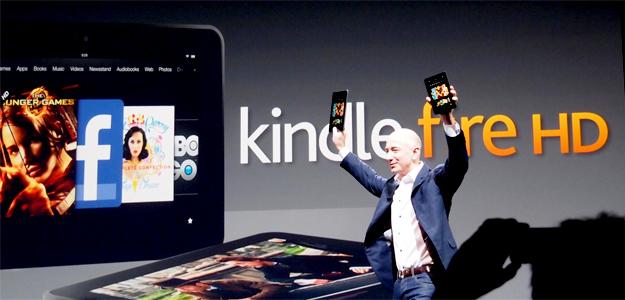
As iPad Mini launch looms, Amazon says $199 Kindle Fire HD is the biggest-selling product on its site

kindle fire hd launch tablet amazon

Of all of Amazon's tablet and e-reader products, the $199 7-inch Kindle Fire HD is the most popular, the e-commerce giant announced on Monday. The news came the day before Apple is expected to enter the mini-tablet market with the launch of a smaller version of its popular iPad device.

The day before tech titan Apple is expected to unveil a smaller version of its iPad tablet, Amazon has piped up to remind everyone that it also has some mini-sized tablets on the market, with the announcement that its $199 Kindle Fire HD device has become the biggest-selling product on its website worldwide. That’s not bad going for a product which – outside of the US – is only currently available in five countries: France, Germany, Italy, Spain and the UK. Even then, in these locations it can only be pre-ordered, with its release date listed as October 25.

Of course, it would be wonderful to know exactly how many of the 7-inch tablets have been snapped up (or pre-ordered) by consumers since its launch in September, but true to form, the company hasn’t released specific sales figures. Instead we’ll have to make do with what a spokeswoman for the e-commerce giant told Reuters – that its best-seller status is based on unit sales, as opposed to revenue or some convoluted percentage-based calculation.

That puts it ahead of the cheaper $159 Fire and pricier 8.9-inch Kindle Fire HD devices. It also means it’s selling in greater numbers than its family of Kindle e-readers, including the recently launched Paperwhite device. Incidentally, it was reported earlier on Monday that Amazon has quietly retired its Touch e-reader, with a message on the Touch’s old landing page directing consumers to the Kindle Paperwhite, described on the page as “a newer model” of the Touch.

But how will Amazon’s tablets shape up against Apple’s expected iPad Mini, a device likely to sport more features, but also a heftier price tag? Or are they targeting two entirely different sets of consumers?

Either way, all eyes are now on the California Theater in San Jose where on Tuesday Apple will (almost certainly) pull the covers off a smaller iPad, entering the mini-tablet market for the first time – a space currently dominated by the likes of Google with its Nexus 7 device and Amazon with its Fire tablets.


Source : digitaltrends[dot]com

Oct 17, 2012

What’s in store? Google to hold Android event in New York on October 29

Another day, another 'special event' announcement from a tech giant. This time it's Google, with an event planned for Monday in New York. Details unknown.

Not content with allowing Apple and Microsoft to hog the limelight in the coming days – with the former expected to unveil the iPad Mini and the latter launching the Surface tablet – Google has just piped up to let everyone know it’ll be holding an event of its own at Basketball City in New York at 10am on Monday October 29. October 29? Microsoft happens to be holding a Windows Phone 8 event on that day. Is this significant?

Google’s invite reads “the playground is open”, although, as is often the case with tech companies and their special events, there’s no concrete information about what’ll be happening.

It might involve the covers coming off the next-generation Nexus handset; it could be about a new 32GB version of the Nexus 7 tablet; it may be something to do with a new cut-price Nexus tablet, or a high-end 10.1-inch device; it might be about updates to its Android operating system; it could have something to do with the Google Play app store; it may be about to open a chain of children’s playgrounds across the country (unlikely). It’s possible it’ll be about all or none of these things. Or simply some.

If you’d like to watch the event live, Google will be streaming it here. And of course, we’ll be bringing you the news as it happens.


Source : digitaltrends[dot]com

Oct 15, 2012

Christmas plans: Amazon to hire 50,000 extra workers for the holiday season

amazon

Online retail giant Amazon is set to take on 50,000 temporary workers this holiday season to cope with increased demand.

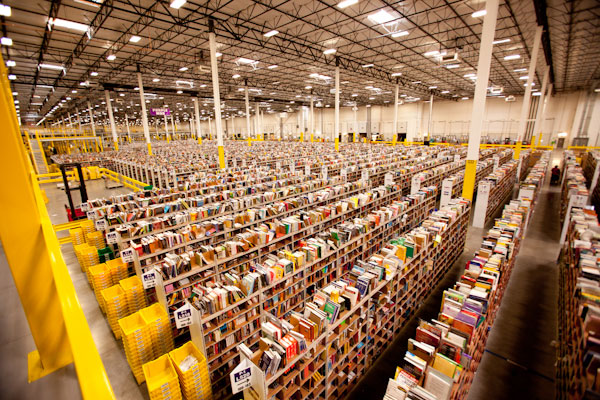
Amazon is already making plans for the holiday season, announcing its intention to hire 50,000 seasonal workers for its 40 fulfillment centers across the US.

With a year-round full-time staff count of 20,000 at its centers, the large number of extra workers indicate Amazon’s expectation of a bumper Christmas. Alongside orders for its large number of usual items, the e-commerce giant will also be looking forward to a flurry of requests for its new range of Kindle Fire HD tablets, as well as its e-readers, which include the new Paperwhite device.

Referring to the company’s hiring plans in a statement, Dave Clark, Amazon’s vice president of global customer fulfillment, said, “We’re hiring at our sites across the US for talented individuals to help us deliver a great experience for our customers this holiday season.”

Clark said the temporary workers play a “critical role” helping with increased customer demand, adding that thousands end up staying on in full-time positions.

The precise nature of the available work isn’t specified, though being located at the fulfillment centers where online orders are dealt with likely means physical tasks – such as taking purchased products from wharehouse shelves, packing and labeling – will form the bulk of the work.

In March, the Seattle-based company purchased warehouse automation solution firm Kiva Systems in a bid to make its centers more efficient.

On its dedicated Fulfillment website, one Amazon employee says intriguingly of her job, “Amazon’s peculiar ways is what keeps this career exciting and rejuvenating.” So if you enjoy a bit of peculiarity and are free this holiday season, you know exactly what you should do.

[Image: Amazon]


Source : digitaltrends[dot]com

Softbank’s $20 bln Sprint takeover: Everything you need to know

new sprint softbank wireless carrier

Japan's Softbank, a telecom and Internet giant, is taking a 70 percent stake in Sprint for $20.1 billion. What is it thinking? Can Sprint customers expect anything from the deal?

In a surprise move, Japanese mobile operator Softbank has made a deal to acquire a 70 percent stake in Sprint, the United States’ number-three mobile operator. At $20 billion, the takeover represents Softbank’s largest overseas acquisition to date — and the biggest deal inked by a Japanese company in the United States in something like three decades. Acquiring Sprint gives Softbank a major entry point into the still-growing U.S. mobile market — perhaps a welcome move, since Japan’s mobile market is mostly stagnant.

However, for Sprint customers the takeover brings uncertainty. What will change at Sprint once Softbank is holding the reigns? Given that Sprint has lost money in its last 19 quarters (nearly 5 years) — with a 20th on the way — is Softbank out of its mind to sink $20 billion in cash into the company? And, most importantly, can Sprint customers — and potential customers — expect any benefits from the deal?

How the Softbank takeover will work

Sprint CEO Dan Hesse (July 2010)

Like many other high-profile deals, Softbank’s takeover of Sprint is complicated, but it’s also an example of one of the fundamental axioms of business: cash talks. Softbank is putting a total of $20 billion in cold hard cash into Sprint. Softbank will be spending a total of $12.1 billion on Sprint stock: the bulk will go toward buying up about 55 percent of current Sprint shares for $7.30 each, with some $3.1 billion of that money earmarked for buying shares in a new publicly-traded company dubbed “New Sprint,” for the time being. On top of that, Softbank will be pouring another $8 billion in cash into the new company, providing it with substantial operating capital.

Taken at face value, Softbank putting $20.1 billion into Sprint means it valued Sprint at about $28.6 billion — some two-thirds higher than Sprint’s total market capitalization as of the markets’ close last week.

Softbank Sprint structure

That operating capital will likely be all about fueling Sprint’s 4G LTE expansion. Right now, Sprint has LTE service up and running in a couple dozen markets, but that pales in comparison to the hundreds of markets where Verizon Wireless currently offers LTE service. The new Sprint will most likely use that $8 billion in cash to not only accelerate its planned rollout of LTE services, but quite possibly to make additional acquisitions to bolster its spectrum holdings and reach. The most likely candidate there is Clearwire, where Sprint already has a 48 percent stake, but MetroPCS may not be out of reach either, even through it’s agreed to a reverse merger with T-Mobile.

Softbank’s cash is coming from its own bank accounts, plus financing from three Japanese banks (Mizuho Corporate Bank, Sumitomo Mitsui Banking, the Bank of Tokyo-Mitsubishi UFJ), along with Deutsche Bank. The $7.30 in cash Softbank is offering for Sprint shares represents a 27 percent premium over the company’s stock price when the deal was announced. Softbank expects the stock purchases to be completed by mid-2013. Once the deal is complete, Softbank will hold 70 percent of “New Sprint,” while Sprint’s existing shareholders will retain about 30 percent of the new company.

For all these changes, there will be some continuity. Sprint’s current CEO Dan Hesse will stay on as the CEO of the new company, and Sprint’s headquarters will stay in Overland Park, Kansas. “New Sprint” will have a ten-member board of directors, with at least three of those members coming from Sprint’s existing board (and that includes Hesse himself on the board).

What is Softbank thinking?

Masayoshi Son Softbank

Softbank’s decision to put $20 billion into Sprint may seem like folly. After all, Sprint has been a money-losing proposition since 2007 and it’s far behind competitors Verizon Wireless and AT&T in rolling out 4G LTE. What’s more, Sprint has been losing subscribers, it’s saddled with $15 billion in debt, and the company is still trying to crawl out from under a near-disastrous merger with Nextel in 2005. Sprint doesn’t seem like a good takeover target.

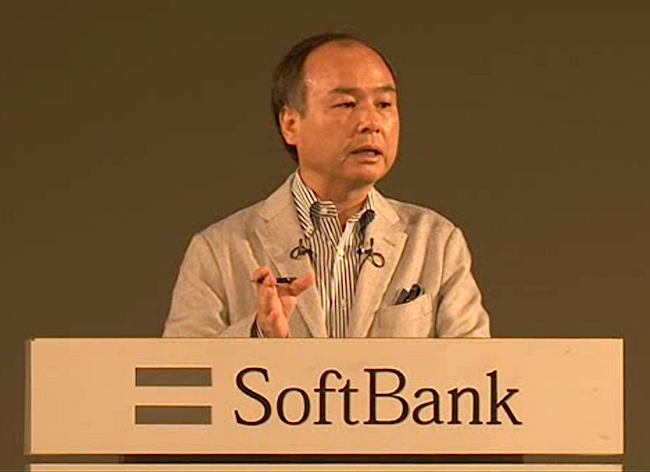
But that’s not the way Softbank sees it. Softbank’s CEO Masayoshi Son isn’t cut from the risk-averse, conservative cloth of many other Japanese business magnates: he’s a risk-taker who isn’t afraid to do something seemingly crazy he believes will pay off in the long run. And he’s done it before. Back in 2006, Softbank sunk $15.5 billion into acquiring Vodafone’s Japanese unit—and, as with the Sprint deal, most industry watchers thought Softbank overpaid and was utterly out of its head. And, at first, the deal did not seem to go well, costing Softbank a billion a year for the next four years. The 2008 financial crisis also hit Softbank hard: the company had poured ¥75 billion into an investment based on credit-default swaps, some of which defaulted in the financial meltdown. Softbank incurred tremendous debt, but the bet in acquiring Vodafone was sound, and Softbank bolstered its core business by (for a while) being the exclusive Japanese carrier of the Apple iPhone. Son had pledged to retire Softbank’s debt by early 2014, but had recently backpedalled a bit on that, saying that the company only needed to get its debt to manageable levels before looking at new acquisitions.

In Japan, Softbank has been very aggressive about deploying LTE service — and, moreover, Softbank’s flavor of LTE is Time-Division Long-Term Evolution (TD-LTE), which is similar to the LTE technology currently being rolled out by Sprint partner Clearwire. Although some of Softbank’s experience building out LTE in Japan is not directly applicable to the United States — the geographies are radically different, after all — the company’s experience with both network management and offering differentiated services that capture subscribers from other carriers are well-established. In many ways, Softbank’s bet on Sprint is very similar to its bet on Vodafone six years ago. And, on average, Japan’s mobile networks have long offered far more bandwidth than those in the United States. U.S. mobile operators are still learning what it means to offer high-bandwidth services to consumers: Softbank has been doing it for years.

But the Japanese mobile phone market is almost stagnant, and has almost no growth prospects, particularly with Japan’s population growth near zero. That means Softbank’s only way to grow in Japan is through acquisitions. Softbank has just announced a $2.3 billion effort to acquire Japanese mobile provider eAccess in a bid to become Japan’s number-two mobile operator, but Sprint is far more tempting. The United States’ mobile market is still growing, and only about half of the United States’ 320+ million mobile users are carrying a smartphone. That means half are still using feature phones; Softbank sees this as a tremendous growth opportunity.

Moreover, the time is right for Softbank to move. Japanese interest rates are at record low levels and the yen is near all-time highs against other world currencies. There may never be a cheaper time for a Japanese company to make a major play in the U.S. market.

How could things go wrong?

Sprint

Softbank’s bet on Sprint is not without significant risks. The new company is not going to be able sit back and watch the dollars roll in.

Market experience: Softbank has zero experience in the U.S. market. None. Although Softbank is determined to keep Sprint CEO Dan Hesse on board along with (it seems) a portion of Sprint’s existing management, there’s no telling if Softbank will be able to develop working strategies to differentiate Sprint’s service to consumers and grow its business.

Overextended management: Softbank just bought eAccess in Japan in a bid to become Japan’s second-largest mobile operator: that was ambitious in itself. Taking over the much-larger Sprint may be more than Softbank’s management can handle. Moreover, Sprint already had its hands full: Sprint is in the middle of a $15 billion+ commitment to Apple to carry the iPhone and spending billions to bring LTE to its network as part of its Network Vision plan. The good news is that the $8 billion in cash from Softbank should help Sprint carry through on both those initiatives; the bad news is that Sprint is now adding a corporate restructuring to its already daunting to-do list.

“There’s a huge risk that the deal will not go to plan and could weaken both companies at critical times,” noted Informa Telecoms & Media principal analyst Mike Roberts.

Debt: Softbank’s takeover of Sprint will have Softbank once again swimming in debt: Sprint already has $15 billion in outstanding debt, and Softbank is still carrying about $10 billion in debt. Those numbers push Softbank’s debt-to-capital ratio into dangerous territory, and could place significant pressure on Softbank’s operating cash in the next few years as it’s forced to work on retiring debt rather than growing its business. Softbank may wind up owning Sprint but unable to do much with it — particular if the world economy takes another downturn.

Who could win?

clear clearwire logo

All that said, Softbank’s bet on Sprint may be risky, but many parts of it make sense.

Clearwire: Sprint and Softbank emphasized that their deal does not require Sprint to take any actions with Clearwire. However, the deal could leave Clearwire sitting in a very nice spot. Clearwire has been moving its network away from WiMax 4G service it debuted in 2009 to LTE. (Sprint and other investors had bet that getting out the door first with WiMax 4G services in 2008 or 2009 was a better bet than waiting until 2012 or 2013 for LTE to become a reality, though it doesn’t seem to have helped much.) Clearwire has a substantial portfolio of spectrum licenses in the 2.5GHz range — that’s well above the building-penetrating 700GHz range preferred by AT&T and Verizon Wireless, but would still add significant coverage to Sprint’s LTE efforts. However, Clearwire hasn’t been able to capitalize effectively on those licenses due to a lack of money to invest in its network. The bulk of its users are actually from Sprint, thanks to a wholesale agreement, so the tighter Clearwire becomes with Sprint, the better.

The $8 billion in operating capital Sprint is receiving from Softbank would go a long way toward building out LTE services in Clearwire’s spectrum. Moreover, Softbank’s LTE services in Japan are also built in the similar 2.5GHz spectrum blocks, and use the same TD-LTE service that Clearwire is deploying on its network. Some industry watchers expect Sprint to invest even more heavily in Clearwire, or move to purchase it outright.

Clearwire had no comment on Softbank’s acquisition of Sprint.

Sprint: Being acquired by Softbank makes Sprint more directly competitive with AT&T and Verizon Wireless in one important way: subscriber numbers. In the second quarter of 2012, Verizon and AT&T sported 105 and 102 million subscribers, respectively, accounting for 33 percent and 31 percent of the U.S. mobile market. Sprint is in a distant third place with 56 million subscribers. However, Softbank boasts some 34 million subscribers in Japan, meaning once Softbank acquires Sprint it will have an effective customer base of about 90 million people. That’s not far behind Verizon and AT&T, and should help the new Sprint negotiate more advantageous deals with equipment and handset providers. Softbank ought to be able to pay less for networking gear than Sprint, and have access to a better deals and a broader range of gear and handsets from equipment manufacturers. That may include Apple, since Softbank probably wants to keep Japan’s NTT Docomo from getting the iPhone.

The upshot could be a wider range of handsets, tablets, and other mobile gear available on Sprint at the same time they launch on other major U.S. carriers.

Upshot

Bringing the iPhone on board has helped Sprint gain subscribers and revenue. (Just ask T-Mobile how it feels to not have the iPhone.) Unfortunately, it hasn’t swung the company back to profitability. After 19 straight quarters of losses, Sprint needs a turnaround.

Sprint’s kind of turnaround seems to be Masayoshi Son’s specialty. The Japanese mobile market is dominated by KDDI and NTT Docomo, and Son was able to buy Vodafone, revamp it, and make it a solid competitor against a duopoly. In the United States, the mobile market is dominated by the duopoly of Verizon Wireless and AT&T. With Sprint, Son sees an opportunity to bring his successful turnaround model to the United States.

“I think we can provide much better competitive technology and services that U.S. citizens have never experienced,” Softbank’s Masayoshi Son said in a conference call with analysts today.

Sprint customers certainly hope he’s right. But changes won’t come overnight: Softbank’s acquisition of Sprint won’t be complete until the middle of next year, and still needs regulatory approval. In the meantime, AT&T and Verizon won’t be sitting on their hands. Verizon Wireless plans to light up its 400th LTE market this week.


Source : digitaltrends[dot]com

Sep 12, 2012

Windows Phone Store is the new name of the Marketplace

Microsoft has officially scrapped the Windows Phone Marketplace, folks. The new go-to place for the software giant’s mobile OS applications will be called Windows Phone Store from now on.

Along with the new name, Microsoft has introduced several improvements to the Windows Phone Store. They include better search functionality powered by Bing, as well as overhauled app lists. The latter include Top Free, Top Paid, as well as New + Rising categories. The new application lists will only be available at the Web Store for now. They are however, expected to hit upcoming Windows Phone devices.

The changes have already landed in Australia and New Zealand. The rest of the world is bound to follow in the coming weeks.


Source : blog[dot]gsmarena[dot]com

Sep 6, 2012

Apple planning to take on Pandora and Spotify, report says

Apple iCloud music

Apple has Pandora and Spotify in its crosshairs, according to a report Thursday, as the tech giant plans a rival offering to the popular music streaming services.

Apple is reportedly looking to establish itself in the music streaming space by taking on the likes of Pandora and Spotify, services which allow users to build customizable online ‘radio stations’ based on their personal music preferences.

Citing “people familiar with the matter”, the Wall Street Journal reported Thursday evening that Apple’s free, ad-supported service will be made available across all of its hardware products, which include its mobile devices and Mac computers.

It could even be coming to PCs running Windows, though devices powered by Google’s Android OS would be excluded, the source told the WSJ. That doesn’t come as too much of a surprise, as Google and Apple continue their no-love-lost battle for supremacy in the mobile sector.

According to the WSJ, Apple is currently in talks with a number of music providers in an effort to hammer out licensing deals for the new service, though a launch is not expected for at least several months.

The WSJ points out that Apple could be a threat to existing services thanks to its firmly established and massive presence in online music sales and the fact that it already has such a large number of music-playing devices, such as the iPhone and iPod touch, in circulation.

Services like Pandora and Spotify, which stream songs based on a user’s existing tastes, have built up a steady following since arriving on the scene, with music fans able to access an enormous library of songs for free as long as they have a connection to the Internet.

But a quick look at the numbers show there could be rough waters ahead for these companies. Pandora has 54.9 million active users, while Spotify, which launched in the US last year, has 16 million. In comparison, there are more than 400 million iTunes accounts up and running. Do you think the Cupertino company will be able to blow away the competition with a streaming service of its own?


Source : digitaltrends[dot]com

Aug 26, 2012

Nigeria vs South Africa – Who is The Giant Of Africa ?

This is a very interesting infographics comparing various socioeconomic indicators from Nigeria and South Africa to determine who can lay claim to the bragging rights as the ‘Giant of Africa“. Nigeria is Africa’s most populous country, It is on record that one out of every four Africans is a Nigerian, South Africa on the other hand has grown to become the economic hub of Africa

These two countries has been laying claim to the ownership of the title “Giant of Africa” who is indeed the true giant of Africa, let’s take a look at the infographic below, It’s from our friends at business intelligence tools, I leave this to you, you be the judge.


Source : techtalkafrica[dot]com

Aug 15, 2012

Samsung has sold 10 million Galaxy Notes worldwide

During the US announcement of Samsung’s latest Galaxy Note 10.1, we found out that the Korean giant has sold 10 million Galaxy Note devices worldwide. The news was brought by Younghee Lee – Samsung’s SVP and head of global marketing.

The number impressive includes sales of both the international Samsung Galaxy Note N7000 and its US sibling, the AT&T flavored, LTE sporting I717. Given that the T-Mobile version of the phoneblet has been on sale for only a week now, we don’t believe that it has contributed heavily to the above sales number.

While 10 million units in a little less than a year might not appear like much by Apple iPhone or Samsung Galaxy S family standards, it is nevertheless an impressive feat for a device, which many branded as unnecessary when launched. The truth is that Samsung put the use of stylus as an input device back in fashion with its Galaxy Note family.


Source : blog[dot]gsmarena[dot]com