Pages

Showing posts with label music. Show all posts

Nov 19, 2012

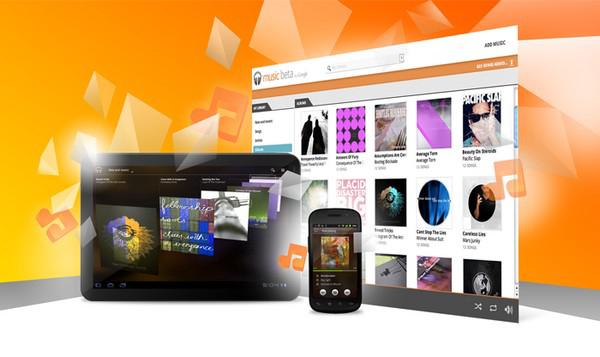
Google strikes deal with European music publishers to add 5.5 million tracks in 35 countries

google music

Google has inked a music licensing deal with Armonia that will enable users to play 5.5 million tracks on Google Music in 35 European countries.

Google Music is about to get a much-needed boost to its catalog thanks to a new deal with overseas rights holders. The Associated Press reports that the platform inked a licensing deal with European music publishers and artists that will add an additional 5.5 million tracks spanning 35 countries throughout Europe.

Typically, music licensing deals are secured on a country-by-country basis, as has been the case with Amazon and iTunes, but by working with Armonia, a major European music publishing group that represents licensing organizations based out of France, Italy, and Spain, Google has obtained the rights to stream music in 35 more countries in one fell swoop. The royalty and financial parts of the deal were “in line with industry standards involving Google rivals like Amazon and iTunes,” says SACEM spokesperson Catherine Kerr-Vignale.

The deal will enable Google Music users in these 35 countries to sync their albums and music to their Google Music library that can hold up to 20,000 songs. It also grants its European users the opportunity to purchase music from what we can tell include mainstream artists, considering that music from Lady Gaga and Rihanna are among the types of tracks that have been named in the deal.

The announcement comes after Google Music unveiled its free scan and match feature that finds the music on your computer and uploads it to the Google Music platform. Normally, users of Amazon and iTunes are charged an annual fee of $25 for the same feature and the extra storage.

The deal will be critical in expanding its services internationally to remain competitive and in particular to stave off rumors that circulated in March suggesting that Google Music was bleeding users consistently on a weekly basis and “not living up to expectations.” Some music label executives at the time were voicing their concerns that Google was shuttering the doors of its Google Music project.

Google Music’s main struggle can be traced back to its contention with the major music labels. The labels are wary of partnering with the platform because they see Google Search as a path toward illegal downloading, which it undeniably is, and want the company to block these sites completely or at least do more to thwart music pirating — and they’re holding out on a deal until Google appeases them. And for all its work partnering with indie labels and artists, the relatively empty library remains a problem. While Google Music does have partnerships with Universal and Sony, it’s becoming more and more important to net all four labels in order to compete with the likes of iTunes and streaming services like Pandora and Spotify. 

Perhaps this new deal will make it a more viable option overseas, although it seems like Google Music faces an uphill battle in general. 


Source : digitaltrends[dot]com

Myspace pitch deck leaks, reveals how the underdog plans to take on Spotify and Pandora

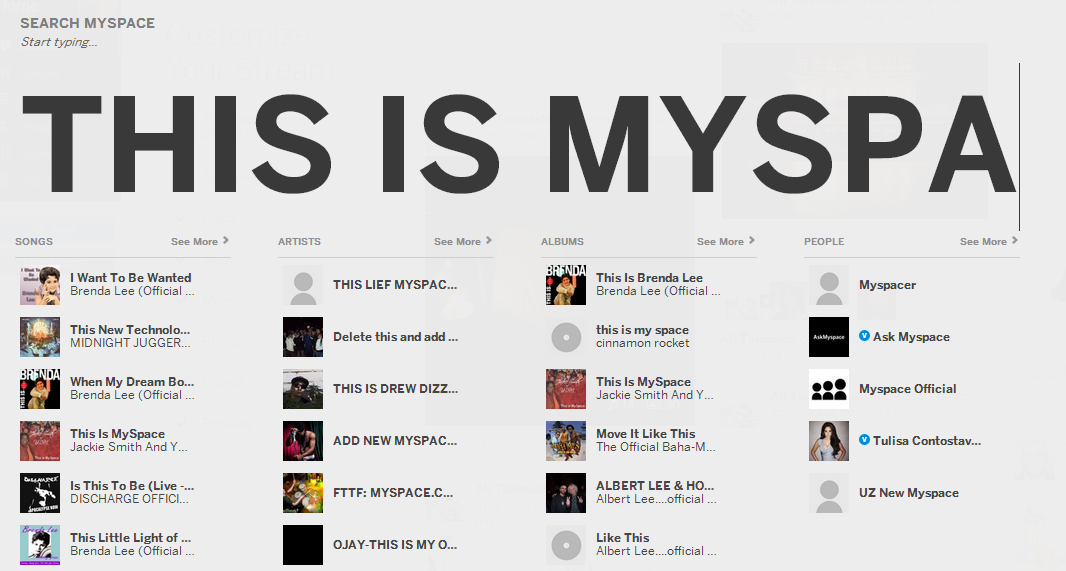
search myspace

After giving us details on the new Myspace last week, the music platform's leaked pitch deck reveals more about how the site plans to challenge Spotify and Pandora for a top streaming service spot.

Last week we finally got a first look at the new Myspace, a sleek, smart, conceptual twist on one of the original social networks. New owners Chris and Tim Vanderhook and Justin Timberlake have more than managed to inspire renewed interested in a platform that very nearly faded into the darkest corners of the Internet.

But the Myspace revival isn’t only UI-deep, and BusinessInsider has gotten its hands on a very revealing pitch deck from the company. According to the document, Myspace plans to challenge Spotify and Pandora and position itself as a top streaming service. Interactive Media (owned by the Vanderhooks) is looking to raise $50 million toward the site’s relaunch – $10 million dedicated to marketing, $15-$25 million for licensing deals, and another $15-$25 for general expenses.

Right now, the new Myspace features an embedded music player that follows you around the site, as well as a video player that automatically fills the screen (which you can optionally pop into the lower right-hand corner). There is no downloadable client, it’s all Web-based, and at the moment there are no premium account options. Of course, in our time with Myspace last week, it was emphasized that we were getting a very early look at the site, and that there’s plenty of growing and building to do. Specifically, the team said the platform would follow what the community of artists and users wanted – including ways to sell merchandise and download music.

And in the pitch deck, you can see Myspace plans to deliver; prospective plans include “subscription, transaction (downloads, merchandise, tickets),” and something called “Myspace TV.” The transaction model is slated to launch in 2013.

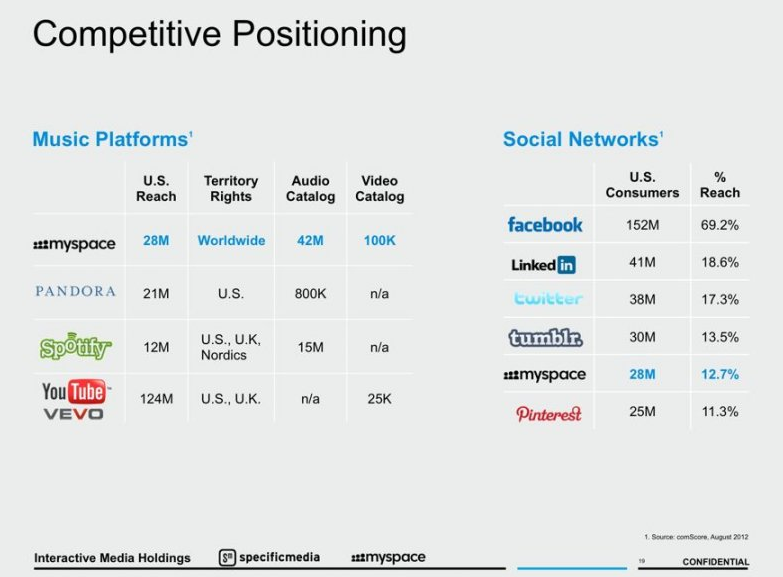
The fact the Myspace is positioning itself to take on Spotify and Pandora isn’t surprising. The company has deals with all four major labels as well as an impressive number of indie labels and artists – five million unsigned artists to be exact (the catalog boasts 42 million songs in total). This slide right here pinpoints the competition Myspace is about to get itself into:

myspace slide

And here’s why it thinks it can do things better: “Myspace has a significant cost advantage with respect to the music streaming costs compared to Spotify and Pandora because our proprietary 27,000,000 song library from unsigned artists accounts for ~50 percent of song plays on our services and has a zero cost basis … Myspace pays the lower Radio rate on the vast majority of our label related song plays.”

Myspace plans to leverage its vast amount of unsigned music and artists to propel itself among other streaming services, which is a bold move: The streaming wars have so far been won by being able to provide licensed music (right, Google Music?). But Myspace also has the four major labels in its arsenal, making it a very viable option. It’s definitely a much more immersive, versatile experience than either Spotify or Pandora, although its plans for introducing a transaction model will likely play a huge role in its potential. For now, we’ll continue to try out the beta and see how this all unfolds in the coming months. 


Source : digitaltrends[dot]com

Nov 9, 2012

Google TVs in the UK, France and Germany will all welcome the Google Play store this month

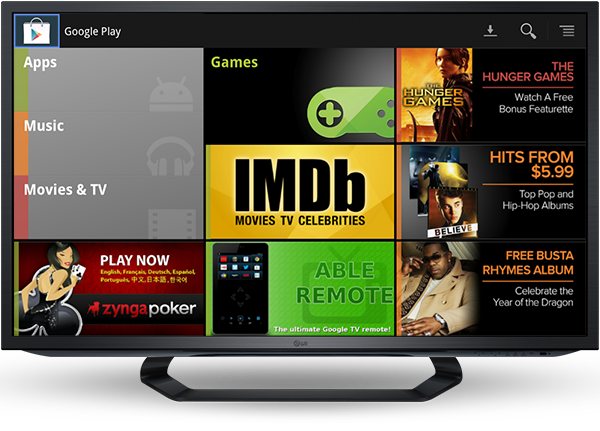
google play on google tv

Google has announced it is expanding the reach of its Google Play store on Google TV boxes, with the UK, France and Germany all gaining access to movies and music later this month.

Google TV has been around for a few years, but didn’t make it to Europe until mid-2011. Last month, Google added Google Play support to its set-top boxes, and thankfully it hasn’t taken another year for them to provide the same service elsewhere in the world, as today, Google has announced that it will be opening up Google Play for Google TV boxes in the UK, Germany and France on November 13.

With Google Play available on Google TV, access will be granted to the music and movie stores, but it has yet to be confirmed whether TV shows will be included. It’s also unclear how many studios and content providers have signed agreements with Google and for which countries, so expect them all to vary when it goes live. Finally, there’s no information on pricing for renting or buying content for Google TV either.

Initially, Google added Canada and Australia to its list of lucky new countries, but these have since been removed with an apology, and a promise that more locations will be added soon. Whether this was a mistake, or the result of some last minute legal wrangling, isn’t known. However, if it’s the latter, then they may appear again sooner rather than later.

If the news that Google Play is coming to Google TV in your home country has inspired you to seek out a box, your choice is slim, with Sony’s NSZ-GS7 being one of the only official, current options. It’s yours for £160 through Amazon in the UK. By contrast, Apple TV, the closest competitor to Google TV is a mere £75, and provides access to iTunes and its extensive collection of movies, music and television shows.

The November 13 release date will be a busy one for Google, as it’s the same day the new Nexus 4 smartphone and Nexus 10 tablet go on sale too.


Source : digitaltrends[dot]com

Oct 25, 2012

Sony updates its Music Unlimited app for iOS – can it compete with the current stars of streaming?

music unlimited iphone

With a new update to Sony's Unlimited Music service on iOS devices, including the addition of music channels and redesign of the homepage, we got a hands-on look at a premium subscription of the music streaming service.

Music Unlimited has been around as a Spotify competitor since May, when we covered the launch of Sony’s streaming-music service. The app offers a comparable pricing model at $4.99 per month for the basic paid plan and $9.99 for the premium subscription, and has a library of 18 million licensed tracks that are available in 17 different countries. Streaming veterans Rdio and Spotify, for the record, each offer more than 18 million songs as well.  

Competition be damned, we go hands-on with the Sony streaming service and its iOS update. Using the $9.99 service for  iPhone, we wanted to see if the latest version of Music Unlimited can breath a little life into a platform whose name isn’t among the cream of the music streaming crop. 

Interface and navigation

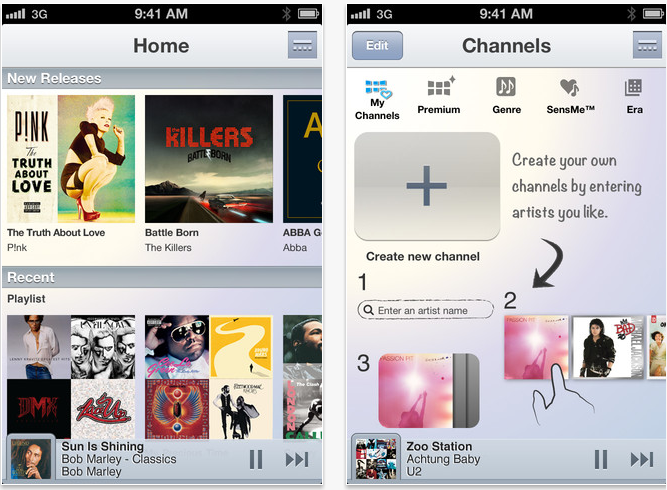
Music Unlimited’s iPhone app’s look and feel hasn’t been changed for the most part since launch, but there has been a retooling of a couple of the iOS app’s hubs, the new homepage being the most noticeable change. A list of random channels – pre-set music stations – and playlists used to be featured up front. Now you’ll find a category for “New Releases,” and recently played playlists and channels. At the very bottom of the homepage you’ll find a category called “You Might Like,” where Music Unlimited’s recommendation engine suggests artists based on your listening history. As a long time Spotify user, Music Unlimited’s iOS app’s homepage is arguably a familiar sight from color down to the album tiles.

Navigation remains fool-proof. A navigation button on the top right corner of the screen opens up additional tabs labeled “Channels,” “Charts,” “My Library,” and “Settings.”

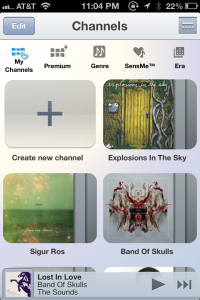
music unlimited channelsUnder the hood

Music Unlimited pays particular attention to its curation of music, and this is where the service actually does its competitors one better. The variety and number of curated channels (the equivalent of Spotify’s Stations) is a tempting service for lovers of radio and preset channels and refrains from inundating users with too much variety. For instance you can discover music based on chart topping tracks under “Charts,” access a list of Top 100 tracks from different genres from within the “Premium” tab, or take a trip as far back as the 1950s through the “Era” channel. The service also recognizes a trend in mood-based music curation by integrating mood driven channels like “Energetic,” “Emotional,” and “Morning.”

If you want to get creative, you can also make your own channel simply by selecting a favorite artist, and letting Music Unlimited’s engine do the rest. A Sony spokesperson explained that the custom channels worked “based on the analysis and categorization of musical traits across the service’s global library of music.” Still, I easily preferred the quality of music Spotify’s under-the-hood engine recommends. Music Unlimited’s engine runs on Gracenote, and while it sufficed, it was never quite able to surface music I really wanted to hear. Obviously this is subjective, and you might find Gracenote’s engine up to your standards. 

Finding and adding music to your library is as simple as opening up the navigation tab, searching for an artist, album or track, and selecting the track. And a new feature that iOS users will enjoy in the latest update is the ability to add tracks to a custom playlist.

Hiccups

A couple of caveats that I noticed was that I had to drill down three times into a search result before I could add the song. On top of this, when I was playing a track on a channel and wanted to skip to another track or play a new channel altogether, I encounter a bug on numerous occasions that would freeze the track until I navigated to a different tab to break out of the glitch. And again, the recommendations that Music Unlimited surfaced were pretty consistently disappointing for me — although, I have to reiterate this has more to do with personal taste than anything else. But it still seems like the streaming app’s ability to find what I want to listen to just isn’t quite up to par. 

Verdict: Good… but is it good enough?

Music Unlimited could easily function as a Spotify substitute if you’re needing one, particularly among those of you who enjoy preset music and genre-based music stations. The setup and function of the two have much in common: The like and dislike icons that helps the engines learn about your musical taste, the general look and feel of the interfaces, and even the pricing strategies are alike. And while Spotify’s business has taken off since its stateside launch (as of May, the service had 15 million active users, three million of whom pay for the service, for the record), Sony’s own effort is holding its own: Sony’s spokesperson revealed to Digital Trends that since its launch in May the service has amassed over one million active paid subscribers.


Source : digitaltrends[dot]com

America’s Oldest Voice Recording Restored

ap edison phonograph jef 121025 wblog Americas Oldest Voice Recording Restored

“Mary had a little Lamb,” “Old Mother Hubbard,” and a 23-second cornet solo are the highlights of what could be described as America’s oldest recorded music album. It’s not for sale on iTunes.

Thanks to technological advances, experts have been able to transfer a rough 78-second recording made in 1878 on a Thomas Edison-invented phonograph from flimsy tin foil to a computer. Experts believe it’s the nation’s oldest such recording.

“This is the first 1878 tin foil recording that we’ve played, you don’t get much closer to that moment of Edison’s transformative invention than this,” Dr. Carl Haber, senior scientist at the Lawrence Berkeley National Laboratory told ABC News. “If there are older ones, it would be just be by a couple of months.”

The recording, available to listen to online, opens with a cornet solo followed by a man reciting “Mary Had a Little Lamb,” followed by laughter, a recitation of “Old Mother Hubbard,” and finally more laughter and speaking.

In the history of recorded sound, captured audio that was playable was an enormous breakthrough.  A French inventor named Edouard-Leon Scott de Martinville had previously recorded sound waves visually on paper 1860, but was unable to find a way to play them back.

“Edison’s was the first sound recording which was itself playable at the time. From my point of view that was the transformative invention because sound recording became very useful once you were able to play it back,” said Haber.

“There was a lot of innovation and experimentation that went on in the 1880s and 1890s, that was the period of real growth. But the 1870s is when it first happened, that broke the field wide open” he added.

The Edison phonograph used a sheet of tin foil, a stylus and a hand crank to record sound waves generated by the operator’s voice. Such recordings were very fragile and could not be played back repeatedly.

“Every time you played it you probably damaged it a little bit,” said Haber.  ”There are a few foils like this that are around, but this is the only one that has been played back to date.”

Museum of Innovation and Science curator Chris Hunter told ABC News the voice on the recording is believed to belong to St. Louis newspaper humor writer Thomas Mason, who often used a pseudonym I.X.Peck.

The digitized recording is scheduled to be played this Thursday during a presentation entitled “Found Sound,” at the GE Theater in Schenectady, N.Y.

The technology required to restore the audio was developed through a collaboration between the Optical Sound Restoration Project and the Library of Congress, and by research sponsored by the Institute of Museum and Library services.


Source : abcnews[dot]go[dot]com

Oct 17, 2012

V-Moda M-100 headphones offer slick features for the urban audiophile with a fancy price tag to match

V-Moda ventures into the tumultuous world of audiophilia with its new M-100 headphones. Armed with dual inputs, a music-sharing cable and the ability to add a boom mic, the M-100 are a bit of a departure from the company's previous offerings. The same can be said for the price, which is set at $300. Expect the M-100 to drop sometime this holiday season.


Today,  V-Moda launched their M-100 headphones, which it says were designed by “crowdsourcing” DJ’s, journalists, and consumers. Once the design team had collected enough input, they began working on the headphones with outside recommendations in mind. Still, the company indicates it was never going to stray too far from its roots, as an organization reportedly obsessed with the intricacies of audio.

“Speaker drivers must be carefully quality-controlled like grapes at fine vineyards,” said Val Kolton, Chief Visionary Officer at V-MODA. You know when a company is comparing the crafting of its speaker drivers to the making of fine wines, it’s run by folks who consider themselves real audiophiles. If you’re not one yourself, you may want to skip this high-end offering.

The real question, however, is: do the M-100’s deliver? As part of the Crossfade series, the phones are billed as versatile, durable, and functional. In terms of versatility, the dual inputs are said to allow the phones to serve as an on-the-go mixer, and there’s also the option to add-on a Boom Pro mic if you’re the gaming/podcasting/broadcasting type. As for durability, the V-Moda M-100 come equipped with detachable, kevlar-reinforced cables, and in terms of functionality, the phones feature a SharePlay cable for music sharing without the aid of extra adapters.

The literature for the M-100’s is laden with the phones’ supposed features, but no amount of marketing savvy can make a shoddy pair of cans sound spectacular. When we reviewed the V-Moda Crossfade LP’s, we found the sound quality a bit lackluster but we’ve yet to get our hands on these as of yet, so we’re still in wait-and-see mode. Looks like we may be there for a while too, as  V-Moda is a bit nebulous on release details. The company says only that the Crossfade M-100 will be available this holiday season. They’re priced at $300 and for an extra $10, you can pre-order a pair at V-MODA.com, which will ship with an extra set of personalized shields and a set of Faders VIP Tuned Earplugs for a limited time.


Source : digitaltrends[dot]com

Oct 12, 2012

Does the RIAA even want Pandora’s golden eggs?

Does the RIAA even want Pandora’s golden eggs?

The same services that have helped the recording industry stamp out piracy are on the brink of starvation and death… because of the recording industry.

Streaming music services are dying.

I know, I know: By almost any metric you use, the streaming music business is actually booming. Let’s just look at the two biggest examples. Over 150 million people have signed up to hear tunes through Pandora, while another 33 million folks sing in the shower with the help of Spotify. Spotify alone sucked down over a quarter of a billion dollars — that’s billion with a “B — in revenue in 2011. Pandora’s revenues topped $100 million last quarter alone.

That’s a ton of ears and even more moolah, and those numbers should only increase as more and more people move to using mobile devices with limited storage space and free-roaming Internet abilities.

Even still, the streaming music services are dying. That’s because the one metric that matters most just so happens to be the one metric that both companies fail miserably at: actually making money. Despite those millions of customers and hundreds of millions of dollars in revenues, you see, neither Pandora nor Spotify have yet to make a single dollar’s worth of profit. And it’s not their fault.

The streaming music services are dying, choked slowly into oblivion by the overwhelming greed of the music industry.

Looking a gift horse in the mouth

By almost any metric you use, the RIAA and the rest of the American music industry should be swooning over the meteoric rise in streaming music popularity. The streaming music revenue model monetizes listeners who used to download albums off of BitTorrent and LimeWire, converting their once-illegal habits into actual income through the royalties paid by the services themselves. In a nutshell, streaming music services turn nothing into something for the RIAA and co.

Study after study has shown that having free or low-cost legal music options stamps out piracy much more efficiently than dragging illicit downloaders into court ever did. Spotify found raging success in the Scandinavian countries, for example, and those countries have seen music piracy rates drop between 25 and 50 percent since the service launched. The number of pirates continues to dwindle as time goes on.

download statsGiven that the U.S. boasts more music pirates than any other country in the world, you’d think the music industry would want to nurture the blossoming streaming music industry into maturity. And it does: In a 2012 industry report (PDF), the IFPI — International Recording Industry Association — calls streaming music “a fast-expanding business model” and notes one big potential upside. “In the à-la-carte environment, an album or track is downloaded once and paid for. In the streaming environment, a track or album may be listened to hundreds of times, each triggering a payment to rights holders.”

Streaming music is a cow that will never run out of milk. Unless, of course, the cow itself winds up dead. The music industry’s greed could very well end up doing that.

Why aren’t streaming music services making money?

It’s simple: they pay too much money out in royalties.

Pandora differs from most streaming music services in that it’s more accurately called an Internet radio station: It plays whatever music it wants, then gives the artist a royalty payment in line with what’s mandated by a government statutory license, which also imposes limits on on-demand listening and the number of times a song can be played in a set time period. The license fee works out to the greater of $0.02 per listener per hour or 25 percent of the company’s revenues.

It’s that “whichever’s greater” part that’s killing Pandora. That line forces Pandora to pay out over half its revenue in royalties, a completely unsustainable long-term business model.

spotify premiumBecause of that, the company is lobbying hard for Congress to pass the Internet Radio Fairness Act, a bill that would allow Internet radio royalty rates to be set by a panel of judges who adjust royalties based on their commercial value, similar to what’s done for traditional cable and satellite radio. The move could drop Pandora’s royalties down to 8 to 16 percent of total revenues, a much more sustainable amount. Our Geoff Duncan already tackled the complex subject in-depth.

Conversely, the music industry backs a competing bill called the Interim FIRST ACT (PDF) that would force traditional broadcasters to pay the same high royalty rate as Internet radio stations.

Spotify and the other on-demand music streaming services handle things a bit differently. They’ve negotiated individual licensing deals with the music labels that have the services paying agreed-upon rates for streaming music. The exact amounts haven’t been disclosed, but they’re definitely steep: Spotify CEO Daniel Ek has said that 70 percent of revenues go “back into the industry,” but a recent leak of the company’s 2011 financials suggest royalty-related costs could consume a whopping 97 percent of the company’s revenue.

Streaming music: Shining brightly, but destined to fade?

No company can survive those kinds of content costs. Even more incredulously, several artists have complained that services like Spotify still don’t pay them enough, although TechDirt’s Mike Masnick — a noted intellectual property journalist — says that when a royalty collection agency studied the numbers, it found that Spotify pays a much higher royalty rate per-listen than iTunes or traditional radio.

Some analysts have suggested that running more ads would reduce the royalty burden and increase revenues for streaming music services, but as anyone who’s ever listened to the free version of Spotify can tell you, the service runs an abundance of ads — and it’s still losing money hand over fist.

It’s a complicated subject, to be sure, and it’s similar to the struggles other content providers are facing in an Internet-connected world where most digital content inevitably moves towards no cost for the end user. But here’s the rub: The music industry has already been there. Piracy ran rampant in the previous decade in the form of file-sharing, and that specter still looms large over the U.S. music scene.

Low-cost streaming music services offer artists salvation, having already proven that they can turn today’s bleak piracy-filled landscape into a profitable revenue stream for the future. But if the music industry can’t check its greed and hash out a royalty scheme that works for artists and streaming services alike, it could very well snuff out the golden egg-laying goose for good. If the two brightest streaming music stars can’t sustain, none of the services can.

But hey, look on the bright side! If Spotify and Pandora go down, there’s always BitTorrent.


Source : digitaltrends[dot]com

Oct 3, 2012

Xbox Music launches alongside Windows 8 on Oct. 26

Xbox Music, Microsoft's Spotify competitor raised from the ashes of Zune, will launch alongside Windows 8 at the end of the month.

 xbox spotify

Microsoft has held a nearly year long funeral for Zune in 2012. Now after months of rumors and vague announcements confirming the death of the Zune brand in favor of the name Xbox Music, Redmond is finally ready to unleash its latest attempt to secure a share of the shifting music market. The Spotify-style, advertising supported Xbox Music streaming service will open for business, free of charge, on October 26th. Right in time for the launch of a little operating system

At least, that’s according to sources familiar with Microsoft’s plans. Xbox Music will be available on all of Microsoft’s major consumer products, including Windows Phone, Xbox 360, and the company’s would-be Apple killer, Windows 8. Like the Windows Player app of old, though, Microsoft is aiming to get Xbox Music onto as many platforms as possible, with plans for the service on iOS and Android devices as well. Any adventurous iPhone 5 users gearing up to experiment with an alternative music service hosted by a massive multinational corporation will have to wait a bit though, as the iOS and Android Xbox Music apps won’t be available until an unspecified future date.

All Microsoft media apps will be updated to account for the new service.

As expected, the service will come in a variety of packages. There will be subscriptions for users looking for unlimited, ad-free access and existing Zune Music Pass subscribers will see their accounts transferred over automatically. There will also be a free version that offers ad-supported music a la Spotify.

Official pricing for Xbox Music subscriptions is still unknown. Users that received early access to the service claimed that the unlimited subscriptions would run around $15 per month and $145 per year. Like many media apps, Xbox 360 owners will have to have a premium Xbox Live Gold subscription, an additional $60 per year, to even access Xbox Music on the console.

Microsoft made the right choice killing the Zune brand. Over its six years in the market, Zune was never able to build any cache with users in the way that iTunes or even Amazon’s music and media services have. After eleven years, the Xbox brand is particularly strong, but if Microsoft can’t rely on it to automatically draw consumers. Xbox Live branded games haven’t made the Windows app market on Nokia Lumia phones a booming business after all. Microsoft also can’t expect the Xbox 360 audience to consider access to an advertising-based music streaming service a draw to spend on Xbox Live Gold. The sooner Microsoft realizes that the old Xbox Live Gold subscription model, giving access to basic services that are free on competing machines, is dead, the sooner it can really build a cross-platform strategy around Windows 8.

Source: The Verge


Source : digitaltrends[dot]com

Niel Young and Pono pushing new top-quality digital music

Hawaiian for righteous, Pono is primed to do more than just ride the wave.

Lost in the shuffle of the 21st century’s transition to digitized music, is one omnipresent and obtrusive reality: MP3’s just do not offer great quality sound. The format simply doesn’t capture the nuanced and vibrant sound of studio sessions, and instead delivers music in a diluted, watered-down manner.

According to Rollingstone.com, Musician Neil young is poised to offer a high-quality alternative to services like iTunes — services he thinks offer an inferior listening experience. The project has been dubbed Pono — Hawaiian for righteous — and its aim is to reproduce recordings as they sounded in the studio.

Along with Meridian Audio, the legendary songster plans to release a line of high-quality portable music players, coupled with a download service. The service will reportedly utilize a digital-to-analog conversion technology capable of producing digital music files of unprecedented quality. 

Young’s being backed in his venture by such industry giants as Warner Music Group, Sony Music, and Universal Music Group, all of whom are in the process of converting their album libraries to the new format. Warner in particular had digitized roughly 8,000 album titles into 24-bit/192kHz form before Young was even on board. The willingness of industry giants to embrace the new format suggests that Pono may truly be on track to provide a revolution in the digital music industry.

Some are saying the service may even push iTunes to improve its quality, or be pushed aside. As of yet, there have been no details on release date and/or pricing, but it’s safe to say that the high-end audio Pono purports to offer will come with a hefty price tag; not to mention you’ll need to re-buy any songs you currently own if you want to hear them in the new format. Still, it’s always nice to see manufacturer’s forego quickness and quantity in favor of quality. Stay tuned for continuing coverage.


Source : digitaltrends[dot]com

Sep 26, 2012

Microsoft leaks Xbox Music Pass pricing model, and no surprises here, it looks exactly like Zune Music Pass

xbox music

Many Xbox Music features will be ported from Zune Music, and based on the Xbox dashboard update for beta testers, the same applies to the cost of the service.

No surprise here: Microsoft’s leaked Xbox Music service pricing model is no different from every subscription music service out there. Unlimited streaming music on Xbox will cost £8.99 (about $14.50) per month, or you could elect for a slightly discounted upfront cost of £89.90 ($145.15) per year.

With the intention of letting select Xbox owners try out the new Windows 8 interface, Microsoft accidentally leaked the pricing model with the dashboard update, according to The Verge. From what could be determined based on photos taken of the interface, users will be offered a 14-day free trial (Spotify offers 30 days of its premium service for free, for the record) and it also looks like Microsoft will offer a free, ad-supported version of its music service. But in order to use Xbox Music on your console at all, beta testers are reporting that you’ll be required to own a subscription to Xbox LIVE Gold.

The pricing model is similar to Microsoft’s existing Zune Music Pass service, which currently charges $9.99 per month or $100 per year, and it’s likely that the U.S. subscription cost to Xbox Music will be structured similarly. Like Spotify, it could be a possibility for the service to offer additional tiered pricing models based on the amount of access that you’d like.

Microsoft is clearly looking to compete in the music streaming market, with Xbox Music replacing the Zune brand that’s soon to be canned. Xbox Music is essentially a big rebranding effort of an existing service that Microsoft hopes will reenergize its foray into music, a sector that the company has been falling behind compared to its competitors.

From what we know so far, our expectation is that many of the Zune Music Pass features will be ported to Xbox Music. Users will be able to access Xbox Music across multiple devices, including the Xbox, desktop PCs, smartphones, and tablets that are running the Windows 8 operating system, and the service even includes Zune Music’s “Smart DJ” function, which plays a mix of similar music based on the songs in your collection. It also appears that the ability to sync your playlists with other devices will make its way from Zune Music to Xbox Music.

Although the music streaming industry is crowded enough as is with just about every major tech company — Sony, Samsung, and Google all have streaming products, and you can’t discount popular services like Pandora, Rdio, Last.fm and Spotify. And it should be noted that none of these services have yet to debut a Windows 8 specific app, making Xbox Music the de facto music streaming service for Windows device owners once its launched. 

The launch date of Xbox Music has yet to be announced by Microsoft.


Source : digitaltrends[dot]com

Sep 25, 2012

RIM execs serenade BlackBerry developers with ‘Keep on Loving You’ music video

Has Research In Motion finally lost the plot? Or is it merely showing everyone it has a sense of humor? A new music video starring company executives thanks BlackBerry developers for sticking with its mobile platform, promising better days ahead.

Research In Motion (RIM) may be experiencing the toughest time in its 28-year history, but it hasn’t forgotten how to have bit of fun.

At its BlackBerry Jam developer conference in San Jose on Tuesday, the mobile company decided to entertain its attendees – or possibly horrify a few of them – with a slickly-produced music video featuring three RIM executives singing a developer-focused version of the classic REO Speedwagon hit, Keep on Loving You.

The video is apparently RIM’s way of expressing its appreciation for developers that have stuck with the BlackBerry platform.

“This video is a thank you to all developers supporting the BlackBerry platform. Your Developer Relations, Alliance and Developer Tools teams appreciate your enthusiasm and loyalty! We’re Going To Keep On Loving You,” reads the accompanying blurb on YouTube.

The three-and-a-half-minute production kicks off with the lyrics:

We’ve all seen these are challenging times, baby,

‘Cuz we’re in transition.

A whole new mobile computing platform may be

one tough proposition.

So don’t be misled,

The launch is just ahead,

We’ll have BlackBerry 10 both in full touch and QWERTY editions.

In a message to BlackBerry developers, vocalist Alec Saunders – RIM’s VP of developer relations and ecosystem – sings, “We’re gonna keep on loving you,” at the same time reassuring them that “our updated SDK is really cool.”

Check it out at the end of this piece and let us know: epic fail or good laugh?

Besides serenading the developers, RIM is also hoping to hold on to existing ones, or even attract new ones, by offering $10,000 per BB10 app submitted to its app store, provided it meets certain quality requirements.

The video was screened on the same day that RIM boss Thorsten Heins announced some better news for the Ontario-based company. Against expectations, BlackBerry subscriber numbers rose to 80 million for the quarter ending September, an increase of two million from earlier this year.

RIM’s future rests heavily on its next mobile operating system, BB10, which is set to launch early next year, together with a number of new handsets. Hopefully the Keep On Loving You video released on Tuesday won’t have scared off too many developers, and the phones can come to market with plenty of BB10 apps to choose from.


Source : digitaltrends[dot]com

Sep 12, 2012

Shimi, the intelligence musical companion you’ll want as your personal DJ

Tovbot Shimi

Shimi is a sophisticated robotic smartphone and MP3 player dock that will play your songs and enjoy it without judging your taste in music.

If you’re lonely on a Friday night or looking for a pal that won’t criticize your taste in music, Shimi just might be the robotic companion and personal DJ for you. Tovbot’s Shimi, developed by engineers from Georgia Tech, IDC Herzilya, and MIT Media lab, shimmies to music playing from your smartphone or MP3 player, can understand commands, and learn your musical preferences.

The Shimi, at first glance, just looks like a toy — but it took the minds of weathered PhDs to program and design this rather sophisticated piece of machinery. 

“We saw first-hand the level of excitement and interest that we were getting from our amazing robotic musicians like Shimon. So, we decided to use our experience with those larger, much more expensive robots to create Shimi, an extremely intelligent personal robotic companion with a personality and high-quality audio that consumers can afford,” Tovbot Co-Founder, Gil Weinberg, tells us.

Right away, we can recognize that the Shimi sports a “face” with speakers that protrude from the ends of its wing-like facade, resembling that of a hammerhead shark. The robot’s left foot serves as a dock for your MP3 player or smartphone, while its right foot is built for the sole purpose of tapping to the music.

The Shimi’s existence is almost comical because at its core, it’s really just a glorified speaker dock for your Apple device. At the same time, it’s highly sophisticated and capable of natural language processing, machine learning, motion tracking, and its gears are silent, contributing to smooth movements that might make us forget for a moment that Shimi isn’t a robot.

When you turn on the music, pivoting on five strategically placed motors, Shimi will groove to the music as it bobs its head to and fro, while its foot taps on beat with the music that’s currently playing. And no dance is the same, as its movements depend on your song choice.

You can also call out commands for Shimi to play specific songs from your connected mobile device, or ask it kindly if a certain song can be found in your music player’s library or even a streaming service like Spotify, to which Shimi will offer gesture responses of “yes” or “no.”  A secondary option to search for music, if you’re rhythmically talented, is to tap out the beat of the song that you’d like Shimi to play. It will for the most part recognize the beat and select the song accordingly.

Using its motion tracker, it can recognize your movements and direct its speakers toward wherever you are, but according to its creators, the next stage is app development that will enable Shimi to recognize your facial expression, learn what types of music you like, and recommend new music. ”Shimi will continue to evolve based on crowd-sourced ideas, including adding Android compatibility, Bluetooth connectivity and LED lighting color schemes,” said Weinberg.

The creators of Shimi have taken to Kickstarter to help complete their vision. The musical companion will cost $149 for the duration of the Kickstarter campaign, although a limited supply of 100 Shimis were up for grabs at a cost of $129, until that offer sold out.

Check out the video of Shimi in action below.


Source : digitaltrends[dot]com

iTunes 11 debuts with enhanced iOS compatibility, Facebook features

iTunes 11 brings a redesigned shopping experience to all Apple devices

While the iPhone 5 was the big announcement, Apple's ever-present music store got a sizable redesign as well. Both iOS and application versions of iTunes have new looks coming soon.

While the big news to come from the Apple press conference was the highly anticipated iPhone 5, Apple also snuck in an update to its iTunes music store. After hyping up just how great the product already is, Apple’s senior vice president of Internet Software and Services, Eddie Cue, told the crowd at the Cupertino headquarters that the “number one music store in the world” was going to get better — or at least different.

After realizing that two thirds of all iTunes purchases have come from iOS devices, Apple started with a redesign of the mobile app, according to executives. The new look is more streamlined and consistent throughout the store, from music to books and videos. The screenshots show a banner of featured content at the top of the store, followed by rows of new and popular items below it. The store is promising to yield better search results and improved performance. You’ll also be able to preview products while browsing, a handy feature for anyone that actually likes to try — or listen — before buying. The App Store also got a new layout that prominently features Facebook integration. You will be able to “like” and share your favorite apps through the Store. The iTunes iOS app will be available September 19 along with iOS 6.

While the iTunes app got a nice revamping, the desktop application also got its share of changes. The new iTunes comes with an edge-to-edge design will make the browsing and viewing experience more immersive, as options from your library and the store sprawl across the length of the screen. Clicking on an album cover will cause the album to expand in line, revealing the tracks of the selection. It’s very much a design cue from iOS. A new feature called “In the Store” will show top songs and albums from an artist, allowing you to finish off your discography of your favorite musicians. 

Browsing the new iTunes library by artist will allow for some artist-to-listener sharing. For instance, when you look at Coldplay’s library, you can also see pictures that the band is sharing with their followers. It feels like a feature borrowed from the ill-conceived Ping music network. 

If you’re playing music from a playlist or a full album, the music player will have a drop-down menu called “Up Next” that will show songs that are next in the queue. The pop-out mini player also got a redesign. It’s smaller, sleeker, and has the same handy drop-down feature. The mini player displays a small clip of the album art with the name of the song and artist currently playing. The same area becomes the control panel for when you want to change songs. You can also pull up the search bar, which now provides a live preview of your search term, including album covers.

Movies received an overhaul similar to the music department within iTunes, with the edge-to-edge view of all your video collections. Because iTunes has full iCloud integration, films you were watching on your iOS device can now be continued on your desktop or other computers running iTunes with the iCloud. The iTunes 11 download will be available late October.


Source : digitaltrends[dot]com

Sep 7, 2012

Portland Digital eXperience: Spotify, Shazam, and the toppling of traditional music consumption

pde spotify shazam

At Portland Digital eXperience, new-wave music products Spotify and Shazam defend their services against an aging industry.

Given its scheduling along side MusicfestNW, one of Portland Digital eXperience’s most anticipated keynotes was the Dave Allen-moderated discussion on the science of music discovery with Shazam and Spotify. And given that nature of the very indie-friendly music festival and Portland’s inarguably hipster, screw-the-man spirit, you can assume the discussion erred toward the tense side.

As a bit of background, Allen is a musician, formerly worked as director of Consumer Digital Audio Services for Intel, and now runs independent record label Pampelmoose. So suffice it to say he takes some issue with how the current state of mainstream music discovery and consumption is working.

Right after panel introductions – which consisted of Allen, Peter Szabo from Shazam and Jason LaCarruba from Spotify, the tough questions started — mostly targeted at Spotify.

First up, Allen had to ask Spotify where those 50 million users it told the Wall Street Journal it planned to get way back during its stateside launch. “I think we’re doing really well getting those users. We’re always trying to launch new features to do that,” LaCarruba said, mentioning the relatively new Radio feature, which he works on (and says will be getting better).  

That said, he admitted that Spotify definitely has not hit the 50M mark; it has 15 million globally, four million of which are paying customers.
Which prompted this comment from Allen: “Your valued at $4 billion. How can that be?”

Shazam, which wasn’t hit quite as hard with the “how dare you!”s, had some impressive numbers to report. The app currently has 35 million users and is adding two million a week. “It’s one of those apps when people first get a smartphone, they download,” Szabo reasoned.

Of course, Shazam has been around longer than Spotify and is a more diverse service.

Piracy and artists’ rights couldn’t go untouched, either. For all their inherent problems, one thing the streaming services — and arguably products like Shazam — bring to the table is that they fight illegal downloading. Both Szabo and LaCarruba generalized a bit here, but reasoned that by cutting down on piracy so largely, it’s paving the way for a better future for artists’ pockets.

As you can assume, Allen had a lot to say about this. Of course, he’s not the only one: Since Spotify’s launch, indie labels and artists — and even The Black Keys — have called out Spotify for hurting musician’s bottom lines. “My last check was $17. Thats not funny,” Allen told the crowd. “I make no money from streaming.”

The defense? Basically, that at least it’s progress against piracy, and that the more people who decide to pay for streaming services like Spotify, the more money will come in. That there’s fun and experimentation in this new music technology and that it’s going to find a sweet spot at some point. And to Shazam’s credit, nine percent of mobile listens lead to a purchase — so there is a proven correlation between discovery and buying there.

Allen’s response? Not good enough.

For starters, he reiterated that streaming platforms can’t honestly think of themselves as a viable way for musicians to make money — and the conversation quickly took a turn into the current generation of music discovery and curation disrupting the old. There were plenty of references about how people used to buy albums and not just singles, about vinyl, about the lost human influence of the DJ — it became fairly clear that instead of a discussion about the science of finding and listening to music, we were watching a tug-of-war between the old and the new.

Don’t get me wrong, there are plenty of problems with our current state of content consumption, but I feel more comfortable placing that blame on the labels and rights holders versus outlets connecting users to music. And it’s because they don’t want to change, they want things to continue as they have been — and that’s something consumers simply won’t settle for anymore.

“My friend doesn’t have to make a mixtape and bring it to me to introduce me to new music — it’s so much more immediate,” says Szabo; to which Allen replied: “I liked the old way.”

Complaining about this “inhuman” experience is warranted, sure, but then you’re tackling a much bigger beast, and that’s the digitalization of nearly all our interactions. It’s not just music — it’s talking to people, buying food, the work office; all of these things have been transitioned thanks to technology.

Jury’s still out on how well the new music models will find compromise for users, artists, and labels; it’s a lot to attempt. And there are no shortage of imperfections along the way — but there’s simply no going backward from here.


Source : digitaltrends[dot]com

Sep 6, 2012

Apple planning to take on Pandora and Spotify, report says

Apple iCloud music

Apple has Pandora and Spotify in its crosshairs, according to a report Thursday, as the tech giant plans a rival offering to the popular music streaming services.

Apple is reportedly looking to establish itself in the music streaming space by taking on the likes of Pandora and Spotify, services which allow users to build customizable online ‘radio stations’ based on their personal music preferences.

Citing “people familiar with the matter”, the Wall Street Journal reported Thursday evening that Apple’s free, ad-supported service will be made available across all of its hardware products, which include its mobile devices and Mac computers.

It could even be coming to PCs running Windows, though devices powered by Google’s Android OS would be excluded, the source told the WSJ. That doesn’t come as too much of a surprise, as Google and Apple continue their no-love-lost battle for supremacy in the mobile sector.

According to the WSJ, Apple is currently in talks with a number of music providers in an effort to hammer out licensing deals for the new service, though a launch is not expected for at least several months.

The WSJ points out that Apple could be a threat to existing services thanks to its firmly established and massive presence in online music sales and the fact that it already has such a large number of music-playing devices, such as the iPhone and iPod touch, in circulation.

Services like Pandora and Spotify, which stream songs based on a user’s existing tastes, have built up a steady following since arriving on the scene, with music fans able to access an enormous library of songs for free as long as they have a connection to the Internet.

But a quick look at the numbers show there could be rough waters ahead for these companies. Pandora has 54.9 million active users, while Spotify, which launched in the US last year, has 16 million. In comparison, there are more than 400 million iTunes accounts up and running. Do you think the Cupertino company will be able to blow away the competition with a streaming service of its own?


Source : digitaltrends[dot]com

Sep 3, 2012

How To Improve Your iPod Battery Life

Learning how to improve your iPod battery life gives you more opportunity to maximize the use of your iPod. It is a hassle for someone listening to music or podcast when all of a sudden, the battery dies. Here are some tips that you can do to extend the battery life of your iPod, and prevent it from dying quickly:

1. Minimize the Backlight Timer

The backlight consumes almost 30% of the battery. It is one of the biggest causes of battery drain, so better minimize the time in consumes. You can go to Settings then choose Backlight Timer to adjust the time.

2. Use minimum brightness

The brighter the iPod screen is, the more energy it consumes. You can use the minimum possible brightness that you can see, to extend the battery life. Adjust this setting by going to Settings then Brightness.

3. Turn off the clicker confirmation audible feedback

When using the click wheel or touch screen interface, turn off the audible feedback to minimize power consumption. Just go to Settings then Clicker then choose Off.

4. Use hold switch

By using the hold switch, you can let the iPod ignore the accidental input.

5. Pause if you are not listening

Do not let the iPod play when not used. Pause whenever you are not listening for a bit.

6. Avoid changing tracks

Avoid skipping tracks forward or backward. Utilize the playlist efficiently.

7. Turn off the Equalizer

When the Equalizer is calculating and modifying the music, it significantly drains the battery life. Turn off the Sound Check and EQ by going to Settings then EQ then choose Off.

8. Use mp3 compression

It is better to play sounds in mp3 format since they can save battery life. Moreover, they are smaller in file size so they occupy lesser space in the hard drive.

9. Do not expose the iPod in the hot temperature

Heat can degrade the performance of the battery so keep your iPod away from a hot car or sun.

10. Update the software often

Software developers often fix bugs and improve the iPod software. New updates minimize the use of the battery so always update your iPod whenever there is a new version.

What To Do When iPod Battery Dies

There are few options that you can do when the battery of your iPod dies. You can go ahead and buy a new one if you want, but there might be more affordable options. Apple has a battery replacement program but it is somewhat expensive. For cheaper options, look for other retailers that sell battery replacements. Alternately, you can check out cheaper external backup batteries.

By following simple tips, you can extend the battery life of your iPod. However, if your iPod battery dies, look for cheaper ways to find a replacement.

Author Bio: Vince Cinelli has owned every generation of the iPod, as well as each iPhone and iPad model.  He specializes in writing tips about Apple products, such as iPhone repair and switching from a PC.

Tags: iPod, iPod Battery

Source : techtalkafrica[dot]com

Yippee ki-yay, law maker: Bruce Willis may sue Apple over ownership of his digital music collection

Die Hard 5 Bruce Willis

Bruce Willis may be contemplating legal action against Apple over the ownership of his digital music collection.

At first, this appears to be a slightly ridiculous story that exists only because it features a movie star and the world’s most talked-about technology company, Apple. However, there is a little more to it than that, but first here’s the tabloid-friendly story:

Bruce Willis, star of many an action film including most recently, The Expendables 2, is said to be gathering a legal team to potentially fight Apple in court, over the ownership of his digital music collection.

This doesn’t refer to his own discography from the 80s and 90s, but to songs he has purchased through iTunes. Willis wants to pass on the presumably extensive collection — which according to The Sun contains songs by the Beatles and Led Zeppelin — to his children, Scout, Tallulah and Rumer after he dies.

Except Bruce has done what many of us haven’t — he has read the iTunes terms and conditions, which under the “nontransferable license” section clearly says that “licensed applications” (in this case, songs), cannot be used on any Apple device you do not own or control. You aren’t really purchasing the music through iTunes, but the rights to listen to it, which can’t be passed on to others.

His legal team is in the process of setting up a trust to hold his music collection, but if the report is accurate, he’s also readying them to go to court over the situation.

Save us, Bruce Willis!

For those not in the know, The Sun is one of the best-known tabloid newspapers in the UK, and as such a degree of sensationalism in its stories should be expected; but Bruce’s frustration will be felt by a great many others too.

Attempting to bequeath digital media isn’t as easy as it is with a physical collection of music, books or films. An estate attorney for a New Jersey law firm told the Wall Street Journal that despite digital collections being recognized as “an asset and something of value, the law is light years away from catching up.”

This won’t help Bruce Willis, who has the added problem of agreeing to the terms and conditions when he signed up with iTunes. It’s hard to argue about something when you’ve already accepted the consequences.

Setting up a trust is a way to circumvent the troublesome ownership issue, which according to the blurb on one such site advertising such a service, “manages your digital assets and allows those who you preselect to access them without violation of the license terms and without potential liability.”

While this is probably the route Willis will end up taking, one must wonder what would happen if a media personality with clout stood up in court with the intention of changing the rules concerning digital content ownership. Could Willis, who has said “I think I could save the world five or six more times” before retiring, be that person?


Source : digitaltrends[dot]com

Aug 31, 2012

10 Coolest Headphones

The music industry is all about expression with different genres catering to the taste of different individuals. The music we choose to listen to can therefore tell a lot about us – and so can the type of accessories through which we listen to music.

In the modern world, headphones are more than just a practical tool that enables us to listen to music on the go. Available in a range of colours and designs, headphones are now just as much a part of personal expression as our choice of music – so what are 10 of the coolest designs?

1. Beats
Focusing on auditory quality just as much as style, this outstanding range of earphones from Dr Dre is a clear contender for cool headphones.

2. Skull Candy
Another popular brand, these in-ear headphones are known for their colourful designs. They offer a high level of comfort as well and deliver an impressive sound quality which makes them a great overall performer.

3. Altec Lansing A1 Custom Single Driver Earphone
These custom moulded earphones are perfect for those who want an understated but impressive style. They are relatively plain in design but utilise a unique shape which provides high levels of comfort. Excellent sound definition is transmitted through these exceptional earphones, making them a great option.

4. Sennheiser CX 680 Sports
Combining brightly coloured accents with a black base colour, these earphones are the perfect embodiment of casual cool. They’re designed to fit ear canals with greater comfort and even boast a waterproof construction. Distinctive embellishments which protrude from the top of the earphones also make them a clear choice for the style conscious.

5. Lego Earphones
A popular brand which has found its way onto everything from keyrings to flash drives; it seemed only a matter of time before Lego earphones became available. These in-ear varieties are fun and colourful, making them perfect for those with quirky tastes.

6. Ultimate Ears 18 Pro
With 6 drivers per earbud, these fantastic earphones deliver a high quality sound which is virtually unrivalled. Alongside that, their bold appearance utilises bold colours and interesting shapes to give them major style points.

7. AKG K 350
These great earphones are a testament to the fact the high quality and impressive style doesn’t have to cost a fortune. Affordably priced, they offer consumers a comfortable design which delivers high sound quality through a brightly coloured earbud.

8. Soul by Ludacris SL99
Earning major cool points through their endorsement by Ludacris, these earphones also benefit from a comfortable flat earbud and understated, subtle designs.

9. Munitio Bullet Headphones
These 9mm earphones are specifically designed to resemble bullets and are completely unique. Constructed from a single piece of copper alloy and coated in Titanium, the quality of materials and of sound deliverance are high.

10. Transformer Headphones
Whilst these may not actually transform into anything, their design is one which cannot be surpassed. Featuring mini transformers set onto the outside of the earbud, these are a great and novel example of how eccentric headphone designs can be.

Guest post by Richer Sounds experts in HiFis, smart tvs and headphones. Visit the website to view the latest headphones deals.


Source : techtalkafrica[dot]com

Aug 29, 2012

Flipboard rolling out six curated video channels to boost content

Flipboard TV

Flipboard is rolling out curated video channels for its popular news reader app, covering subjects such as news, science, music, fashion and cooking.

A day after announcing it now has 20 million users, Flipboard is introducing curated video channels to its news reader.

The hugely popular app, which presents news content in an attractive magazine-style format, is rolling out six new TV sections, powered by popular YouTube channels.

Topics include news, science, music, fashion and cooking, among others. The existing video sections, provided by an array of sources, will of course continue to be available to users.

“Whether you enjoy inspirational talks, science experiments or live music, these curated video sections are guaranteed to entertain and inform, wherever your interests lie,” Flipboard said in a post on its blog.

At the time of writing, the channels weren’t showing in its ‘contents’ section and could only be accessed via links on its blog post about the new feature (through ‘Inside Flipboard’). If the new section is being added via an app update, it hasn’t shown up for iOS users yet. Android users should be able to update already, according to the version showing in the Google Play store.

Stats revealed by Flipboard on Tuesday show that three billion pages have been flipped in the two years since the app became available, with users spending an average of 86 minutes a month perusing its content.

Channel info

Here’s a full list of Flipboard’s new curated channels:

Cooking TV: For foodies and aspiring home chefs, these how-to cooking videos can add skills to your culinary repertoire. Learn the basics like Chow.com’s “How to Make the Creamiest, Cheesiest Mac ‘n Cheese” or try quirky recipes like Food Network TV’s “Chicken and Waffles on a Stick.”

Influencer TV: Hear about big ideas from leading innovators and creative thinkers. Influencers TV includes a TED Talks lecture on creating awe by Rob Legato, the Visual Effects Supervisor for “Titanic” and “Hugo.” For shorter fare, check out Big Think videos on “The Search for Life on Mars” and “Seeing Sound, Tasting Color: Synasthesia.”

Music TV: Keep up with what the kids—and hip people of all ages—are listening to these days. Watch the latest indie music videos on Noisey and follow NPR Music’s Tiny Desk Concert series for intimate sessions with emerging artists. Pitchfork TV catches live show moments, including “Bjork Dedicates ‘Declare Independence’ to Pussy Riot.”

Science TV: Feed your curiosity with cool experiments and surprising scientific facts. VSauce will answer “What if the Earth were Hollow?” and “What If Everyone Jumped at Once?” On SciShow, find out “Why Our Brains Love Junk Food” or other scientific explanations for everyday dilemmas.

News TV: With News TV, stay updated on current events via leading news outlets. Get storm and earthquake alerts from Associated Press and ABC News. CBS News follows the 2012 presidential campaigns and Al Jazeera provides international news.

Catwalk TV: Get the latest fashion trends, fresh off the catwalks in Paris, Milan, Tokyo, New York City and more. YouTube channels like Fashion TV and Videofashion cover global runways and rising models. See new campaigns from individual designers, like Alexander McQueen’s “Menswear Autumn/Winter 2012.”


Source : digitaltrends[dot]com