Pages

Showing posts with label range. Show all posts

Nov 14, 2012

Sony mocks clueless DSLR users with new ad campaign

Sony has released a new ad campaign for its NEX range of cameras that mocks DSLR users. But not just any DSLR users, clueless DSLR users in particular.

The ads basically concentrate on DSLR users who carry a ton of equipment around for their cameras and don’t know the first thing about how to use them. Most of the situations shown in the video are places where a simple point and shoot camera would be more appropriate but the people are seen carrying around complicated DSLR rigs that are more trouble than worth.

The video goes through multiple scenarios, such as one where couple of girls on a beach are taking a self portrait with a zoom lens and a lens hood attached to their camera just for uploading on social networks. In another scenario, you have a guy who despite having two DSLRs on him manages to miss the moment because he couldn’t get them up and running in time.

The point of these ads is not to mock DSLR users in general (clearly that would be silly because Sony sells some of their own) but basically people who like to carry a gun to a pillow fight. The only bad part about these ads is that there is zero mention of Sony’s own cameras and had it not been for the YouTube description you wouldn’t even know it was for the NEX series.

You can watch the full video below and there are several more short ones in the source link.


Source : blog[dot]gsmarena[dot]com

Nov 6, 2012

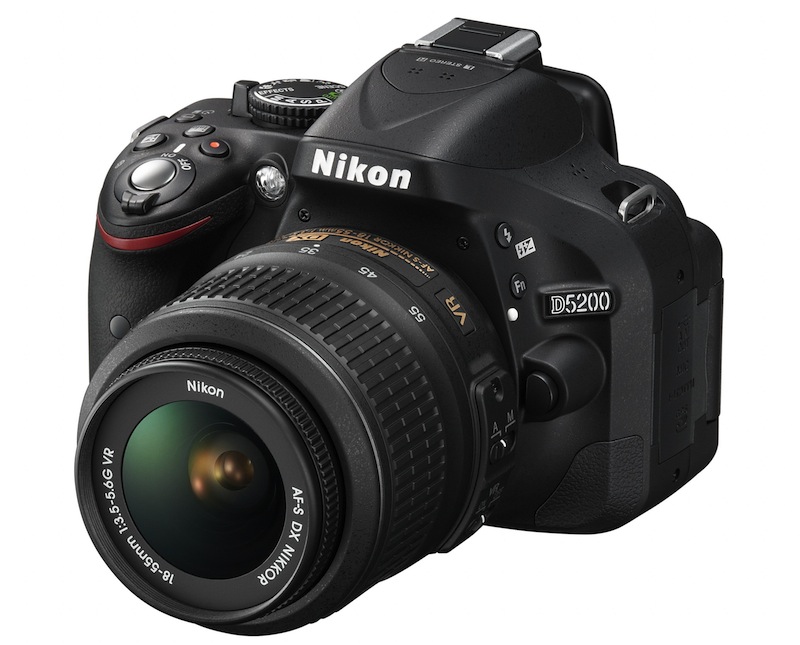
Nikon unveils D5200 DSLR, borrows from pricier D7000

It's been a busy year for Nikon's DSLR range, with the Japanese camera company today announcing its fifth model since January. The new D5200 shooter is an improved version of the D5100 and incorporates several features found on Nikon's more advanced D7000 device.

Nikon unveiled the latest addition to its DSLR range on Tuesday. The D5200 is an improved version of the D5100 that it released 18 months ago, though the earlier model will continue to roll off the production line – for the time being, at least.

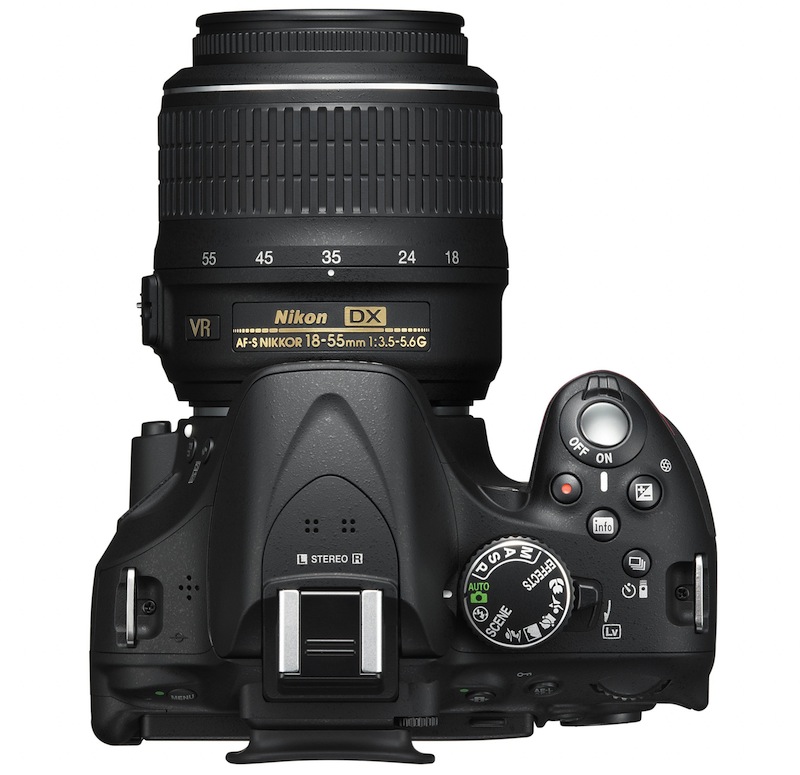
The new consumer-level DSLR shooter pulls a number of features from Nikon’s pricier D7000 camera, including its 39-point autofocus system (up from the 11 points found on the D5100) and 2016-pixel RGB metering sensor.

Buyers of the new camera might want to consider investing in some beefy SDHC/SDXC cards and hefty external hard drive, with its new super-sized 24.1-megapixel APS-C sensor guaranteeing snap-happy photographers rapid memory usage with the large picture files the camera will be serving up.

The frames-per-second rate of the D5200 shows a slight improvement over the D5100, increasing from four shots to five thanks to its new Expeed 3 processor.

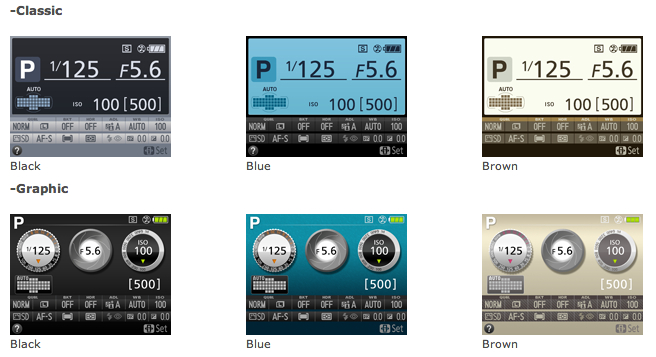
For camera operation, Nikon is promising that the device’s newly designed graphical user interface will be “easier and more intuitive” to operate than previous versions, with ‘classic’ or ‘graphic’ options to choose from.

Anyone wanting to make use of its 1080p movie capabilities can now shoot at rates of up to 60 fps, and will also be able to utilize its new built-in stereo microphone for improved sound over the older D5100.

Owners of iOS and Android devices who want to receive pictures wirelessly from the camera can do so with the optional WU-1a adapter, which also allows remote shutter control.

As with the older model, the new mid-range camera incorporates a 921k-dot TFT LCD screen that flips out, twists and turns, making it more likely you’ll get the picture you’re after when shooting at arms’ length over the top of people’s heads.

For those who prefer a dash of color with their camera bodies instead of the usual black, the Japanese camera giant is offering the D5200 in two other flavors – bronze and red.

Pricing for the new device hasn’t yet been confirmed, though it’s expected to arrive in stores in December.


Source : digitaltrends[dot]com

Nov 5, 2012

Nikon announces D5200 mid-range DSLR

Nikon has announced a new mid-range DSLR – The D5200 – that bridges the gap between the company’s aging D5100 and D7000 models. The D5200 looks similar to the D5100 but comes with a whole bunch of updates, including a new 24.1 megapixel APS-C CMOS sensor.

Inside there is a new 39-point AF system, along with an EXPEED 3 processor that allows the camera to capture up to 5 fps. There is also a new 2,016-pixel RGB metering sensor for better exposure, autofocus and white balance. The camera also records videos up to 60fps in 1080i in stereo sound.

On the back is a 3.0-inch, 921k dot fully-articulated LCD that shows an updated UI over the previous models. The camera is compatible with Nikon’s optional GPS and WI-Fi model and the latter allows you to control the camera remotely using an iOS or Android device.

Unfortunately, no pricing or availability information has been revealed so far.


Source : blog[dot]gsmarena[dot]com

Oct 19, 2012

Prototype E Ink Android phone puts your AMOLED screen to shame (but only in direct sunlight)

Onyx E Ink Smartphone

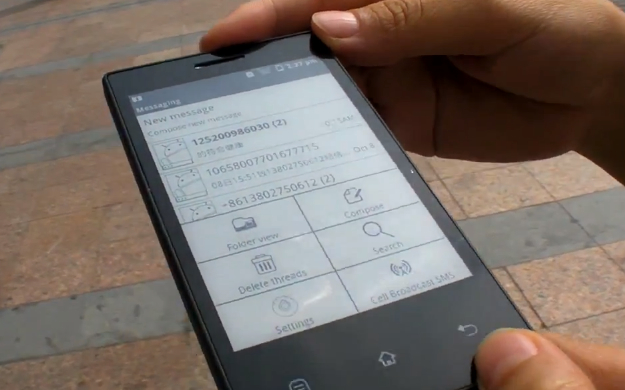
Onyx International, a company known for its range of e-readers, has shown off a prototype Android smartphone with an E Ink display. While the outdoor legibility and battery life are both excellent, the screen does let it down in other areas.

As every owner knows only too well, smartphone screens are difficult to view in direct sunlight, and while pushing the brightness up to maximum can help, it doesn’t do wonders for the battery life.

Here’s an interesting solution to the problem from a company named Onyx International, a smartphone with an E Ink screen. Onyx has plenty of experience in the world of E Ink screens, as it produces the Boox series of e-readers. The handset is only a prototype at the moment, but you can see a working version in the video below, where its screen is compared to a Galaxy Nexus.

The result is spectacular, as the Nexus device just looks like it’s turned off the entire time, while the Onyx phone’s display is crisp and sharp, despite being viewed outdoors. This probably won’t come as a surprise to anyone who has used an e-reader over the past few years, and the superior performance of an E Ink screen in sunlight formed the basis of a recent Amazon Kindle ad campaign.

Surprisingly, the Onyx phone runs Google Android, which has been extensively modified to run on a monochrome screen, but as you can see, the core functionality is still there. Because E Ink screens only take little sips of battery power, the standby time on the prototype is a week. Try that on any other smartphone.

There are, however, one or two little drawbacks. E Ink displays aren’t known for their speed, and sure enough the refresh rate is terribly slow, meaning any multimedia or gaming would be impossible. Viewing text webpages is good though.

While it’s an impressive technical feat and the use of an E Ink screen on a phone certainly has its benefits, the thought of enduring those long refresh times and not being able to do the things that almost all other smartphones can do, would probably make ownership too frustrating. After all, If I wanted a long standby time, a monochrome screen and little else, I’d buy a basic feature phone.

Take a look at the video showing the phone in action and see what you think.


Source : digitaltrends[dot]com

Oct 11, 2012

Samsung’s Galaxy S3 Mini is official, but is it worthy of the name?

Samsung Galaxy S3 Mini

As expected, Samsung has announced the Galaxy S3 Mini, a mid-range Android 4.1 smartphone that has a similar design to its big brother.

Samsung has announced the Galaxy S3 Mini, just as promised by the company’s mobile communications boss yesterday, but can it live up to our expectations, especially as it shares the same name as one of the very best Android smartphones on the market?

The answer to that question very much depends on your expectations, and if they’ve been kept in check. Let’s put it this way, it’s not a Galaxy S3 in a slightly smaller body, but a small phone aimed at a different buyer. Here’s what it’s all about.

Design-wise, it’s very close to its big brother, with the same “natural” flowing edges, rounded corners and smooth rear panel. No lawsuit over the design of this one, then. So how mini is the Mini? It measures 121 x 63 x 9.8mm and weighs 111 grams, so it’s a touch larger than an iPhone 4S, but noticeably smaller than the full-size S3’s 136 x 70 x 8.6mm dimensions and 133 gram weight.

Inside is a dual-core, 1Ghz ST-Ericsson NovaThor processor, with 1GB of RAM and either 8GB or 16GB of internal storage memory. As expected, the Super AMOLED screen measures 4-inches and has a 480 x 800 pixel resolution, while the camera has 5-megapixels, 720p video recording and an LED flash. There’s also a VGA video call camera above the screen.

Samsung Galaxy S3 Mini RearAndroid 4.1 onboard

The good news is the phone will come with Android 4.1 Jelly Bean, so there won’t be any waiting around for Samsung to issue an update, plus there’s the TouchWiz user interface and some of the cool software features from more expensive Galaxy hardware, such as S Voice, Direct Call and Smart Stay. Other features include NFC, DLNA, GPS, a microSD card slot and a 1500mAh battery.

So, the Galaxy S3 Mini is a concoction of the Galaxy S3 and the Galaxy S Advance. Many will bemoan the lack of 4G — although it does support HSDPA and HSUPA — and the processor missing two more cores, but those are features for upper range phones, not a solid mid-ranger like the S3 Mini.

Using the S3 title is certainly a win for the marketing team, but the S3 Mini is far from being an embarrassment to its good name; after all, the design was, and still is, a winner. Plus, Samsung isn’t wrong, in stature it is a miniature S3.

The more sensible spec also means a more sensible price tag. While Samsung hasn’t talked about the cost just yet, Clove Technology has put a SIM-free S3 Mini up for pre-order in the UK for £298, or $477, which is about £120/$192 less than the full-size S3.

Samsung has remained quiet on availability too, but Vodafone UK has tweeted that the device is coming soon to its network. There’s no word on a US release at this time.


Source : digitaltrends[dot]com

Acer joins the Windows 8 party with touchscreen Aspire notebooks and ultrabooks

Acer M5-481T Front and Rear

Acer has announced a range of new Aspire V5 and M5 Windows 8 machines, including touchscreen notebooks and ultrabooks.

Vizio isn’t the only PC manufacturer making news today by adding Windows 8 powered devices to its range, as Acer has now joined the fray with ultrabooks and notebooks using Microsoft’s new operating system. There’s lots to go through here, so make yourselves comfortable.

We’re starting with Acer’s Aspire V5 Series laptops, of which there are three new models — the 11.6-inch Aspire V5-171, the 14-inch Aspire V5-471 and the 15.6-inch Aspire V5-571. Information on the 11.6-inch Aspire is thin on the ground at the moment, with the press release concentrating on the two larger PCs.

This is probably because they both have touchscreens to accompany Windows 8, complete with 10-finger multi-touch support, plus an oversized trackpad beneath the keyboard, in case you don’t feel like a stretch. They’re equipped with either an Intel Core i3, Core i5 or Core i7 processor, all of which are third-generation chips, and the screens are all 16:9, backlit LED panels.

Acer V5-571P FrontThe 14-inch and 15.6-inch notebooks come with the option of a 500GB or 750GB hard drive, plus a built-in DVD burner, and other features such as a 1.3 megapixel webcam, DLNA connectivity, Bluetooth 4.0 and USB 3.0 ports. Acer also boasts of a feature called Acer Instant Connect, which allows the computer to join a Wi-Fi network in 2.5 seconds; four times quicker than other methods.

While not as thin as an ultrabook, Acer says the new V5 notebooks are 30-percent thinner than “previous value-based notebooks,” but fails to provide an actual figure. Even the weights are estimates at this point, with the 11.6-inch V5 being “about” 3 lbs/1.36 kg.

If the 14-inch or 15.6-inch Aspires have caught your eye, then you’ll be pleased to know that prices start at $749, but expect to pay considerably more for the 15.6-inch model with a speedier chip inside. Non-touchscreen version will also be sold, and they start at $499, but no price has been provided for the 11.6-inch Aspire V5.

Acer M5 ultrabooks only at Best Buy

Next, Acer has two new Aspire M5 ultrabooks, but you’re going to have to work harder to find these, as they’re exclusive to Best Buy stores. You’ll be able to choose between the 14-inch Aspire M5-481PT and the 15.6-inch Aspire M5-581T, both of which are constructed from aluminum and have a “minimalist and modern look.”

Again, no dimensions are provided, but the 14-inch M5 weighs 4.6 lbs/ 2.08 kgs, the same as the 14.6-inch V5 mentioned above. Battery life is said to be 8 hours on a single charge, and the PowerSmart cells will last three times longer than regular notebook batteries, thanks to their ability to maintain a high level of capacity, even after a thousand cycles.

The 14-inch M5 has a touchscreen and like the V5 models, it recognizes 10-finger gestures, while the 15.6-inch M5 has a standard non-touch screen. Inside each one is a third-generation Intel Core i5 processor, along with a 500GB hard drive and a 20GB SSD for a 2 second wake-from-sleep time. Other features include a backlit keyboard, USB 3.0 ports, HDMI-out and a DVD drive.

If you want the touchscreen, 14-inch Aspire M5, it starts from $799, while its larger, non-touch sister machine is slightly cheaper at $699. All Acer’s new Windows 8 machines will be on sale across the US from October 26.


Source : digitaltrends[dot]com

Lenovo to build on PC success with international smartphone release, leaves HP in its dust

Lenovo K890

Research indicates Lenovo has become the world's number one PC manufacturer, as the company announces plans to expand its smartphone range.

Lenovo is riding a wave of success at the moment, after announcing some exciting Windows 8 tablets, and now it appears the company has become the world’s number one PC manufacturer, and is preparing to release its smartphone range internationally too.

Research firm Gartner has released data that shows Lenovo has pushed past Hewlett-Packard to take the number one spot, and the figures read like this: HP can claim a 15.5-percent global market share, with 13.55 million units shipped, while Lenovo has a 15.7-percent market share with 13.77 million units heading out the door this quarter.

Perhaps more importantly, Gartner shows HP’s sales as down 16.4-percent on last year, while Lenovo is up by just under 10-percent. If you had to choose a direction as a company, you’d want to be the one going up.

According to Reuters, researchers from IDC still put Lenovo ahead of HP, with market shares of 15.7 and 15.9-percent respectively. HP told them that IDC’s report was “more expansive,” but then, they would say that. Almost regardless of who’s right today, the trend certainly indicates the position swap will happen soon.

HP’s CEO Meg Whitman has been quoted as saying the company is in the first year of a five-year restructuring plan, but despite the much-publicized downturn in PC sales — IDC says global sales have dropped by 8.6-percent since July — it still hasn’t made up its mind about re-entering the smartphone and tablet market. Recent reports seem to indicate confusion regarding this market segment within HP.

Lenovo to enter international smartphone market

Lenovo feels rather differently. It already produces smartphones for a variety of Eastern markets and in June this year, overtook both Nokia and Huawei to take second place in the Chinese market. Perhaps most tellingly — and a point HP needs to hear — is that its phone sales surpassed that of its PC sales for the first time there too.

It’s not just low-end hardware the company produces either, as it introduced the LePhone K860 in August, which has a 5-inch display with a 720p resolution, a quad-core processor (actually Samsung’s Exynos 4 Quad, also seen in the Galaxy S3), Android 4.0 and an 8-megapixel camera. It’s destined for Japan sometime later this year.

The momentum is there for Lenovo, and it’s already producing some interesting hardware, so it’s no surprise to see the following message posted on its Facebook page: “We won’t stop at laptops and tablets. For the first time, Lenovo is making plans to sell smartphones outside China.”

Introducing new hardware into the already massively competitive US and European markets isn’t going to be easy, but Lenovo knows it has little choice. Besides, it can always look at the lucrative African, Russian and South American markets initially, before hitting the rest of Europe and the US with devices such as the K860.

Lenovo hasn’t provided any further details, and we’d be surprised to see any releases this year, but it’s still a very positive step from a highly motivated company. Whether HP will respond remains to be seen.


Source : digitaltrends[dot]com

Oct 10, 2012

Apple launches new iPod ad, lots of colors and bouncing

ipod ad

Apple unveiled a snappy new ad for its refreshed iPod devices on Wednesday highlighting the range of colors on offer.

As Apple begins shipping the first batch of orders for its refreshed iPod range of media players to expectant customers around the world, the tech company has launched a new ad called ‘Bounce’ featuring the new devices.

The 30-second slot, posted on YouTube on Wednesday night and set to air on TV, features a bunch of iPods (touches, nanos and shuffles) bouncing around to a funky track called Yeah Yeah by London-based singer Willy Moon. It’s pretty, slick, and quick, and you can check it out below.

Apple unveiled a new iPod touch last month, featuring a larger 4-inch screen identical in size to that of the iPhone 5. Compared to its predecessor, the updated fifth-generation device is slimmer and lighter, and sports a vastly improved 5-megapixel camera. More RAM and a faster processor make for a much zippier device compared to earlier touches, too. It also comes in six colors – no longer just black and white – a feature that forms the basis of the new ad.

The new seventh-generation iPod nano, described as the thinnest nano to date, has done away with the small square design of its predecessor and returned to the longer look of the fifth-generation nano. An extra color has been added to the range, too.

As for the shuffle, three new colors have been added to the range.


Source : digitaltrends[dot]com

The QWERTY is back with the LG Mach

LG Mach

Sprint has announced the LG Mach, a new QWERTY slider Android smartphone that sits just below the Motorola Photon Q in the network's range.

The QWERTY slider form factor still has its fans, and Sprint wants to make sure they’re well catered for on its network, so it has introduced the new LG Mach. Now, with a name like that, you’re probably expecting incredible performance, but while the Mach isn’t a basic phone, it’s not quite up there with the range-toppers of today.

What we’ve got is a 4-inch touchscreen with an 800 x 480 pixel resolution, which slides to the side to reveal a big QWERTY keyboard, providing users with the best of both worlds. You’ll have to be prepared to compromise on size and weight when comparing it to its touch-only peers though, as the LG Mach is a chunky beast at 12mm thick and 168 grams.

Deep inside the phone is a 1.2GHz, dual-core processor and 1GB of RAM, while the operating system is Android 4.0 Ice Cream Sandwich. Although LG doesn’t talk about it in the press release, CNet.com says the Mach will be upgradeable to Android 4.1 Jelly Bean, but doesn’t offer any timescale.

There is a 5-megapixel camera on the rear of the phone, which can also shoot 1080p video, plus a basic 0.3 megapixel forward-facing video call lens above the screen. LG makes a point of highlighting the Mach’s eco-friendliness, saying it’s 56-percent recyclable, and has been given the seal of approval by a couple of environmental foundations too.

The Mach will connect to Sprint’s 4G LTE network and other features include Bluetooth 4.0, a 1700mAh battery, 8GB of internal storage memory, GPS, a microSD card slot and NFC.

As unusual as the LG Mach’s form factor may be these days, it’s not alone on the market, and one of its closest rivals is also offered through Sprint. The Motorola Photon Q has a slightly larger screen at 4.3-inches, an 8-megapixel camera and a 1.5GHz, dual-core processor, so the LG Mach will likely come in at a slightly lower price. It does win over in one key area though, as the Mach is ever-so slightly lighter and slimmer than the Photon Q.

Sprint hasn’t provided any release information or pricing structure at all, so if you’re interested in the phone, you’ll need a little patience.


Source : digitaltrends[dot]com

Oct 1, 2012

Sharp begins producing 5-inch, 1080p displays, as full-HD mobile devices take another step towards reality

1080p Generic Phone

Sharp has announced it has started production of a 5-inch, 1080p display, which will be coming to a mobile device near you soon.

Many of the current top-of-the-range smartphones — iPhone 5 apart — have screens with a 1280 x 768 pixel resolution or similar, which is good enough to be labelled as HD. However, just as it did with flat screen TVs, 720p is about to be replaced by 1080p — as Sharp has announced that it has started production of its own 5-inch, full-HD smartphone displays.

The new panel boasts a resolution of 1920 x 1080 and a pixel density of 443ppi. As a comparison, the Samsung Galaxy S3’s 4.8-inch display has a resolution of 1280 x 720 and a pixel density of 306ppi, while the 4-inch iPhone 5 has 1136 x 640 pixels and 326ppi.

Sharp may say its 5-inch screen is headed for smartphones, but any device with a display that large usually gets put in the smartphone/tablet hybrid category, joining the likes of the Galaxy Note, Note 2 and the LG Optimus Vu.

The benefits of such a high resolution screen almost go without saying, but Sharp states that it’ll bring “crisp text, super clear maps and amazingly real HD images.” Sharp doesn’t mention on which devices its new super-screen will appear, but along with making its own smartphones, Sharp also supplies screens to other manufacturers too.

It’s also not the only one to have announced plans for a 1080p mobile screen, as LG is also busy with its own full-HD panel, and Oppo has teased us with the Find 5, a 5-inch device with a 1080p display. HTC is also rumored to be preparing the One X5, a tablet/smartphone hybrid with a 5-inch, 1080p screen too.

The mobile industry loves big numbers, as they help convince prospective buyers that one device is “better” than another, and a 1080p screen with 443ppi is about as impressive as screens can get. Questions will no doubt be raised concerning just how much difference a 1080p resolution and a 443ppi density will make on a screen this small, but answers will have to wait until the first device with such a screen goes on sale — and judging by the increase in activity from these companies, we shouldn’t have that long to wait.

Sharp’s press release notes that the screen will be displayed at the CEATEC show — a CES-style technology exhibition — in Japan, which starts on October 2 and will run to October 6.


Source : digitaltrends[dot]com

Sep 16, 2012

Steve Ballmer suggests Surface tablet will be priced similar to the iPad

Microsoft Surface tablet and Steve Ballmer

Steve Ballmer hinted that Microsoft's yet-to-be-released Surface tablet would most likely fall within the same price range as Apple's iPad.

Squashing our collective dreams of a $200 Surface tablet, Microsoft CEO Steven Ballmer implied a price more comparable to the iPad than the Kindle Fire in a recent interview with Seattle Times.

Ballmer said the “sweet spot” for the PC market runs somewhere between $300 and $800. Not exactly a concrete price for the company’s first Windows 8 tablet, but at least it’s a ballpark number — even if it varies by $500.

Microsoft’s CEO elaborates on his opinions of budget-minded tablets in the interview:

“I think most people would tell you that the iPad is not a superexpensive device. … (When) people offer cheaper, they do less. They look less good, they’re chintzier, they’re cheaper.

If you say to somebody, would you use one of the 7-inch tablets, would somebody ever use a Kindle (Kindle Fire, $199) to do their homework? The answer is no; you never would. It’s just not a good enough product. It doesn’t mean you might not read a book on it….”

We’re not surprised Microsoft is holding off on naming a specific price for its upcoming tablet. Having an undisclosed price provides a market advantage, a chance to see what the iPad Mini will cost if its released next month. Then Microsoft can release the Surface with a competitive price that truly reflects the market.

Right now, you can get an iPad for anywhere between $400 to $800, depending on which generation, storage size, and connectivity options you choose. Based on this pricing, our guess would have the Surface RT priced around the lower side of the iPad pricing. Meanwhile, the Surface Pro — aimed at a more professional market — would cap out near the high-end of that spectrum.

If Microsoft wanted to be extra gutsy, it could always undercut the iPad and price the base model of the Surface RT at less than $400, but more than $200. That way it could still be marketed as a superior product to 7-inch tablets — as Ballmer seems to want — while still being more affordable than the cheapest iPad.

Regardless of pricing, however, Ballmer seems to have complete faith in the success of Windows 8 as a whole.

“I’m not paid to have doubts. (Laughs.) I don’t have any. It’s a fantastic product,” Ballmer told Seattle Times in the same interview.

What do you think the ideal price for Microsoft’s Surface tablet would be? Do you think it will be a success no matter what it’s priced at?


Source : digitaltrends[dot]com

Sep 14, 2012

Concept Active Tourer heralds front-wheel drive future for BMW

BMW Concept Active Tourer

BMW will show the Concept Active Tourer at the Paris Motor Show, and it's the basis for a future range of front wheel drive cars.

This is BMW’s Concept Active Tourer, which will make its official debut at the Paris Motor Show, and it’s a very important vehicle for the German manufacturer. Why? Primarily because the platform on which it’s built will go on to form the basis of the next-generation Mini, and a new range of entry-level BMWs in 2014.

Also, it’s the first car to showoff BMW’s new, super-frugal, three-cylinder, 1.5-liter turbocharged motor; plus the concept is a plug-in hybrid that uses the same system seen in the gorgeous BMW i8.

However, there’s another reason too, not that BMW will shout about it. The Concept Active Tourer is front-wheel drive. Yes, the three-cylinder engine powers the front wheels, and it paves the way for the first production front-wheel drive BMWs.

In fairness, BMW is easing us in gently, as the electric motor drives the rear-wheels, making the Concept Active Tourer four-wheel drive; except with 134 horsepower through the front wheels and only 67 through the rears, the bias is the opposite of the aforementioned i8.

BMW Concept Active Tourer Rear

Back to that petrol engine for a moment though. It’s mounted transversely rather than longitudinally, and is essentially the same as that in the i8; except here, the 1.5 turbo will produce 134 horsepower for a 0-60 time of less than 8-seconds and a top speed of around 120 miles-per-hour.

Economy is the order of the day, and when the petrol and electric motor — which has a standalone range of 19 miles — work together, BMW estimates a minimum of 113 miles-per-gallon while producing less than 60g/km of CO2. Cleverly, the hybrid motor talks to the satellite navigation, deciding between them which will be the most efficient way of driving on upcoming roads.

Features on the concept car include a “Cool Shade” panoramic roof, which has an active particle layer that goes from opaque to clear at the touch of a button, 20-inch rims, a color heads-up display and a 10-inch touchscreen control panel.

Aficionados may balk at the thought of a front-wheel drive BMW, raise their eyebrows at a transversely-mounted engine, and fondly recall a time when the company only used front-wheel drive in ads to mock its rivals. The move is a sign of the times though, as production costs will fall and BMW will be able to produce more small cars.

As for the Concept Active Tourer, it’ll eventually become a Mercedes B-Class competitor, and is almost certainly our first proper look at the previously rumored 1-Series GT.


Source : digitaltrends[dot]com

Sep 10, 2012

Will new iPods join the iPhone at Apple’s September 12 event?

ipod-nano-2011-update

Apple may reveal a range of new iPods at its event on September 12, and given the amount if iPhone leaks, they could be the only surprise.

Apple’s talk about “doubling down” on secrecy appears to have been bluster, as a steady stream of leaks over the past few months have built an almost complete picture of what many believe to be the next iPhone.

There’s so much information out there, that its big reveal on September 12 could be less exciting than Apple events of old. Provided that is, the leaks really do relate to the new iPhone, and aren’t part of an elaborate smokescreen to obfuscate the true new device.

If that’s the case, then Tim Cook and his team will have done an impressive job of fooling us all, but if it’s not, then will the event hold any surprises at all?

Leaving aside the prospect of an iPad Mini, what about the iPod range? 9to5mac.com suggests a new Nano and Shuffle could join the new iPhone at the Yerba Buena Center this week, along with the possibility of a third — potentially new — iPod model too.

The report says the new Nano and Shuffle will come in various colors, and that one — presumably the Nano — will come with a choice of memory capacities, while the other will only have one option. Nothing is known about the mystery third device.

Apple’s last Nano refresh was in October 2011, but the current seventh-generation Nano is almost identical to the sixth-generation device, with the differences between them almost solely software-based and applicable to the older 2010 model too. Apple doesn’t even list the seventh-gen Nano as a device on its own site, preferring to stick with the sixth-generation Nano introduced in 2010.

The Nano is perfectly placed for an update then, and as Apple combined the iPhone and iPod launch for its October event last year, it’s not a stretch to see them doing the same this year.

The good thing is, we’ve not seen or heard very much about any new iPods — bar a version of the Nano sporting a camera at the beginning of the year –  so even if the iPhone looks familiar when it makes its debut, at least they’ll be a surprise.


Source : digitaltrends[dot]com
Sep 7, 2012

Land Rover adds fuel economy to the Range Rover’s resume with 2013 hybrid

2013 Land Rover Range Rover front three-quarter view

The Range Rover hybrid is projected to get 45 mpg on the European cycle, and it won't be making the trip across the pond.

The Land Rover Range Rover has never been a car for hippies, thanks to its big, thirsty V8 and considerable girth. Admittedly, there was never a reason to build a fuel-efficient luxury SUV. Land Rover is giving it a shot though, with a hybrid Range Rover based on the updated 2013 model.

The hybrid will combine Land Rover’s 3.0-liter turbodiesel V6 with an electric motor and 1.7 kWh lithium ion battery pack, which will be housed under the SUV’s floor. Despite the Range Rover’s heavy footprint and blunt aerodynamics, Land Rover says the Range Rover hybrid will do 0 to 60 mph in under seven seconds.

The all-important fuel economy number is 45 mpg, on the European cycle, with emissions of 169 g/km of carbon dioxide. While a big SUV with the fuel economy of a small hatchback sounds incredible, keep in mind that cars tend to do better in European testing than EPA testing; Europe also uses Imperial gallons.

The Range Rover’s only conceivable competition are luxury SUVs like the Cadillac Escalade Hybrid and Porsche Cayenne S Hybrid, both of which are rated at 21 combined mpg on the EPA cycle.

The Range Rover hybrid will have one advantage over all other hybrids, though: it’s a Range Rover. That means unparalleled off-road capability, which should make an interesting test of hybrid technology. A hybrid is very fuel efficient while crawling through city traffic, but what about while crawling through the Amazon rainforest?

Unfortunately, this will be a moot point for American buyers. Land Rover will not sell the Range Rover hybrid in North America, because getting its turbodiesel V6 to comply with American regulations would require too many expensive modifications.

Americans will have to stick with the gas guzzling 5.0-liter V8, attached to the same eight-speed automatic transmission as the hybrid. However, Land Rover expects significant fuel economy gains for the conventional Range Rover, owing to its new aluminum body and the eight-speed transmission. The current Range Rover is rated at 12 mpg city and 18 mpg highway.

The Range Rover may not be the most politically correct car but, with or without a hybrid version, it’s still an impressive piece of kit. People buy these beasts for their luxury, off-road ability, and swagger, not fuel economy. Still, it would be nice to have it all.


Source : digitaltrends[dot]com

Selected Amazon Kindle Fire tablets go on sale in Europe, but are they enough to fight off the competition?

Amazon has launched a selection of its new Kindle Fire range of tablets in Europe, but it may not be enough to beat the competition.

Amazon has done a great job with its new Kindle Fire HD tablets, and an even better job of capturing the headlines, as the launch prompted everything from comparisons between the new tablet and its competitors, to much talk of how the aggressive pricing will hurt everyone from Apple to Microsoft.

At first glance, Amazon has announced a series of winning products, neatly avoided the thorny issue of advertising — sorry “special offers” — and is undoubtedly listening to the sound of virtual cash registers ringing right now.

However, that old Amazon problem — international distribution of its hardware — is still exactly that: A problem.

This stretches back to the original Kindle e-reader, which took a couple of generations to make it elsewhere in the world, and now continues with the Kindle Fire and most importantly, the 8.9-inch Kindle Fire HD.

Here’s the good news. Amazon has done the decent thing and launched the updated Kindle Fire in five international stores — the UK, France, Germany, Italy and Spain. All these countries will also get the 7-inch Kindle Fire HD.

Pricing looks like this: The Kindle Fire will be sold for £129/159 Euros, the 16GB 7-inch Kindle Fire HD for £159/199 Euros, and the 32GB for £199/249 Euros. They’re all up for pre-order now, with a release date of October 25.

Limited international availability.

Notice anything about those lists? Right, there’s no 8.9-inch Kindle Fire HD, nor is there a new Kindle Paperwhite. Also missing is Canada, as it appears it won’t get any new devices at all, and Asia too.

While the Kindle Fire is cheap — and with a 1024 x 600 pixel resolution screen, it wants to be — it’s the Fire HD that will be most desired. Except, the 7-inch model isn’t really that desirable. It has a 1280 x 800 pixel resolution and a dual-core processor, plus features regular folk won’t care about, such as dual-band, twin antenna Wi-Fi and Dolby Digital Plus.

Without the exciting 8.9-inch Kindle Fire HD at the top of the list, will anyone be rushing to buy a 7-inch Fire over the Google Nexus 7? After all, the Nexus 7 is the same price and has the same screen size and resolution, a quad-core processor, the much-improved and completely un-abused Android 4.1 OS, no forced advertising, movie rentals, plus at the tap of a button, a free Kindle and Amazon app store app too. The Kindle Fire HD has twice the memory for the same price, but that’s all.

What’s more, the Nexus 7 is on sale in Canada and some European countries, and has been for a while, plus it has recently gone up for pre-order in parts of Asia.

Regarding the Kindle Paperwhite, which is exclusive to the US Amazon store at the moment, Kobo’s Glo will become even more tempting to international buyers now.

This will inevitably all change in the future, and Amazon’s Jeff Bezos has made it clear that he wants to “get into as many places as we possibly can over time.” But for now, while Amazon is welcoming its US customers with open arms, it’s nudging its international customers into the equally welcoming arms of its competitors.


Source : digitaltrends[dot]com

Sep 2, 2012

Nokia announces Purity Pro wireless Bluetooth headset

Last year Nokia announced a couple of audio products as part of the new Nokia Purity range, designed in collaboration with Monster Cable, known for their famous Beats by Dr. Dre range of audio products. That range now has a new member, in the form of the Nokia Purity Pro Wireless Stereo headset.

The Purity Pro is a wireless stereo headset that uses Bluetooth for audio transmission, although you can also hook it up using a cable if your battery runs out. The Purity Pro has NFC built-in, so you can tap your Nokia phone with NFC to pair instantly or you can use the traditional pairing method. It also features active noise cancellation that cancels out the background noise.

The headset features a foldable design that allows you to carry them around easily. Folding and unfolding the headset automatically switches it off and on respectively.

The Purity Pro headset will be sold in four colors, black, red, yellow and white for approximately €299 ($376) in Q4, 2012.


Source : blog[dot]gsmarena[dot]com

Aug 28, 2012

Samsung announces Windows 8 based Series 7 and Series 5 AIOs

Samsung has announced three new members of the Series 7 and Series 5 range of All-in-One (AIO) desktop computers running Windows 8. The Series 7 includes a 27-inch and a 23-inch model whereas the Series 5 includes a 21-inch model.

All three models come with a 10-point multi-touch display that supports the full range of gestures you find in Windows 8. They also all have a resolution of 1920 x 1080.

The 27-inch model comes with a Intel’s third generation Core i7 processor 3770T processor, 8GB of RAM, discrete AMD Radeon HD 7850M graphics and 1TB hard drive. It’s priced at $1,699.

The 23-inch model comes with Intel Core i5 3470T processor with Intel integrated graphics, 6GB of RAM and 1TB hard drive. This one costs $1,099.

Finally, the 21-inch model (pictured above) has an Intel Core i3 processor with Intel integrated graphics, 4GB RAM and a 500GB hard drive. This one will set you back by $749.

All machines come with USB 3.0, Bluetooth 4.0, Wi-Fi, 1.3 megapixel front camera, wireless keyboard/mouse combo and Windows 8 64-bit. They will go on sale alongside Windows 8 on October 26.


Source : blog[dot]gsmarena[dot]com

Aug 24, 2012

GM’s knuckles rapped over misleading Vauxhall Ampera UK TV ad

Vauxhall Ampera TV Spot

Vauxhall has had its TV advert for the Ampera banned in the UK, after its 360-mile all-electric range claim was deemed to be misleading.

A television advert for the Vauxhall Ampera, or Chevrolet Volt as it’s known in the USA, has been deemed to be misleading by the Advertising Standards Agency in the UK.

It’s a simple advert, comparing the Ampera to several athlete’s incredible physical achievements, and closes with the onscreen statement “Ampera, up to 360 mile range,” while narrator Patrick Stewart says “Driving electricity further” as the car disappears into the distance.

The combination of those statements, plus the more subtle presence of power lines and the healthy, wooded area through which the Ampera drives, suggests the car is a lean, green, solely electrically powered machine.

It also led three people to complain to the ASA that the advert was misleading. The reason? It suggests the car can travel 360 miles using only electricity.

This is true, but not quite accurate, as after between 38 and 50 miles, the car switches from electric power to something called a “range extender,” which is a gas-driven generator. On a full tank, the car can then run for another 310-plus miles before requiring some kind of fuel — be it electricity or gas to generate it.

Heated debate

Vauxhall argues that since the engine isn’t connected to the wheels, its small-print at the base of the screen clears them of any deception. The small-print says “Comparison based on electric vehicles and extended-range electric vehicles driven electrically at all times, even when an additional power source is generating electricity.”

While it does acknowledge the presence of a “range extender” system, not everyone knows what this means, and as there is no mention of an internal combustion engine at all, the ASA decided to uphold the complaint and ban the ad in its current form.

Vauxhall’s marketing folk will have to come up with a revised advert before it can be shown on UK TV screens again. By comparison, US adverts for the Volt include this informative spot, which describes in detail how the car works, while even the owner testimonials used the word “gas” in the small print when discussing range.

The operating range of electric cars is a subject that prompts heated debate. Nissan for example, in last year’s UK advert for the all-electric Leaf, avoided the subject altogether, while UK motoring show Top Gear famously incurred Tesla’s wrath in 2011, after it demonstrated the car’s limited range in a typically irreverent manner.

Vauxhall/GM isn’t helping the cause with this type of advert either. Range-extended electric cars are innovative and interesting, and the Ampera is a great-looking — although expensive — vehicle. Trying to attract uninformed customers this way shouldn’t really be necessary.


Source : digitaltrends[dot]com

Aug 23, 2012

2013 Land Rover LR2: The Evoque’s sensible sibling

2013 Land Rover LR2

For 2013, Land Rover's compact LR2 gets a more efficient engine and a tech upgrade, but can it compete with the more stylish Range Rover Evoque?

Land Rover’s chic Evoque is an attention-getter, but it’s not the only compact SUV in Land Rover’s stable. The company still makes the LR2, formerly know as the Freelander, which offers a more traditional (and more generic) take on the small 4×4. The LR2 gets what Land Rover calls a “premium overhaul” for 2013.

Over the years, the original Freelander’s styling has morphed to accommodate Land Rover’s new styling cues. The 2013 LR2 continues that trend with some slight tweaks; only current LR2 owners will be able to spot the differences. It gets new LED headlights with detailing that vaguely echoes the Evoque’s and LR4’s. The grille also gets some extra brightwork, and the 17-inch wheels have been redesigned.

The real news is under the hood. The 2013 LR2 gets the Si4 GTDi 2.0-liter turbocharged inline-four from the Evoque. Despite being smaller than the 2012 LR2’s 3.2-liter inline-six, the new four-banger is more powerful (240 hp and 260 lb-ft versus 230 hp and 234 lb-ft).

With two fewer cylinders, the new engine should also be more efficient. The current LR2 returns 15 mpg city and 22 mpg highway in EPA testing. The Si4 returns 19/28 mpg city/highway in the slightly lighter Evoque.

The 2013 LR2 also gets a few interior upgrades as well. A redesigned center console features a seven-inch touch screen, and owners can crank tunes through a new sound system from Meridian.

The LR2 jumps on the voice recognition bandwagon with Land Rover’s “Say What You See” system, which uses visual prompts for drivers to select with voice commands. Other convenience features include “passive start,” which allows drivers to start the car remotely (the LR2 doesn’t even have a conventional ignition key) and an optional rear view camera.2013 Land Rover LR2 interior

These changes should keep the 2013 LR2 fresh, but will they make it a competitive entry in the luxury small SUV segment? Unlike the BMW X3, Mercedes-Benz GLK, and Audi Q5, the LR2 has the off road abilities of a Land Rover. Unfortunately, so does another compact SUV.

The LR2’s nemesis may be the Evoque. Despite its less-butch looks, the Evoque has proven to be a competent off-roader. Under the skin, the LR2 and Evoque are very similar; they share a chassis (and now) an engine. However, The Evoque’s styling definitely makes more of an impression; it’s the perfect fashion item for Westchester or Los Angeles, where most of these SUVs dwell anyway.

The LR2’s upright roof makes it slightly larger, and much easier to get in and out of. So it makes more sense for families or people who want to use their SUV for more utilitarian purposes. In other words, the 2013 LR2 is the sensible counterpart to the Evoque.


Source : digitaltrends[dot]com

Aug 15, 2012

2013 Land Rover Range Rover gets tweaked styling and a lighter, aluminum body

2013 Land Rover Range Rover front three-quarter view

Land Rover threw out the rule book with the Evoque, but the changes to its flagship Range Rover for 2013 are more conservative.

Not everyone needs to save fuel. For those who can afford an uncompromising blend of off-road performance and luxury, the Land Rover Range Rover really is in a class of one. For 2013, Land Rover is giving this brute a refresh.

After the shockingly different Evoque, the company obviously felt that major changes to its flagship model would be too much. The 2013 Range Rover retains its classic boxy profile, but with a few adjustments. The front end used to be upright, but now it’s more rounded to bring the Range Rover in line with the Evoque. The formerly square headlights and taillights now have little tails, again, copied from the Evoque.

The 2013 model still looks like a Range Rover, and that’s why the Evoque styling cues don’t exactly jibe with the rest of the body. The vents just below the headlights look out of place too, like they were stuck on at the last minute to make the massive front bumper seem smaller.

Styling aside, the 2013 Range Rover gets several mechanical updates that should make it a more capable vehicle. The body may look the same as the 2012, but it’s completely new. Land Rover scrapped the old model’s steel monocoque for an aluminum one, which will save weight and improve fuel economy. The company says 2013 Range Rovers are 39 percent lighter than 2012s; a U.S.-spec model should be about 700 pounds lighter than last year’s model.

Under the hood, the 2013 Range Rover retains the 5.0-liter naturally aspirated and supercharged V8s from the 2012 model, with the same 510 and 375 horsepower, respectively. However, both engines are hooked up to a new transmission: an eight-speed automatic replaces the old six-speed.

The 2013 Range Rover sends its power to all four wheels through an electronic two-speed transfer case. It also gets a revised air suspension system, which can raise the SUV’s ride height on command for off-road driving.2013 Land Rover Range Rover interior

What sets the Range Rover apart from other luxury SUVs is its off-road prowess so, Land Rover will continue to offer its Terrain Response system in 2013 models. The system automatically adjusts the traction control, throttle response, and other settings based on the surface the vehicle is traveling over.

All of this will be controlled from a restyled interior. Like the exterior, the 2013 Range Rover’s interior combines traditional Range Rover design elements with some bits of the Evoque. The small Land Rover’s leather-wrapped dashboard, floating touch screen, and gear knob (first seen on the Jaguar XF) will make their way into the Range Rover. The 2013 model is also more spacious, with an extra 4.7-inches of rear legroom.

The 2013 Range Rover isn’t a dramatic departure from previous models, but there wasn’t much that needed changing. It will be officially unveiled at the Paris Motor Show in September, and it will hit American shores in December, or possibly January 2013.


Source : digitaltrends[dot]com