Pages

Showing posts with label rumors. Show all posts

Nov 9, 2012

Why would Apple move Macs to ARM processors?

Apple ARM processor mac intel

Rumors have Apple moving away from the Intel chips currently used in Macs to the ARM-based chips used in mobile devices like the iPhone and iPad. But would such a seismic shift make sense?

Apple’s Macintosh computers rely on processors from chipmaking giant Intel – just like the vast majority of the world’s PCs, notebooks, and servers. However, Apple’s iOS device line, such as the iPhone, iPads, and iPod touch, rely on processors based on designs from ARM. These chips aren’t as fast or powerful as mainstream Intel processors, but they’re cheaper and they consume far less power, making them ideal for mobile devices like smartphones and tablets.

Now, Bloomberg is citing three unidentified sources saying Apple is seriously investigating shifting Macs from Intel to ARM chips, and new developments from ARM are adding fuel to the fire.

Could Apple move Macs away from Intel to ARM-based processors? What hurdles would Apple face, and how would ARM-based Macs stack up?

Here we go again
Apple Phil Schiller A6X processor

With the original iPad back in 2010, Apple revealed it was designing its own ARM processors rather than relying on chips designed by Samsung or other manufacturers. (That first chip was the Apple A4, which quickly moved to power the iPhone 4 as well.) With Apple designing its own chips, speculation immediately mounted that the company might one day move its Macintosh computers away from Intel to its own ARM-based processors. After all, it wouldn’t be the first time Apple has changed the Mac’s processor architecture. Apple has already shifted the Mac’s processor architecture three times: from Motorola 68000s, to PowerPC, and then to Intel. If there’s a company with experience managing these transitions, it’s Apple. And each time Apple has unveiled a new processor, that speculation has started anew.

What’s different this time around?

ARM 64-bit architecture

Current ARM-based chip designs use 32-bit architectures. For now, that’s ample for most mobile and tablet applications, but one significant ramification for desktop computing is that these processors can only handle about 4GB of memory. Macs today ship with a minimum of 4GB of RAM, and many ship with  8GB, so using a 32-bit architecture just isn’t feasible for today’s desktop computers. However, last week ARM Holdings took the wraps off its Cortex-A50 series, the first ARM processors designs with a 64-bit architecture. (One of them also can claim the title as the world’s smallest 64-bit processor.) Suddenly, managing the amount of memory common in today’s desktop computers—and even high-end servers and workstations—is within reach.

ARM doesn’t make chips; it designs then, and licenses those designs to companies like Samsung, Qualcomm, and (of course) Apple. It will take time for firms to implement 64-bit designs of their own. Nobody is expecting 64-bit ARM chips to be a reality on the market for another year or 18 months. But the market is no longer holding its breath for ARM to release 64-bit designs: now, the work can begin.

It’s also worth noting Apple’s relationship with ARM is much older than its relationship with Intel. It goes all the way back to the 1980s, and Apple collaborated in early stages of ARM processor development. That resulted in Apple owning a over 40 percent of ARM, and that stake helped Apple weather its mid-1990s death spiral as it repeatedly padded its bottom line by selling ARM shares to lower its losses.

Apple is getting results

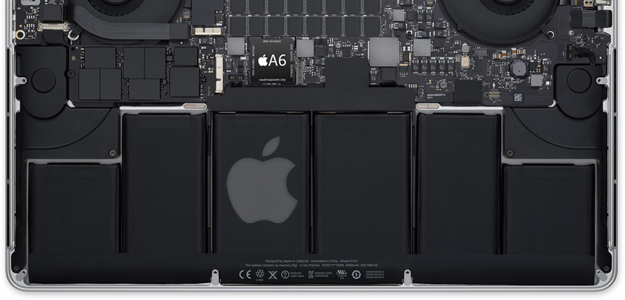
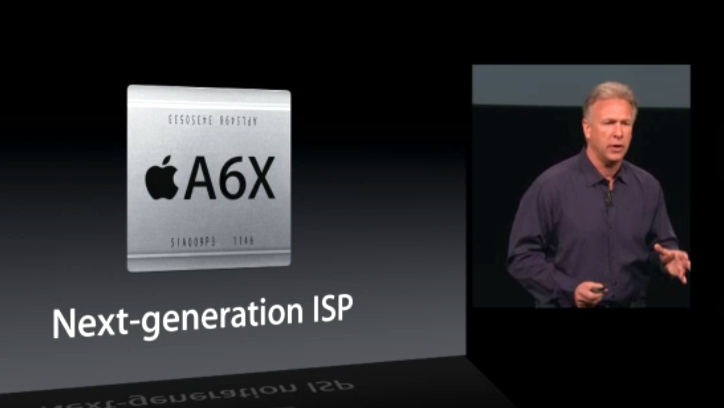
Apple’s work to design its own processors isn’t just a vanity project: It’s about getting performance and capabilities that can’t be matched by other mobile device makers using stock parts. Apple has invested heavily in acquiring chip design expertise (in part through the acquisition of PA Semi and Intrinsity. Apple has consistently been increasing the clock speed of its processor and graphics cores and getting improvements through architectural adjustments. Unveiling the latest iPad, Apple also revealed its latest A6X processor was laid out by hand, rather than trusting the details to CAD tools. The company is clearly willing to sweat the details and design processors that specifically support things like its Retina displays without sacrificing battery life compared to previous, lower-powered products. That expertise can directly translate to notebook and desktop PC designs.

New Technology group

Part of Apple’s recent executive shakeup (which saw the ouster of iOS chief Scott Forstall) was the creation of a new Technologies unit under Bob Mansfield, including Apple’s semiconductor teams, described as having “ambitious plans for the future.” Although the Technologies group is tasks with unifying all of Apple’s wireless efforts, as VP of Mac Hardware Engineering, Mansfield oversaw the development of things like Apple’s iMac and MacBook lines. While the industrial design of Macs remains the province of Jonathan Ive, actually getting them built still seems to fall on Mansfield’s shoulders, in addition to being in charge of chips.

Thinner and lighter

When Apple introduced the MacBook Air back in 2008, it was deemed almost impossibly thin, and the line continues to set the bar for ultraportable notebooks. Apple built the original MacBook Air using a custom Intel processor; one of the reasons Apple was able to beat other PC makers to the super-slim form factor was that it wasn’t using off-the-shelf parts. Apple has continued to demonstrate with the Retina MacBook Pros, ongoing MacBook Air line, and the latest iMac that its obsession with thin-and-light computer designs continues unabated. Although Intel has acknowledged Apple has has provided valuable input into its chip designs, Intel is not making custom processors for Apple, which poses a problem moving forward. It will be difficult for Apple to keep its PC products in front of the rest of the market if it’s forced to use the same off-the-shelf processors as everyone else. Design considerations alone might be incentive to Apple to start seriously looking at alternatives to Intel.

Would OS X run on ARM?

ARM Cortex A50 Big-Little

Apple bringing its OS X operating system to ARM might seem like the equivalent of Microsoft bringing Windows 8 to ARM devices in the form of Windows RT: a potential seismic shift in the product landscape. However, Apple has a head start. Its iOS operating system is based on Mac OS X, meaning the two share a large number of core technologies. Much of the groundwork for running OS X on an ARM chip already exists, and there’s long been speculation Apple has been bringing up most of OS X on ARM systems for years just as a proof of concept.

A bigger question is how well OS X would run on ARM processors: Would it deliver a reasonable desktop experience? By some benchmarks, the A6 processor Apple uses in the iPhone 5 already substantially outperforms any PowerPC notebook Apple ever made, and the A6X in the latest iPad scores even higher. And with the power available in notebooks and desktop computers (as opposed to phones and tablets), Apple could push the processors to significantly higher clockspeeds. Apple could also improve performance and keep heat levels down by adding more processor cores. That would increase the cost of each processor, but Apple’s chips are so much less expensive than Intel’s mainstream CPUs that Apple could afford to eat a bit of expense there.

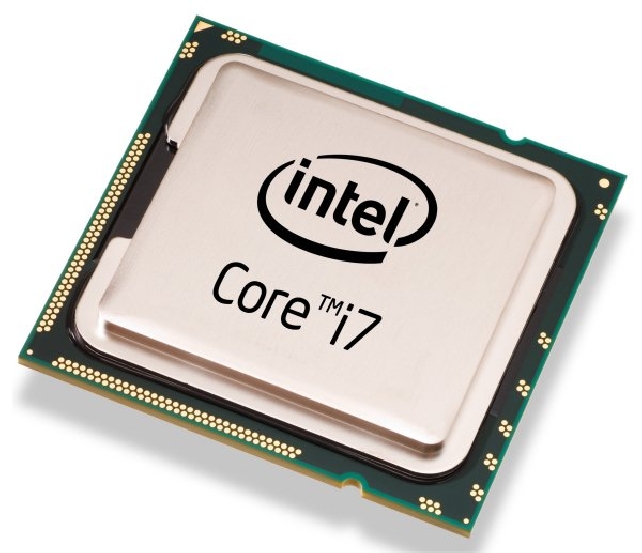
(Doubt that? Intel’s published price lists (PDF) run from $117 for a low-end Core i3 chip to $999 for a high-end Core i7. Bulk customers like Apple, Dell, Lenovo, and HP presumably get a significant discount, but the contrast is stunning: iSuppli estimates Apple pays under $20 for its A6 processor.)

Given how many people find Apple’s iOS devices totally acceptable for lightweight gaming, Web browsing, email, managing photos and entertainment like movies and music, it’s fair to guess hypothetical ARM-based Macs would be able to meet those same sorts of needs easily. On consumer notebooks and desktop systems, the real performance constraints are usually memory, storage, and networks, not the processor.

However, once one gets beyond mainstream computing needs, ARM chips aren’t going to be able to stand up to Intel in the foreseeable future. That means folks who rely on their Macs for content creation, high-end gaming, software development, and compute-intensive applications like large databases, software development, real-time digital signal processing (think musicians and DJs), would suffer from a switch to ARM processors. These are the same users who purchase Apple’s highest-priced, highest-margin Macintosh computers and constitute many of Apple’s most loyal and lucrative Macintosh customers. It seems unlikely Apple would kick them to the curb, so if Apple does move Macs to ARM-based processors, higher-end Macs are likely to stay with Intel.

Barriers to OS X on ARM
OS X Mountain Lion Messages

This doesn’t mean making OS X practical on ARM chips would be a cakewalk. Assuming Apple can indeed overcome possible performance hurdles with its own 64-bit designs down the road. Other barriers include:

Backward compatibility

Just as Windows RT can’t run old Windows software, a hypothetical ARM-based Mac wouldn’t be able to run old OS X software. In the past, Apple has always provided an emulation layer that let old software continue to run, albeit slower. Apple’s cleanest transition was from PowerPC to Intel: Its Rosetta PowerPC emulators let Mac users transition the vast majority of their existing PowerPC software to their new Intel Macs without batting an eye, letting them continue to use their software, then upgrade to new Intel versions over time.

It’s not clear that Apple could manage a transition from Intel to ARM so easily. Russia’s Elbrus Technologies recently announced an x86 emulator for ARM that can let ARM chips run software compiled for Intel processors, but it can only deliver about 40 percent of the ARM processor’s performance through emulation. Elbrus thinks it can bring that level up to 80 percent by the end of 2014, but considering ARM chips are already slower to begin with, that may still mean sluggish performance. The alternative is Microsoft’s approach: Bar legacy software outright.

A desktop version of iOS?

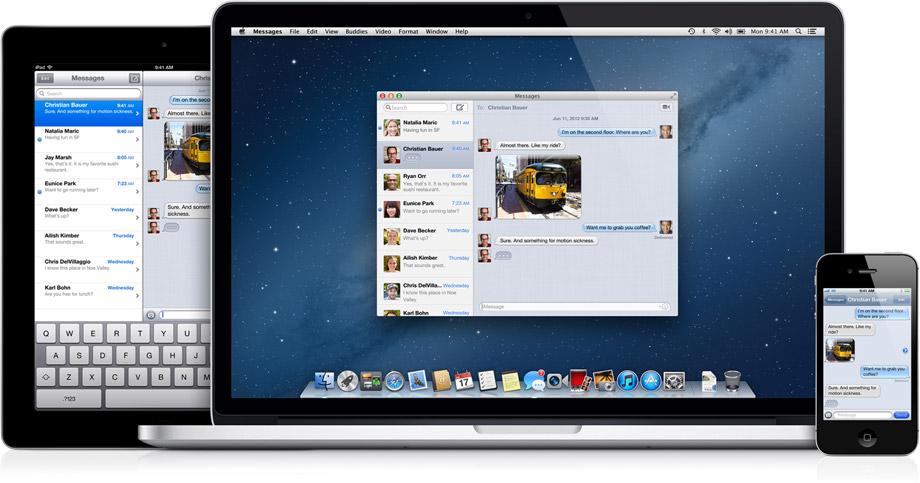
The Mac used to be Apple’s market-leading product… but then it was eclipsed by the iPod, and then by the iPhone, and then by the iPad. Where Apple customers used to come to iOS devices with a knowledge of Mac OS X, now it’s much more likely Apple customers come to the Mac after getting into the Apple ecosystem on an iOS device. Apple’s “back to the Mac” emphasis in Lion and Mountain Lion is about taking elements of iOS and taking them back to OS X so iOS users feel more at home. The Mac App Store, Notifications, and full-screen mode all arose from this effort.

If Apple can’t support legacy Intel apps, would it make sense to essentially make a version of iOS for the desktop? It have the advantage of being instantly familiar to millions of existing iOS users, with hundreds of thousands of existing apps available on launch day. However, apps originally designed for smartphones and tablets generally would not translate well to a notebook or desktop computer. After all, Apple CEO Tim Cook was quick to criticize Microsoft for the sacrifices made by its own hybrids. Apple would also have to make some changes to iOS to match desktop users’ expectations. For instance, multitasking under iOS is currently limited to a handful of tasks that can be delegated to the operating system, all in the name of power management and maximizing battery life. Many desktop users would expect more robust multitasking, without a significant impact on battery life.

What about Intel’s stranglehold?
intel core i7

Apple likes to control its own destiny. Part of that fierce independence comes from total control of product design from the ground up, from the silicon in the chips to the finish on the case to the pixels on the screen. With its Macintosh computers, Apple doesn’t control two key parts of the package: the processor and the graphics chip, which it relies on Intel and Nvidia for. If Apple were to make its own ARM processors, it would liberate Apple from dependence on Intel’s rigid upgrade schedule, which controls the rest of the PC industry.

Of course, putting ARM chips into Macs – or threatening to – could simply be a clever way to exert leverage on Intel. Intel scored a tremendous public relations coup back in 2005 when Apple switched from PowerPC to Intel processors. Although Intel can certainly afford to lose Apple as a client on purely financial level, the damage to Intel’s reputation could be substantial – after all, Apple is one of the most-watched and most-respected companies on the planet. Toying with the idea of a switch to ARM chips could give Apple significant negotiating chips with Intel, maybe even enough to get the chipmaking giant back to making custom processors only available to Apple, like it did with the original MacBook Air.

Apple did not respond to a request for comment.


Source : digitaltrends[dot]com

Nov 8, 2012

Foxconn may open US plants

Foxconn may be moving to America, if rumors that the controversial manufacturer is eying potential locations in Detroit or LA turn out to be true.

There must be some kind of joke about growing the American workforce and reclaiming jobs that have traditionally been outsourced abroad to accompany the somewhat surprising news that Foxconn Electronics, the controversial Taiwanese manufacturer that creates Apple products and has been at the center of numerous complaints and outrage about the conditions within its Chinese plants – is looking to open factories within the United States. Yes, soul-crushing minimum wage tedium that drives some to riot and others to suicide: It’s not just for the rest of the world anymore, apparently.

The news comes via Foxconn chairman Terry Guo, who reportedly announced at a public event that not only was the company planning a training program for US engineers in which they’d be educated in Foxconn processes for manufacturing and design via trips to existing plants in Taiwan and China, but that the company is “already in discussion” with the Massachusetts Institute of Technology over partnering on the program (Guo went on to add that the exchange program will also allow the American engineers “an environment to learn the Chinese language, first-hand experience in the manufacturing process, and a training that can be helpful after they return to the US,” according to a report on the DigiTimes website). Reportedly, both Detroit and Los Angeles are being looked at as potential host cities for Foxconn plants in America, with the aim of manufacturing Apple’s much-rumored iTV product, making it the first Apple product to be domestically constructed in some time.

Reasoning for the potential move to the US reportedly centers around the rising labor costs in the Asian market, although the move may give some reason for pause to boosters for the American manufacturing, considering the famously low wages and poor working conditions that Foxconn has been strongly criticized for in the past, perhaps most famously in a This American Life episode that was later revealed to be “partially fabricated” (Not entirely fabricated, sadly; the influence of Apple may be improving conditions at the plants, but there are still underage kids working there – Oh, and the boss still likened his workforce to animals, so there’s that.)

Foxconn is currently the world’s largest maker of components for electronic equipment, with products constructed from its work including not only Apple’s iPad, iPhone and iPod, but also Amazon’s Kindle family, Sony’s PlayStation devices, and Microsoft’s Xbox 360. Although most of the complaints about the way the company has treated its factory employees have centered around its thirteen Chinese factories, the company has locations across the world, including the Czech Republic – where it is the second-largest exporter in the country – Brazil, Mexico, Japan and India.

Officially, Foxconn would not comment about whether or not it plans to open any American factories at this time.


Source : digitaltrends[dot]com

Oct 16, 2012

Apple’s ‘mini’ event rumors: New Mac mini, 13″ Retina MacBook Pro, and iPad Mini

We do our best to follow all of the latest Apple October 23rd rumors, including a new Mac mini, a 13-inch Retina MacBook Pro, and the iPad mini.

This week is off to a flying start with several Apple rumors already “confirmed,” including new Mac minis, a 13-inch MacBook Pro with a Retina display, a curvy iMac, and an iPad Mini price list for good measure. All of these products are rumored to be announced at a press conference many think will happen on Oct. 23rd. From the looks of it, Apple may announce a number of smaller, ‘mini’ products at the event

New Mac Mini’s coming

New 2011 Mac Mini top

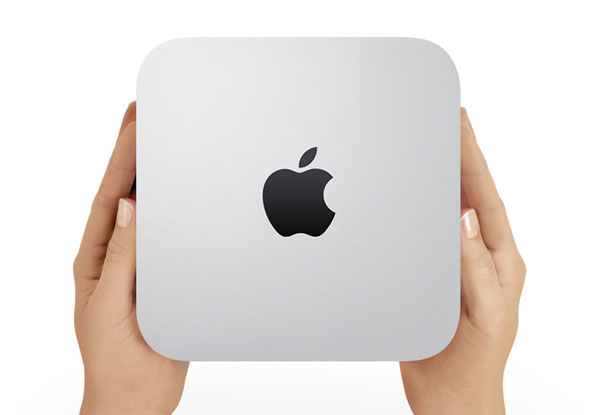
Big fan of Apple’s tiny little Mac? You’re in luck. A new rumor from 9t05Mac points to new versions of the Mac mini rearing their adorable little heads at Apple’s rumored October 23rd event. Supposedly, the new Macs will come in two configurations, with varying memory and processor options as well as a third model for those who want to run OS X Server. Rumor has it that they’ll start shipping immediately after the announcement. Apple hasn’t updated the Mac mini in more than a year.

We assume that the new mini will get some form of visual refresh, but it’s hard to imagine Apple making it a whole lot smaller than it already is. Maybe we’ll get a Mac micro?

13-inch MacBook Pro with Retina display

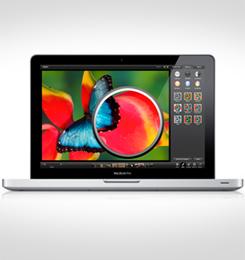
9to5Mac has also heard from a “consistently reliable source” that Apple will introduced a Retina display-equipped 13-inch MacBook Pro during the iPad Mini’s launch event later this month. It will apparently be thinner and lighter, and offer different combinations of processors and storage options too.

Macrumors.com has found a few potential features for the 13-inch Retina MacBook Pro on a Chinese website, which claims the smaller computer will still have two Thunderbolt ports, a USB port, a headphone socket, an HDMI-out and an SD card reader; just like its bigger brother. There’s also talk of an interesting battery design — although it’s not elaborated upon — and the report is accompanied by a couple of pictures that, frankly, could show absolutely anything.

Before we move on, it’s best to clarify that we’re talking about a product that doesn’t exist being launched at an event that hasn’t been announced for another non-existent product. That said, it’s logical for Apple to produce a 13-inch Retina MacBook Pro, but at the moment we don’t know when that will happen.

A curvy iMac

The curvy iMac rumors seems to originate from the same Chinese website, where it’s said that the new model will have a curved shell that’s something like “a water droplet,” which sounds more like Samsung’s design philosophy than Apple’s. Naturally, it too is going to arrive at the small “intimate” event apparently set for October 23.

iPad Mini prices

Finally, we’re onto the event’s main attraction, the iPad Mini. A picture supposedly showing a list of iPad Minis that will possibly be stocked by German electronics retailer MediaMarkt has been leaked, complete with prices and basic specs. In addition to the usual 16, 32 and 64GB models, an 8GB iPad Mini may appear. Each version will have the choice of a black or white finish, and either Wi-Fi only or “cellular” and Wi-Fi.

The most basic 8GB Wi-Fi iPad Mini is priced at 250 euros, and the top 64GB Wi-Fi with 3G or 4G at 650 euros. A quick currency conversion gives us $322 and $840 respectively, the latter of which will probably have seen wallets everywhere twitch nervously.

Just like all the other iPad Mini rumors, there’s no way to know if this is really a screenshot from MediaMarkt’s computer system, and equally we can’t take those prices as final either, as Apple’s US pricing is often lower than it’s European equivalent.

October 23 is one week away tomorrow, which means that if an event is to take place, Apple will start to send invitations out very soon. We really, really hope it does too; if only to put an end to these infernal iPad Mini rumors.

Update 10/16/2012 by Jeffrey VC: Rumors of a Mac mini announcement have surfaced and have been added to the list.

Article originally published 10/15/2012


Source : digitaltrends[dot]com

Oct 15, 2012

Apple rumor overload: 13-inch Retina MacBook Pro, a curvy iMac and an iPad Mini price list

Monday is off to a flying start with a selection of new Apple rumors, including a 13-inch Retina MacBook Pro and an iPad Mini price list.

Monday is off to a flying start with several Apple rumors already “confirmed,” including a 13-inch MacBook Pro with a Retina display, a curvy iMac and an iPad Mini price list for good measure.

Let’s start with the big one. 9to5mac.com has heard from a “consistently reliable source” that Apple will introduced a Retina display-equipped 13-inch MacBook Pro during the iPad Mini’s launch event later this month. It will apparently be thinner and lighter, and offer different combinations of processors and storage options too.

Macrumors.com has found a few potential features for the 13-inch Retina MacBook Pro on a Chinese website, which claims the smaller computer will still have two Thunderbolt ports, a USB port, a headphone socket, an HDMI-out and an SD card reader; just like its bigger brother. There’s also talk of an interesting battery design — although it’s not elaborated upon — and the report is accompanied by a couple of pictures that, frankly, could show absolutely anything.

Before we move on, it’s best to clarify that we’re talking about a product that doesn’t exist being launched at an event that hasn’t been announced for another non-existent product. That said, it’s logical for Apple to produce a 13-inch Retina MacBook Pro, but at the moment we don’t know when that will happen.

The curvy iMac rumors seems to originate from the same Chinese website, where it’s said that the new model will have a curved shell that’s something like “a water droplet,” which sounds more like Samsung’s design philosophy than Apple’s. Naturally, it too is going to arrive at the small “intimate” event apparently set for October 23.

iPad Mini prices

Finally, we’re onto the event’s main attraction, the iPad Mini. A picture supposedly showing a list of iPad Minis that will possibly be stocked by German electronics retailer MediaMarkt has been leaked, complete with prices and basic specs. In addition to the usual 16, 32 and 64GB models, an 8GB iPad Mini appears, each with the choice of a black or white finish, and either Wi-Fi only or “cellular” and Wi-Fi.

The most basic 8GB Wi-Fi iPad Mini is priced at 249 euros, and the top 64GB Wi-Fi with 3G or 4G at 649 euros. A quick currency conversion gives us $322 and $840 respectively, the latter of which will probably have seen wallets everywhere twitch nervously.

Just like all the other iPad Mini rumors, there’s no way to know if this is really a screenshot from MediaMarkt’s computer system, and equally we can’t take those prices as final either, as Apple’s US pricing is often lower than it’s European equivalent.

October 23 is one week away tomorrow, which means that if an event is to take place, Apple will start to send invitations out very soon. We really, really hope it does too; if only to put an end to these infernal iPad Mini rumors.


Source : digitaltrends[dot]com

Softbank is buying 70 percent of Sprint, it’s official

Softbank buys 70 percent of Sprint (Image courtesy of AP)

It's confirmed. Rumors last week that hinted that Japanese telecom and Internet provider Softbank would purchase Sprint were true, mostly. Softbank and Sprint have announced that the company will soon own 70 percent of the third largest U.S. mobile carrier.

Japanese based SoftBank is officially entering the global market. It was announced earlier today that the third largest carrier in Japan is acquiring 70 percent of Sprint, the third largest carrier in the United States, for $20.1 billion (1.57 trillion Yen). The two companies had been rumored to have been in serious discussions late last week. With all the i’s dotted and t’s crossed today, Softbank President Masayoshi Son and Sprint Chief Executive Dan Hesse announced that the deal was completed.

The breakdown of the deal, as announced by both Sprint and SoftBank, will send $12.1 billion to the current Sprint shareholders. The remaining $8 billion of new capital will be used to “strengthen Sprint’s balance sheet.” SoftBank is offering $7.30 a share for existing shares, though Sprint’s stock had closed at $5.73 a share on Friday. Current Sprint stockholders will also receive 30 percent ownership in New Sprint. That’s right, a group of extremely intelligent and wealthy businessmen and investors hashed out a multibillion dollar transaction and the best name they could come up with is “New Sprint.”

The name appears to be the only negative in this deal, though, as both Sprint (old Sprint?) and SoftBank are looking at this acquisition as a win. For Sprint, it provides a sizable influx of cash that allows it to be competitive against Verizon and AT&T. It also gives the company the backing of an extremely successful entity that has built a network in the same way Sprint hopes to. It’s also a win for current Sprint CEO Dan Hesse, who will become CEO of New Sprint and sit as a board member.

For SoftBank, this move is a bit of global market consolidation that plants it firmly in a top spot on the worldwide playing field. Now sitting as the third-largest mobile provider in Japan and in the United States, SoftBank has more than 90 million subscribers. This marks the largest overseas acquisition by a Japanese firm to date. However, any transaction of this size comes with its potential pitfalls. Sprint may be a risky point of entry for SoftBank, taking control of a sputtering company in a market that is dominated by two seemingly immovable giants. The agreed upon merger between Deutsche Telekom’s T-Mobile and MetroPCS makes the market even more competitive toward the top. The deal has also placed SoftBank as “credit watch negative” by Standard & Poor’s, meaning it could see its credit rating downgraded. Of course, S&P made the same threat to the United States and that sure didn’t stop us.

SoftBank’s rise through Japan’s mobile market came on the back of being the first company in the country that carried the iPhone. It’s growth was only bolstered with acquisition after acquisition that put SoftBank in a position to make its biggest purchase yet with Sprint. Masayoshi Son will likely have to continue his aggressive ways to compete in the U.S. market. That doesn’t seem to be something he’s afraid to do. Leveraging SoftBank’s LTE knowledge will be a major key to the success of this transaction, as Sprint has been attempting to build out its network for some time to little avail thanks mostly to money issues. Sprint hopes to have LTE in 100 markets by the end of the year.


Source : digitaltrends[dot]com

Oct 12, 2012

Apple iPad Mini to be announced on October 23, new rumors say

Lately, it’s been quiet on the iPad Mini rumors side. When 10 Oct, the rumored invitation day, came and went, we started worrying that previous rumors have let us down. While this may be the case indeed, not all is lost, as new rumors suggest the announcement event has only been moved to October 23.

Today’s rumors are not any better than the last, but at least, they help keep our hopes high. The sources of this new version have shared it with fellow journalists at AllThingsD, who seem to trust them.

Unfortunately, there are no new details about the 7.85″ slate and there isn’t even a rumored venue for the announcement. Either way, if the event is supposed to happen on the 23rd, Apple should be sending the invites next week, so we’ll know more then for sure.

The end of the month shapes up to be a really busy time for the industry, if the current rumors are to be believed.

This supposed iPad Mini announcement on the 24 will be followed by the launch of Windows 8 and Microsoft’s own tablet, the Surface, on Oct 26. Then only a few days later, on Oct 29, Microsoft will present its Windows Phone 8 OS. That’s also the same date rumored for the launch of the LG Nexus phone.

It seems the competition will try to steal the spotlight from MS. We’ll see how it goes.


Source : blog[dot]gsmarena[dot]com

Oct 10, 2012

Black and white LG Nexus 4 pop up in Carphone Warehouse inventory

The rumors that the next Nexus device is going to be LG-made, got yet more backing today as an LG Nexus 4 was spotted in Carphone Warehouse’s inventory listing.

In fact we’ve got two different items in the list – one for each of the available color versions. Of course, the listing could be simply a placeholder, inspired by the previous rumors and might not mean anything.

The LG-made Nexus was also referred to as the Optimus Nexus and previous rumors were pointing to a device based on the Optimus G, sporting a 4.7″ True-HD IPS LCD with a resolution of 1280 x 768 resolution, a Qualcomm S4 Pro chipset and an 8 MP snapper.

We’ve already seen purported images of the said device. Let’s hope we’ll hear more about it in the coming weeks.


Source : blog[dot]gsmarena[dot]com

Sep 25, 2012

Oh dear, Google hasn’t submitted a Google Maps app to Apple yet

google maps icon

Despite rumors suggesting otherwise, Google hasn't submitted a standalone Google Maps to Apple for approval yet.

In a statement that’s sure to elicit sighs of disappointment from many iPhone users, Google’s Eric Schmidt has told reporters that the company has not submitted a standalone Google Maps app to Apple for approval, despite rumors to the contrary.

Google Maps was removed from Apple’s iOS 6 software along with the standard YouTube app, which Google has already replaced with one of its own, prompting hopes it would do the same with Maps. Apple Maps has come under fire since release for, amongst other things, errors, bugs, a lack of detail and no public transportation information.

Various sources indicated an iOS version of Google Maps was on its way, with The Guardian saying “a Google Maps app is being prepared for iOS 6, which will appear in time,” to Google themselves telling SearchEngineLand.com that its goal was to “make Google Maps available to everyone who wants to use it, regardless of device, browser or operating system.”

Schmidt was questioned over the situation during an event in Japan, where he was busy promoting the local launch of the Nexus 7 tablet, and replied “we haven’t done anything yet” when asked whether Apple was likely to accept a Google Maps app into the App Store.

He added “We think it would have been better if they had kept ours. But what do I know?” Later, as he demonstrated Google Maps on the Nexus 7, he quipped “take that Apple” while showing off the app’s capabilities. It appears The Guardian was right when it said Google was enjoying Apple’s suffering at the hands of the press and the public.

Naturally, Apple is defending its new Maps software, saying it’s “just getting started,” and welcomes all feedback in an effort to implement improvements as quickly as possible.

Without an official Google Maps app on the horizon, iPhone owners can access it using Safari, or try one of these alternative apps.


Source : digitaltrends[dot]com

Sep 17, 2012

Well-timed rumors that the Samsung Galaxy S4 is being prepped for MWC 2013 appear

Next Samsung Galaxy

Rumors of the Samsung Galaxy S4 suggest an increase to a 5-inch screen size and an MWC 2013 release date.

There’s nothing like a good rumor to get the week started and this time it’s a big one, as it concerns the follow-up to the current darling of the Android world, the Samsung Galaxy S3.

According to a report in the Korea Times, Samsung is readying the Galaxy S4 for launch during Mobile World Congress next year, before going on sale in March.

The quote comes from an unnamed Samsung official, who adds that the next Galaxy flagship will have a similar design to the S3 — keeping its “popular rectangular shape with rounded corners,” but potentially increasing the screen size again, this time to 5-inches.

A quad-core Exynos processor will power the device, Android will be the operating system, and it will support 4G LTE networks all over the world. The article makes particular mention of Europe here, where 4G is beginning to become more widespread, plus the UK will hold its 4G spectrum auction early next year too.

The report continues to say that Samsung is still considering using its flexible screen technology for the S4, but hasn’t made a final decision, although talk of production problems make it sound unlikely.

To counter Apple and the release of the iPhone 5, Samsung has already struck out with set of provocative newspaper adverts, and the timing of this leak couldn’t be better either.

Is it true?

Samsung is almost certainly working on a follow-up to the Galaxy S3, and it could well be named the Galaxy S4, but what about the rest of the report’s speculation? It’s equally as likely to use another Exynos processor in the S4, but whether this will be another quad-core chip, or the Exynos 5 Dual with its high resolution screen support, isn’t quite so clear cut.

Android and 4G LTE are also obvious features, while a push to a 5-inch screen isn’t that unlikely either. Remember, the S3 and the Galaxy Note 2 aren’t that much larger than their predecessors, despite the respective increase in screen size.

What doesn’t sound right is the Mobile World Congress unveiling. Samsung made a very big deal out of the S3’s launch in May, deliberately moving the release from February’s Mobile World Congress to a separate event later in the year. It worked really well and anticipation quickly built to fever pitch, while the glitzy event captured plenty of headlines, so we doubt Samsung would decide against doing the same thing again next year.

A March 2013 release would also see the S4 go on sale less than a year into the S3’s life, which seems very early for such a capable device.

But then, accuracy isn’t the point of this leak, it’s about letting everybody know that Samsung is hard at work on the next big thing, and not to be distracted by shiny offerings from the competition.


Source : digitaltrends[dot]com

Sep 13, 2012

Apple iPhone 5 rumors roundup: what came true and what not

Naturally, prior to its announcement, the iPhone 5 was surrounded by hundreds of rumors. Somewhat unexpectedly though, this time round most of them turned out correct and we knew almost all there was to know about the latest Apple flagship, long before Tim Cook took the stage.

The amount of leaks of hardware parts and accessories as well as reports of iPhone 5′s features that turned out to be true was staggering. In fact we knew more about the iPhone 5 than we knew about the iPhone 4 and back then a real unit escaped the R&D center. There were still a few persistent rumors that turned out incorrect, so we thought we might do a quick round up and see if we’d actually miss any of them.

But first thing first – here’s the list of rumors that turned out correct.

Bigger 4″ screen

First off, the screen. An iPhone with a 4-inch screen was rumored ever since the iPhone 4 went official and we started waiting for the 4S. It didn’t happen last year, but the iPhone 5 finally got the hotly anticipated bump in screen size.

The numerous cases and part leaks also confirmed this multiple times so there were few raised eyebrows when Phil Schiller confirmed it on stage. We even knew that the screen resolution will be changed accordingly and the aspect will be changed. Even the fifth row of icons wasn’t a surprise thanks to the iOS 6 emulator.

Smaller dock connector, redesigned earbuds, two-tone body

The smaller dock connector appeared a few dozen times, along with the new-two tone design, all of which we witnessed at yesterday’s event. We even got to learn the new connector’s name and price prior to the press conference, which is hardly ever the case with Apple’s products.

Aluminum and glass combination. That’s what Apple is using for the new iPhone. It’s cool, but not shocking, and once again we have the leaked parts straight from the factory floors where the new iPhone 5 is made, to blame.

So if the design of the iPhone 5 couldn’t be kept under wraps, what was left for the earbuds that come in its package? Yes, they too shared the destiny of the Lightning dock connector and surfaced well in advance, complete with pricing info and name.

iOS 6, nano SIM and LTE

Those three didn’t even need leaks, really. Everybody knew that the iPhone 5 is going to run iOS 6, it was just a matter of making it official.

The same goes for the nano SIM, which the iPhone 5 uses . Apple fought hard for its version of the nano-SIM standard, so from the moment it was approved, we knew the iPhone 5 would utilize it.

Last year, Apple decided to skip on LTE for the iPhone 4S, but leaving it out of the iPhone 5 would be too risky. Not to mention that most of the latest mobile chipsets support native LTE radio – 4G is no longer eating batteries for breakfast.

It’s named the iPhone 5

Up until Apple sent out event invites to the press, it was hotly debated whether the next iPhone will use the iPad naming scheme and just be called the ‘new iPhone’ or stick to its roots and add a “5″. As the invite for the event confirmed, Apple chose to stick with the numbered iPhones.

Now, let’s review some of the rumors that came out false.

NFC

Slowly but surely, more and more Android and Windows Phone devices started featuring NFC capabilities, but Apple decided to skip it with the iPhone 5. Mind you, their Passbook feature for storing loyalty and gift cards as well as boarding passes and tickets is as ready as it’s ever going to be, but maybe it just isn’t the right time for Apple.

Probably, the guys over at Cupertino are leaving the NFC feature for the iPhone 5S. By then, the technology will be more widely spread and Apple will havemore time to attract more partners and enable NFC-sporting iPhones to do more cool things.

T-Mobile partnership

T-Mobile continues to be the only major US carrier that isn’t offering the iPhone. Although the company teased that people should be expecting exciting news in the near future, it turned out the news isn’t related to the iPhone 5. Bummer, really.

Fingerprint scanning Home button

A fingerprint scanning Home button sounds like something taken out of a spy movie, but some rumors suggested it’s a real possibility. No matter the wow-factor it would’ve brought, many people though its highly unlikely for Apple to go this far with security of the iPhone 5.

But who knows, maybe the iPhone 5S will allow you to not only look like James Bond, but actually feel like one as well?

Apple CEO Tim Cook made an announcement couple of months ago that the company is doubling the security around future products to keep leaks away. The first ever product to go under the umbrella of this promise was the iPhone 5, but ironically almost every part of the new iPhone was leaked.


Source : blog[dot]gsmarena[dot]com

Sep 12, 2012

30-pin to Lightning adapter now available, will set you back $30

Apple did what rumors have been suggesting for weeks and what many thought impossible – the old 30-pin connector that has been around for ages is gone and has been replaced by the Lightning connector.

So, what are you to do if you have many iGadget accessories but plan on getting an iPhone 5 or one of the new iPod Touches or the nano? Well, there’s an adapter for that, but wait till you see how much it costs.

Ready? 30 bucks. Yes, 30 American dollars to go from 30 to 9 pins. And here’s the fine print: “Video and iPod Out not supported.”

The adapter itself looks similar to the iPad Camera Connection Kit. My complaint here is that it looks big and clunky – it’s that big and it doesn’t even support a couple of features that were always touted as big advantages of the 30-pin connector over standard USB.


Source : blog[dot]gsmarena[dot]com

Sep 10, 2012

Sticking around: Apple design chief Jony Ive buys $17 million home in SF

Jony Ive, Apple's vice president of industrial design, appears to have put to bed rumors of a move back to his native Britain with the purchase of a luxury home in San Francsico for $17 million.

Apple design chief Jony Ive has reportedly just bought a property in San Francisco’s exclusive ‘Gold Coast’ neighborhood  for $17 million. The is likely to end speculation suggesting Ive wanted to move himself and his family back to his native Britain.

The house, which was built in 1927 and has six bedrooms and eight bathrooms, went on the market back in February for $25 million, people familiar with the deal told the Wall Street Journal. Apple’s vice president of industrial design will be able to enjoy sweeping views across the San Francisco Bay from the back of his 7,274-square-foot property.

Located close to Alta Plaza Park, the house also has an oak-paneled library and six wood-burning fireplaces. According to the WSJ, one of its upstairs bedrooms has “cathedral ceilings with exposed beams.”

Ive is the man widely credited for the design of some of the Cupertino company’s most iconic products, including the iPod, iPhone and iPad as well as its range of computers, such as the MacBook Air.

He started working for Apple in 1992, though, according to Walter Isaacson’s Steve Jobs biography, was on the verge of quitting five years later, concerned that profit was taking precedence over product design. Jobs persuaded him to stay.

“Ive and Jobs would soon forge a bond that would lead to the greatest industrial design collaboration of their era,” Isaacson wrote.

 In May, 45-year-old Ive made a trip to the UK to receive a special honour from the Queen for services to design and enterprise.

Early last year, rumors were circulating that Ive was considering a move back to his native Britain because he wanted his children to attend school there. However, Apple execs reportedly said that if he returned, he wouldn’t be able to keep his position within the company.

The move to the new place in San Francisco indicates that Ive is in with the tech giant for the long term, a prospect that is sure to please Apple fans everywhere.


Source : digitaltrends[dot]com

Sep 5, 2012

Report: Amazon smartphone ‘confirmed’, may be unveiled at Thursday’s event

amazon-phone

Amazon is reportedly planning to unveil its first smartphone at Thursday's press event in Santa Monica.

There have been rumors swirling around for some time now about the possibility of an Amazon smartphone coming to market. A report from The Verge suggests it is going to happen, and that it may even be unveiled at Amazon’s press event in Santa Monica on Thursday.

The report obtained its information from “multiple sources”, adding that the handset would run “a variant of the Kindle Fire’s Android-based operating system.” Other than that, few details are known about the device.

The phone is reportedly not yet finished, though it appears this won’t stop it from being presented to the press at Thursday’s event.

Chatter surrounding the possibility of Amazon readying itself for the smartphone market increased significantly a couple of months back when reports surfaced claiming the e-commerce giant was “working with component suppliers in Asia to test the smartphone.” Foxconn is rumored to be manufacturing the phone at its plants in China.

As with its Kindle Fire tablet, any such handset from Amazon will likely be placed at the low end of the market, sold at cost, or possibly at a loss, in order to boost sales of the device and push people towards its well-stocked online store.

It’s set to be a busy day for Amazon tomorrow. The Seattle-based company is widely expected to launch the second iteration of its 7-inch Kindle Fire tablet at the media gathering, possibly together with a cut-price Fire with ads. An updated Kindle Touch e-reader, or possibly a brand new ‘Paperwhite’ e-reader, is also thought to be on the way.

Digital Trends will be at the event, which kicks off at 10.30am PT, so be sure to check back for the lowdown on Amazon’s new offerings.


Source : digitaltrends[dot]com

Sep 4, 2012

Steam to enter the gaming hardware market

There have been rumors floating around that Steam is planning on entering the gaming hardware market, either by making their own console or a gaming PC. Now Steam has finally come forth and confirmed that it does indeed plan on entering the gaming hardware segment.

Steam mentions that they are frustrated with the current lack of innovation in the computer hardware space, which is why they have decided to jump in. You can find the entire statement from the company after the break.

Valve is traditionally a software company. Open platforms like the PC and Mac are important to us, as they enable us and our partners to have a robust and direct relationship with customers.

We’re frustrated by the lack of innovation in the computer hardware space though, so we’re jumping in. Even basic input, the keyboard and mouse, haven’t really changed in any meaningful way over the years. There’s a real void in the marketplace, and opportunities to create compelling user experiences are being overlooked.


Source : blog[dot]gsmarena[dot]com

Aug 21, 2012

Android running Nikon camera surfaces again, this time through pictures

We have reported in the past about Nikon working on an Android based point and shoot camera. Nikon Rumors have now published some pictures that are allegedly of this yet to be announced camera.

The camera in question looks like your usual point and shooter from the front, until you get to the back where you’ll find a large touchscreen along with the usual physical Android navigation keys.

To be honest, something about this picture doesn’t seem right. If Nikon is putting Android on their cameras, something tells me they won’t just put up a stock Android ROM on there, complete with an alarm and music player app, which seem out of place on a camera. Instead, they would probably try to make the UI seem more like their existing cameras while maintaining Android specific features such as image sharing or a web browser, rather than make it look like a generic Android phone’s UI.

Nikon Rumors have pictures of two more cameras that suggest Nikon will be releasing a range of Android based cameras on launch, although you don’t see the back of either of them so they could be just your average point and shoot cameras for all we know.

The product announcement is said to be on or around August 22, so we’ll just have to wait for a couple more days to find out if this is for real.


Source : blog[dot]gsmarena[dot]com

Aug 17, 2012

OnLive isn’t out of business, but won’t comment on full staff layoff

Cloud-based games on demand company OnLive isn't closed as rumors suggest, but the company is strangely silent about staff layoffs.

The sky is falling! Or maybe it’s the clouds.  Just one cloud actually. Cloud-based streaming video game service OnLive is closing.

At least that’s what Friday rumors purported. Turns out that OnLive isn’t shutting down, but it’s up in the air whether anyone is working there or not.

It all started when InXile Entertainment head honcho Brian Fargo took to Twitter on Friday morning, saying, “Just received an email that OnLive is closed as of today!” A bold, dangerous statement; Consider how many game developers and publishers working with OnLive likely heard about the Tweet within minutes. It’s the stuff of Internet brushfire legend.

Fargo’s exclamation was followed up by a report at Mashable that OnLive had laid of its entire staff. Its source claimed all OnLive employees were summoned in for a meeting at 10am PDT on Friday and all in attendance were promptly laid off. A number of staff were told that they would be immediately rehired as the company transformed into something new.

That same source said that the management of CEO and founder Steve Perlman was the cause of OnLive’s implosion. His refusal to sell the company to interested buyers was apparently a primary cause of OnLive’s failure.

OnLive corporate communications director Brian Jaquet took to the press by Friday afternoon though, saying that its only comment on the news is that the business isn’t shutting down. Jaquet answered Joystiq’s inquiry as to whether or not it was closing, “We don’t respond to rumors, but of course not.”

So OnLive will still offer up streaming video games to its users according to Jaquet. Wonderful. What about the company’s hundreds of employees? Unknown. There’s been little indication from the company’s employees on social networking sites that they’ve been laid off, but LinkedIn and Facebook profiles don’t exactly tell full stories.

These are strange days for the nascent streaming gaming business. Sony acquired Gaikai, OnLive’s primary competitor, at the beginning of July. As f that moment, cloud-based gaming was no longer a promising niche for startups like OnLive. Now it’s the territory of massive, multinational businesses. There has been speculation that Microsoft would in turn make an offer to OnLive, but so far the company’s stayed independent. The only console related announcement made by the company recently is that it will support Ouya, Boxer8’s new Google Android game console.

We’ve reached out to a number of OnLive employees and will update this article with any relevant information they provide.


Source : digitaltrends[dot]com