Pages

Showing posts with label chips. Show all posts

Nov 9, 2012

Why would Apple move Macs to ARM processors?

Apple ARM processor mac intel

Rumors have Apple moving away from the Intel chips currently used in Macs to the ARM-based chips used in mobile devices like the iPhone and iPad. But would such a seismic shift make sense?

Apple’s Macintosh computers rely on processors from chipmaking giant Intel – just like the vast majority of the world’s PCs, notebooks, and servers. However, Apple’s iOS device line, such as the iPhone, iPads, and iPod touch, rely on processors based on designs from ARM. These chips aren’t as fast or powerful as mainstream Intel processors, but they’re cheaper and they consume far less power, making them ideal for mobile devices like smartphones and tablets.

Now, Bloomberg is citing three unidentified sources saying Apple is seriously investigating shifting Macs from Intel to ARM chips, and new developments from ARM are adding fuel to the fire.

Could Apple move Macs away from Intel to ARM-based processors? What hurdles would Apple face, and how would ARM-based Macs stack up?

Here we go again
Apple Phil Schiller A6X processor

With the original iPad back in 2010, Apple revealed it was designing its own ARM processors rather than relying on chips designed by Samsung or other manufacturers. (That first chip was the Apple A4, which quickly moved to power the iPhone 4 as well.) With Apple designing its own chips, speculation immediately mounted that the company might one day move its Macintosh computers away from Intel to its own ARM-based processors. After all, it wouldn’t be the first time Apple has changed the Mac’s processor architecture. Apple has already shifted the Mac’s processor architecture three times: from Motorola 68000s, to PowerPC, and then to Intel. If there’s a company with experience managing these transitions, it’s Apple. And each time Apple has unveiled a new processor, that speculation has started anew.

What’s different this time around?

ARM 64-bit architecture

Current ARM-based chip designs use 32-bit architectures. For now, that’s ample for most mobile and tablet applications, but one significant ramification for desktop computing is that these processors can only handle about 4GB of memory. Macs today ship with a minimum of 4GB of RAM, and many ship with  8GB, so using a 32-bit architecture just isn’t feasible for today’s desktop computers. However, last week ARM Holdings took the wraps off its Cortex-A50 series, the first ARM processors designs with a 64-bit architecture. (One of them also can claim the title as the world’s smallest 64-bit processor.) Suddenly, managing the amount of memory common in today’s desktop computers—and even high-end servers and workstations—is within reach.

ARM doesn’t make chips; it designs then, and licenses those designs to companies like Samsung, Qualcomm, and (of course) Apple. It will take time for firms to implement 64-bit designs of their own. Nobody is expecting 64-bit ARM chips to be a reality on the market for another year or 18 months. But the market is no longer holding its breath for ARM to release 64-bit designs: now, the work can begin.

It’s also worth noting Apple’s relationship with ARM is much older than its relationship with Intel. It goes all the way back to the 1980s, and Apple collaborated in early stages of ARM processor development. That resulted in Apple owning a over 40 percent of ARM, and that stake helped Apple weather its mid-1990s death spiral as it repeatedly padded its bottom line by selling ARM shares to lower its losses.

Apple is getting results

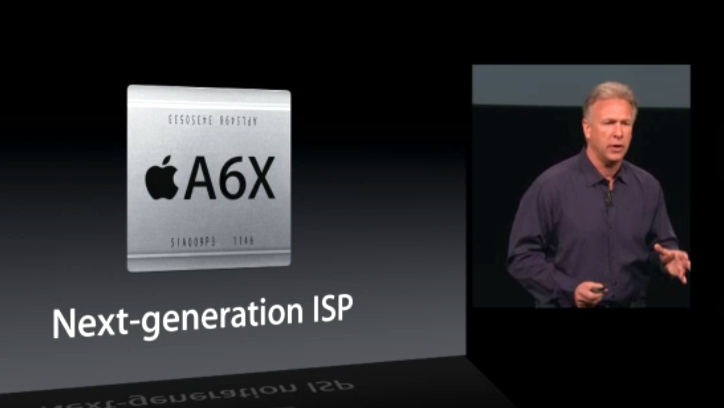
Apple’s work to design its own processors isn’t just a vanity project: It’s about getting performance and capabilities that can’t be matched by other mobile device makers using stock parts. Apple has invested heavily in acquiring chip design expertise (in part through the acquisition of PA Semi and Intrinsity. Apple has consistently been increasing the clock speed of its processor and graphics cores and getting improvements through architectural adjustments. Unveiling the latest iPad, Apple also revealed its latest A6X processor was laid out by hand, rather than trusting the details to CAD tools. The company is clearly willing to sweat the details and design processors that specifically support things like its Retina displays without sacrificing battery life compared to previous, lower-powered products. That expertise can directly translate to notebook and desktop PC designs.

New Technology group

Part of Apple’s recent executive shakeup (which saw the ouster of iOS chief Scott Forstall) was the creation of a new Technologies unit under Bob Mansfield, including Apple’s semiconductor teams, described as having “ambitious plans for the future.” Although the Technologies group is tasks with unifying all of Apple’s wireless efforts, as VP of Mac Hardware Engineering, Mansfield oversaw the development of things like Apple’s iMac and MacBook lines. While the industrial design of Macs remains the province of Jonathan Ive, actually getting them built still seems to fall on Mansfield’s shoulders, in addition to being in charge of chips.

Thinner and lighter

When Apple introduced the MacBook Air back in 2008, it was deemed almost impossibly thin, and the line continues to set the bar for ultraportable notebooks. Apple built the original MacBook Air using a custom Intel processor; one of the reasons Apple was able to beat other PC makers to the super-slim form factor was that it wasn’t using off-the-shelf parts. Apple has continued to demonstrate with the Retina MacBook Pros, ongoing MacBook Air line, and the latest iMac that its obsession with thin-and-light computer designs continues unabated. Although Intel has acknowledged Apple has has provided valuable input into its chip designs, Intel is not making custom processors for Apple, which poses a problem moving forward. It will be difficult for Apple to keep its PC products in front of the rest of the market if it’s forced to use the same off-the-shelf processors as everyone else. Design considerations alone might be incentive to Apple to start seriously looking at alternatives to Intel.

Would OS X run on ARM?
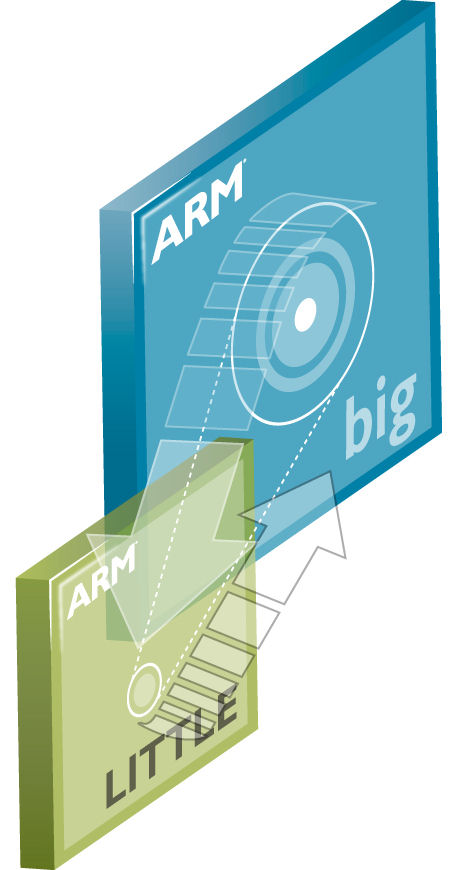
ARM Cortex A50 Big-Little

Apple bringing its OS X operating system to ARM might seem like the equivalent of Microsoft bringing Windows 8 to ARM devices in the form of Windows RT: a potential seismic shift in the product landscape. However, Apple has a head start. Its iOS operating system is based on Mac OS X, meaning the two share a large number of core technologies. Much of the groundwork for running OS X on an ARM chip already exists, and there’s long been speculation Apple has been bringing up most of OS X on ARM systems for years just as a proof of concept.

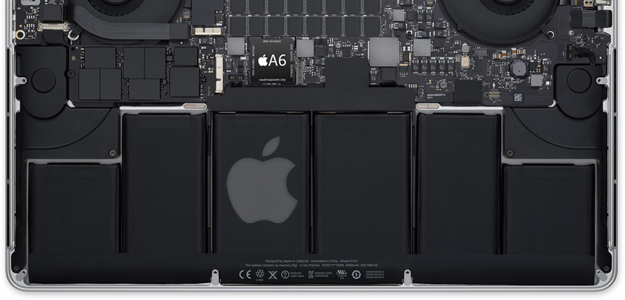
A bigger question is how well OS X would run on ARM processors: Would it deliver a reasonable desktop experience? By some benchmarks, the A6 processor Apple uses in the iPhone 5 already substantially outperforms any PowerPC notebook Apple ever made, and the A6X in the latest iPad scores even higher. And with the power available in notebooks and desktop computers (as opposed to phones and tablets), Apple could push the processors to significantly higher clockspeeds. Apple could also improve performance and keep heat levels down by adding more processor cores. That would increase the cost of each processor, but Apple’s chips are so much less expensive than Intel’s mainstream CPUs that Apple could afford to eat a bit of expense there.

(Doubt that? Intel’s published price lists (PDF) run from $117 for a low-end Core i3 chip to $999 for a high-end Core i7. Bulk customers like Apple, Dell, Lenovo, and HP presumably get a significant discount, but the contrast is stunning: iSuppli estimates Apple pays under $20 for its A6 processor.)

Given how many people find Apple’s iOS devices totally acceptable for lightweight gaming, Web browsing, email, managing photos and entertainment like movies and music, it’s fair to guess hypothetical ARM-based Macs would be able to meet those same sorts of needs easily. On consumer notebooks and desktop systems, the real performance constraints are usually memory, storage, and networks, not the processor.

However, once one gets beyond mainstream computing needs, ARM chips aren’t going to be able to stand up to Intel in the foreseeable future. That means folks who rely on their Macs for content creation, high-end gaming, software development, and compute-intensive applications like large databases, software development, real-time digital signal processing (think musicians and DJs), would suffer from a switch to ARM processors. These are the same users who purchase Apple’s highest-priced, highest-margin Macintosh computers and constitute many of Apple’s most loyal and lucrative Macintosh customers. It seems unlikely Apple would kick them to the curb, so if Apple does move Macs to ARM-based processors, higher-end Macs are likely to stay with Intel.

Barriers to OS X on ARM
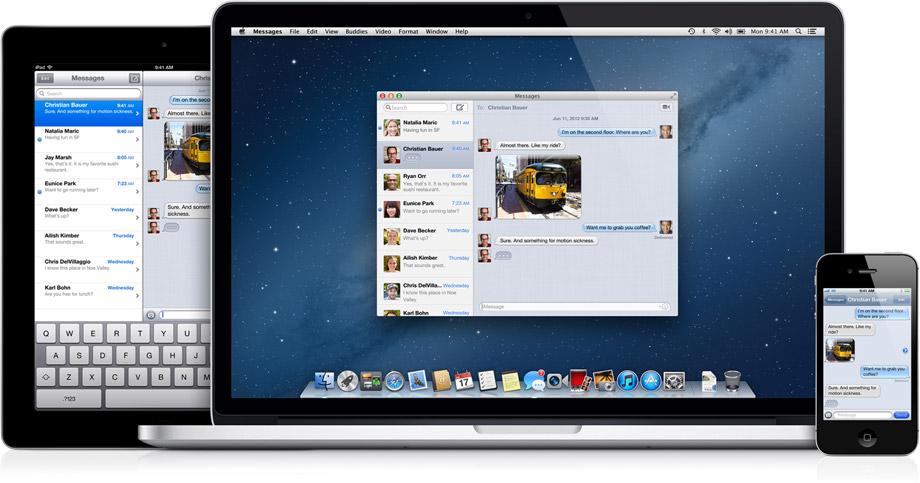
OS X Mountain Lion Messages

This doesn’t mean making OS X practical on ARM chips would be a cakewalk. Assuming Apple can indeed overcome possible performance hurdles with its own 64-bit designs down the road. Other barriers include:

Backward compatibility

Just as Windows RT can’t run old Windows software, a hypothetical ARM-based Mac wouldn’t be able to run old OS X software. In the past, Apple has always provided an emulation layer that let old software continue to run, albeit slower. Apple’s cleanest transition was from PowerPC to Intel: Its Rosetta PowerPC emulators let Mac users transition the vast majority of their existing PowerPC software to their new Intel Macs without batting an eye, letting them continue to use their software, then upgrade to new Intel versions over time.

It’s not clear that Apple could manage a transition from Intel to ARM so easily. Russia’s Elbrus Technologies recently announced an x86 emulator for ARM that can let ARM chips run software compiled for Intel processors, but it can only deliver about 40 percent of the ARM processor’s performance through emulation. Elbrus thinks it can bring that level up to 80 percent by the end of 2014, but considering ARM chips are already slower to begin with, that may still mean sluggish performance. The alternative is Microsoft’s approach: Bar legacy software outright.

A desktop version of iOS?

The Mac used to be Apple’s market-leading product… but then it was eclipsed by the iPod, and then by the iPhone, and then by the iPad. Where Apple customers used to come to iOS devices with a knowledge of Mac OS X, now it’s much more likely Apple customers come to the Mac after getting into the Apple ecosystem on an iOS device. Apple’s “back to the Mac” emphasis in Lion and Mountain Lion is about taking elements of iOS and taking them back to OS X so iOS users feel more at home. The Mac App Store, Notifications, and full-screen mode all arose from this effort.

If Apple can’t support legacy Intel apps, would it make sense to essentially make a version of iOS for the desktop? It have the advantage of being instantly familiar to millions of existing iOS users, with hundreds of thousands of existing apps available on launch day. However, apps originally designed for smartphones and tablets generally would not translate well to a notebook or desktop computer. After all, Apple CEO Tim Cook was quick to criticize Microsoft for the sacrifices made by its own hybrids. Apple would also have to make some changes to iOS to match desktop users’ expectations. For instance, multitasking under iOS is currently limited to a handful of tasks that can be delegated to the operating system, all in the name of power management and maximizing battery life. Many desktop users would expect more robust multitasking, without a significant impact on battery life.

What about Intel’s stranglehold?
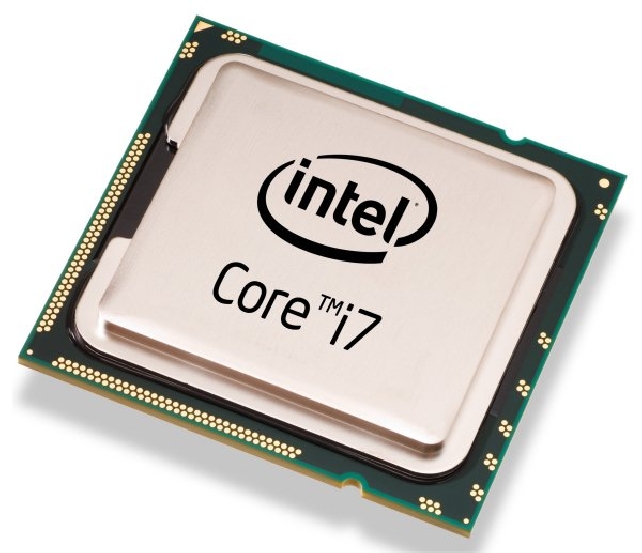
intel core i7

Apple likes to control its own destiny. Part of that fierce independence comes from total control of product design from the ground up, from the silicon in the chips to the finish on the case to the pixels on the screen. With its Macintosh computers, Apple doesn’t control two key parts of the package: the processor and the graphics chip, which it relies on Intel and Nvidia for. If Apple were to make its own ARM processors, it would liberate Apple from dependence on Intel’s rigid upgrade schedule, which controls the rest of the PC industry.

Of course, putting ARM chips into Macs – or threatening to – could simply be a clever way to exert leverage on Intel. Intel scored a tremendous public relations coup back in 2005 when Apple switched from PowerPC to Intel processors. Although Intel can certainly afford to lose Apple as a client on purely financial level, the damage to Intel’s reputation could be substantial – after all, Apple is one of the most-watched and most-respected companies on the planet. Toying with the idea of a switch to ARM chips could give Apple significant negotiating chips with Intel, maybe even enough to get the chipmaking giant back to making custom processors only available to Apple, like it did with the original MacBook Air.

Apple did not respond to a request for comment.


Source : digitaltrends[dot]com

Nov 7, 2012

Browsing with Chrome now gets you longer battery life

The latest stable release of the popular Chrome for Windows browser from Google now has full GPU acceleration enabled for video decoding.

Dedicated graphics chips draw considerably less power than CPUs when watching videos, which means that your laptop will last that much longer.

In Google’s own tests, with GPU video acceleration enabled the battery lasted 25% longer when watching 1080p videos on YouTube.

Another update brought by this release is a quicker way to access permissions for any website you visit with Chrome. Instead of having to dig through a settings menu for the permissions of a particular website, simply clicking on the new padlock icon in the address bar will give you access to all the permissions available for the current website you’re visiting.

If you have Chrome already, then the update should roll out to you automatically. Otherwise, Chrome for Windows can be found here.


Source : blog[dot]gsmarena[dot]com

Oct 19, 2012

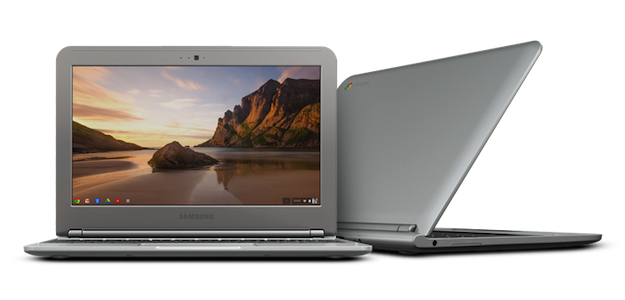
Google and Samsung shun Intel, announce Exynos-powered Chromebook

Samsung Chromebook

Samsung has once again partnered with Samsung to produce a laptop running Chrome OS. The new model shuns Intel's chips, and has a very attractive price tag too.

Google has once again collaborated with Samsung to release a laptop with Chrome OS installed. The new model is simply called Chromebook, and is smaller and lighter than the Chromebook 550. It also marks a departure from Intel’s chips, as it’s based on ARM architecture instead.

The new Chromebook has an 11.6-inch screen, smaller than previous models, but with a higher (and more traditional) 1368 x 768 pixel resolution. The Atom processor has been removed and Samsung has installed its own dual-core Exynos 5 Dual chip.

This is exciting for several reasons. Samsung’s Exynos 5 Dual was the first chip to use ARM’s Cortex A15 architecture — the same as Qualcomm’s quad-core Snapdragon S4 Pro — and the Chromebook marks its first appearance after being announced in August. It’s also expected to appear in Samsung ’s next generation tablets and although no clock speed is mentioned for the Chromebook, the chip can run at up to 1.7GHz.

Samsung and Google’s move to ARM is also good news for our wallets, and the Chromebook has been priced at a very competitive $249 in the US and £229 (if purchased online) in the UK.

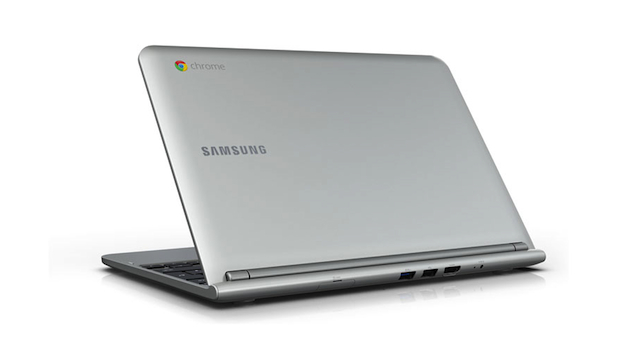
Samsung Chromebook Rear

For this you get a 16GB SSD that provides a 7-second boot up time, 2GB of RAM, a memory card reader, a pair of USB ports, an HDMI-out, Wi-Fi, a VGA camera, Bluetooth 3.0 and a battery that promises more than 6 hours of use before needing a recharge. The chassis weighs 2.5lbs, or 1.1kg, and measures 20mm thick.

As the whole point of the Chrome OS is to work in the cloud, Google will make up for the pathetic 16GB of onboard storage space by providing a complimentary 100GB chunk of Google Drive space. The small print points out that this is only valid for 2 years, after which time it’ll revert back to standard and you’ll have to pay.

So, the price is good and the spec is interesting, and to help introduce buyers to Chrome OS, Google will promote the new laptop in stores through special “Chrome Zones.” However, with the impending introduction of Windows 8 and all its associated hardware, will the Chromebook get a look in, regardless of its low price?

The new Chromebook is available as a pre-order from Best Buy, Amazon, TigerDirect.com and Newegg.com, or from PC World in the UK right now. According to the latter, it’ll be released on October 19.


Source : digitaltrends[dot]com

Oct 15, 2012

Amazon may be looking to buy Texas Instruments’ OMAP business

Making your own chips seems to be all the rage these days – a new rumor claims that Amazon is looking to acquire Texas Instruments’ high-end OMAP chipset manufacturing business.

TI recently announced they’ll be expanding the focus of their chips to “automotive, industrial, enterprise communication, vision and robotics”, but they won’t give up on the mobile phone and tablet market.

Has that changed? And more importantly, why would Amazon, which is a retail and service company, spend billions of dollars to get its own chipset making business?

Amazon recently revealed they are not making any profit on the hardware of the Kindles (they serve more as a storefront), so if they’re the ones making the chipset powering the Kindle Fire tablets (also Barnes&Nobles Nook tablets) they might be able to reduce the manufacturing costs somewhat.

But enough to justify a deal worth billions of dollars? It might, if Amazon was planning to make more than just Kindle tablets. There were rumors of an Amazon phone, but the company might also go the digital video player route a la Apple TV or Nexus Q – they certainly have the multimedia library for it.

What else? Well, Amazon is maintaining a lot of data centers for EC2 and their own needs and ARM-based servers have been gaining popularity lately (and TI’s OMAP 5 that’s based on Cortex-A15 would be a good fit for something like that).

Of course, all this is just speculation – the two companies haven’t even confirmed that such a deal is being discussed. But Amazon is certainly a company that aggressively breaks new ground, so it just might be true.


Source : blog[dot]gsmarena[dot]com

Sep 27, 2012

Goodbye OMAP? Texas Instruments to stop investing in mobile processor business

Texas Instruments OMAP 4

Texas Instruments has announced it will stop investing in mobile chips, and turn its attention to the "embedded processor" market instead.

The saying goes “when the going gets tough, the tough get going,” however it appears Texas Instruments took it in a slightly different way to the rest of us, as it has announced it’s taking a step back from the incredibly competitive mobile processor market.

It was TI’s Senior VP of Embedded Processing Greg Delagi who announced the news at an investor meeting on September 25, saying “the [smartphone] opportunity is less attractive as we go forward,” and talked about the market being “dominated by a couple of players.”

While Texas Instruments may not be as well-known as Qualcomm or Nvidia, it is America’s second largest chip manufacturer and its OMAP processors can be found in devices such as the Amazon Kindle tablet, B&N’s new Nook tablets, a wide variety of Huawei smartphones, the Panasonic Eluga, several Motorola Droids and Kobo’s new range of Android tablets too.

Texas Instruments may be taking a step back, but it’s not a total retreat, as Delagi promised that it would continue to support smartphones and tablets that use OMAP chips, but wouldn’t be dedicating the same level of investment as it had done in the past.

What this will mean for the forthcoming OMAP 5 isn’t clear. This exciting chip is expected to start appearing in devices towards the end of this year or early next, and uses ARM’s dual-core Cortex A15 architecture, much like Samsung’s Exynos 5 Dual. A video showing an early test indicated the OMAP 5 was set to be quite a beast, so let’s hope it’s still on its way.

So what will Texas Instruments be doing instead? It’s going to concentrate on something called “embedded processing,” where chips are used in appliances, big industrial machinery and most importantly, cars. Delagi showed the embedded processing market to be worth $18 billion, and that the automotive slice of that pie was worth $6.5 billion alone.

The news has seen Texas Instruments’ stock take a fall, and analysts voice their concern over the decision. That said, others predict that if embedded processing takes off, the move could be very profitable.


Source : digitaltrends[dot]com

Sep 25, 2012

Never lose a sock again with RFID-chipped socks

blacksocks rfid socks

Definitely helpful when attempting to locate the sock the dryer supposedly ate, socks with RFID chips brings a digital spin to laundry.

Detailed on the Blacksocks site, the clothing company has added a radio ID tag to a line of socks that allows consumers to keep track of the footwear within the bedroom or when being washed. The Swiss company attached the tag at the top of the socks and it can be scanned with the included RFID reader. Shaped like a small garage door remote control, the RFID reader communicates with an iPhone over Bluetooth in order to transmit specific information about the sock. Within the Blacksocks application, the user will be able to match up the same two socks over and over in addition to tracking data like the amount of times that the sock has been washed or the original production date of each individual sock. 

blacksocks-rfid-readerHowever, anyone can download the iPhone application in order to use the camera tool to measure the black level of their current socks. Using the iPhone camera, the application measures the black level on the image and offers a recommendation regarding the purchase of newer socks. The camera also takes a light reading on a white surface in order to calibrate the application for the room’s lighting.

Regarding keeping track of socks with the application, the app allows the user to pair socks together. If a sock is destroyed or fades after repeated washing, it can be paired with another tagged sock using the app.

Called the Plus+ socks, the radio ID tag looks like a small button on the outside of each sock. The socks are mostly made out of Peruvian pima cotton and basically look like a standard dress sock.

However, the socks are definitely on the expensive side. Blacksocks sells 10 pairs of RFID-tagged socks in three different sizes along with the RFID reader for a steep price of $189. In addition, replacement Plus+ socks can be purchased in 10-pair allotments without the RFID reader for $120. 


Source : digitaltrends[dot]com

Sep 6, 2012

Why the Lumia 820 and 920 won’t save Nokia

Stephen Elop and Steve Ballmer Nokia Lumia 920

Are the Nokia Lumia 820 and Lumia 920 the blockbuster phones Nokia needs to reignite its phone business? Probably not.

When Nokia declared defeat on Symbian and stacked all its remaining chips on Windows Phone, the company’s fate was sealed. With the Lumia 900, that bet didn’t go so well. 

Now it’s rolling the dice one more time with the Lumia 920 and Lumia 820. Are these the smartphones that will save Nokia?

The answer, sadly, is “probably not.” Unfortunately for Nokia, the scales of the smartphone market are tipped against it right now, and the only a pair of game-changing devices could tip them back. The Lumia 920 and 820 don’t carry that weight. Here’s why.

New phones…or an updated Lumia 900?

nokia lumia 920 and 820

In terms of specs, both the Lumia 920 and the Lumia 820 are competitive with devices like the Samsung Galaxy S III and other mid- to high-end smartphones. That’s part of their problem: There’s little about the new Lumia hardware that stands out at first glance, other than swappable neon-colored cases. In fact, the new Lumia’s specs aren’t all that different from their predecessors, the Lumia 800 and 900, in many respects. The Lumia 900 offers a 1.4GHz processor, 4.3-inch 800 by 480-pixel AMOLED display (same dimensions as the new Lumia 820), an 8-megapixel Carl Zeiss camera, and support for 4G LTE networks. Add Qi wireless charging and a more-sensitive screen, and you’ve essentially got a Lumia 820.

It wouldn’t be hard to argue that one of Nokia’s new flagship phones is slightly warmed-over version of its previous flagship phone: You know, the one that didn’t sell well and that Nokia wound up issuing full-price rebates on because of a software gaffe.

PureView: “It’s a brand, not a technology”

Nokia Lumia 920 prototype pureview image

The specs above on the Lumia 920 gloss over a genuine hardware innovation: the PureView 8.7-megapixel camera. Seeing the name PureView immediately recalls the recent Nokia 808 smartphone. The 808 is based on the moribund Symbian platform, but it sports a unique and stunning 41-megapixel camera. That doesn’t mean the 808 takes 41-megapixel pictures; it uses all the extra capacity in the sensor to offer high-quality zoom and noise reduction. It’s really quite cool, and totally unique. Nokia introduced PureView as a fundamental rethinking of how mobile cameras can operate — and delivered.

Nokia 808 pureview 41 megapixel sensorNone of that PureView is in the Lumia 920. Instead, the Lumia 920 offers a high-quality Carl Zeiss 8.7-megapixel camera. It’s not a stock part: None of the camera components area derived from previous Lumia offerings, and it’s all-new from the flash (twice as powerful as Nokia’s previous LED flash) to the housing. The most significant item on the new list is optical image stabilization, which works to keep the camera lens physically steady and capable of taking sharp, unblurred pictures even in shaky hands. No other smartphone has this technology yet. The floating optics make the camera bigger than most other phone cameras, but Nokia still packed them into a device that measures just 0.42 inches thick. If you’re a photography aficionado, you’re applauding right now.

However, the Lumia 920′s camera means Nokia is now positioning PureView as a brand, rather than a specific set of technologies. The Nokia 808 represented the first “phase” of the technology; the Lumia 920 represents a second “phase” aimed at improving low-light use and reaching a broader range of consumers. Nokia wants PureView to denote a premium imaging experience of some sort, regardless of the specific technologies in play.

That’s a mixed message if we’ve ever seen one.

Nokia says the combination of image processing and high-quality optics make the Lumia 920 worthy of the PureView brand name. In fact, Nokia’s Damian Dinning — who has spent five years developing PureView technologies, took to Twitter this week to argue exactly that. Early reports of image quality in the Lumia 920 are quite positive, particularly in low-light situations, and Nokia is expected to bring out lens “apps” to add functionality via software. 

Nonetheless, the consumer camera market largely hasn’t gotten past the megapixel argument. Show a typical buyer two $99 cameras, one with an 8-megapixel sensor and one with a 14-megapixel sensor, consumers will almost always buy the 14-megapixel camera because “more” is better. Some may make a different decision based on size, battery type, features like an optical zoom, or even image quality, but megapixels are still the primarily marketing point for digital cameras.

From a marketing perspective, Nokia would have been better off skipping the PureView brand entirely and trumpeting the Lumia 920 as “the first phone camera in the world with optical image stabilization.” That’s a tremendous accomplishment. Instead, the Lumia 920′s PureView camera comes across as a watered down version of technologies originally meant to support a 41-megapixel sensor. That’s if consumers are aware of the 41-megapixel PureView camera at all — otherwise, the Lumia 920 is just another phone with an 8-megapixel camera. Don’t they all have that these days?

No firm prices or launch dates

Nokia Jo Harlow Nokia Lumia 920

Nokia’s press event in New York City today basically amounted to a stunt. With Apple preparing to unveil the iPhone 5 on September 12, major technology companies (like Motorola and Amazon) have been scrambling to introduce their products ahead of Apple for two primary reasons:

  1. Apple product announcements garner an incredible amount of press and consumer attention. Pre-empting Apple could potentially take some of the wind out of Apple’s sails.
  2. Pre-empting Apple means a company’s newly-announced products mostly get compared to Apple’s existing product line, rather than whatever the notoriously secretive Apple has up its sleeve.

However, Nokia has failed to account for two factors that make Apple’s hardware product announcements so devastatingly effective:

  1. Apple always announces pricing when they introduce a product.
  2. The new product is always available for pre-order — if not outright sale — shortly after the announcement.

Nokia did neither of these things. The company offered no timeframe for when the new devices would be available, save that they would land in the last three months of 2012. The company has revealed no pricing information. Few expect that the Lumia 920 would cost more than an iPhone or a high-end Android phone, but right now, there’s no telling. Some industry watchers are speculating Nokia will follow the path of the Lumia 800 and 900 and price the devices at $49 and $99 (on contact) in an effort to attract buyers.

Windows Phone fans feel burned, new customers don’t care

Nokia Lumia 820 (alternate)

The lack of pricing and availability information leads to another crucial question: Who is going to buy a new Lumia phone?

The logical answer is that early adopters will be folks who have already bought Windows Phone devices from the likes of Nokia, HTC, and Samsung. After all, they already have an investment in the platform, so stepping up to a new flagship Nokia device might be a no-brainer.

Or is it? Windows Phone 7 debuted in October 2010, almost two years ago, which means that users who were among the very first to jump on the platform are nearing the end of their phone contracts and probably starting to look for a new phone. The new Nokia handsets might be very tempting when they eventually ship.

However, most existing Windows Phone customers did not jump on the platform on Day One. And the Lumia 900 — arguably the best device to date engineered to the Windows Phone platform — only hit the market five months ago. Customers who bought that phone won’t be out of their contracts until 2014.

Moreover, those customers probably feel more than a little bit slighted, since no existing Windows Phone 7 devices will be upgradable to Windows Phone 8. (They’ll get a new start screen with Windows Phone 7.8, though.) Even if folks bought a new Windows Phone just a few months ago, they’ll have to buy a whole new device to get Windows Phone 8.

Put together, that probably means many existing Windows Phone 7 customers aren’t in much of a hurry to snap up the Lumia 820 or 920 when they become available later this year.

Who does that leave in Microsoft and Nokia’s target market?

  • Existing iPhone, Android, and BlackBerry users
  • Folks looking for their first smartphone

Existing smartphone owners are difficult to convert because they already have an investment in apps, accessories, and add-ons for their platform. Once you’re locked in, it’s hard to switch — or not feel annoyed at having to buy Angry Birds all over again for your new phone.

Guess which platform is widely preferred by folks who are looking for their first smartphone? Often, it’s the platforms their friends and family use.

How many people have friends and family using Windows Phone 8? Zero.

The bottom line is that Nokia’s new Lumia phones will be a tough sell all around, at least, when they go on sale. Whenever that might be.

The sand in the hourglass is running out

Nokia CEO Stephen Elop

The Lumia 820 and Lumia 920 may represent Nokia’s last, best opportunity to wow the smartphone market.

But it’s just not enough.

Nokia is hemorrhaging money, and it’s getting very difficult for the company to borrow to keep its operations afloat. Standard & Poors recently downgraded Nokia from BB+ (high-end junk bond) to BB- (a somewhat junkier junk bond). The move follows a similar downgrade by Moody’s (from Ba1 to Ba3) in July. Nokia has put a brave face on these ratings downgrades, noting it has a few billion euros in the bank (more than twice its reported debt) and access to 1.5 billion more in credit lines that are good through 2016. That cash position — coupled with cost reductions like layoffs — can keep the company afloat for a time.

But Nokia’s stock price declined nearly 16 percent with the announcement of the Lumia 820 and Lumia 920. Investors — even those willing to consider sub-prime “speculative” stocks — didn’t like what they saw today. Nokia’s stock price is down over 60 percent in the last year.

The stock price and rating downgrades are indicative of how deep a hole Nokia has dug for itself with its all-or-nothing bet on Windows Phone. Most of Nokia’s revenue still comes from feature phones, primarily sold to developing markets, and that revenue is drying up as carriers shift away from Symbian in favor of platforms like Android, or demand deep discounts from Nokia to keep Symbian on the shelves. Nokia’s Windows Phone devices have generally been well reviewed, but not enough people are buying them to make up for the lost revenue. The result is that Nokia is having to cut deals with carriers and discount the phones in an effort to make consumers even consider them. It all smacks of desperation—not a known turn-on for consumers.

Nokia has a few things going in its favor: Microsoft will aggressively promote Windows Phone 8 alongside Windows 8 and Windows RT going into the crucial end-of-year holiday season, which should help make Nokia devices more visible. Mobile carriers are interested in having a third major phone platform that they can play against Apple’s iOS and Google’s Android, so they may be willing to cut some favorable deals to give Windows Phone a chance. And it’s significant that Nokia unveiled these new Lumia phones in the United States: it means Nokia is looking to re-assert itself in the North American market, which it has largely abandoned for the last several years.

But the clock is ticking. Microsoft has a lot of cash. It can afford to keep promoting and iterating the Windows Phone platform for years — just as it has done with its Bing search engine — without making a penny from it.

Nokia cannot afford to play out that kind of long-term strategy. Today’s highly-anticipated announcement from Nokia, leading up to the official launch of Windows Phone 8, was perhaps the company’s best shot at showing it can innovate and disrupt the smartphone market with something truly unexpected.

That didn’t happen. Nokia has enough money for maybe two more attempts. Personally, I hope they can do it.


Source : digitaltrends[dot]com

Aug 25, 2012

Review: BioLite CampStove charges gadgets while it cooks

BioLite CampStove

Despite keeping to a diet of twigs and wood chips, BioLite's CampStove is powerful enough to stand toe-to-toe with some of the best gas stoves out there, and it will charge your gadgets while it's at it.

With a smart and innovative design, this powerful little biomass stove promises a lot: Not only will it cook your food, it will charge your electronics, eliminate the need to carry fuel, and do it all without creating smoke. Does it live up to all it’s promises? Read on to find out.

Out of the box

Like any good piece of camping equipment should, the BioLite stove feels solid. Its interior chamber is made of high-temperature steel that will withstand even the hottest fires, and it’s surrounded by a honeycomb-patterned steel mesh so you can still pick it up once it gets hot. The mesh will bend inward if you squeeze tightly, but will spring back once you release, so there’s no need to worry about warping the exterior. For stability, the stove has three extendable legs made out of solid but lightweight anodized aluminum. Even on bumpy or uneven ground, the legs made it easy to situate the stove in a way that would hold a pot safely.

The plastic housing around the fan and generator seemed like a potential weak point. The first time we fired it up, we were concerned that a breeze would send flames licking down onto it, turning it into a gooey blob of molten orange plastic. Wrong. The plastic it’s made out of is pretty rugged, and is designed to withstand a good amount of heat. Even if strong winds start to cause problems, it’s not hard to reposition the stove to keep the flames away from the plastic.

The fan and charger unit easily detaches from the burn chamber, and once it’s cool enough, fits nicely inside of it for more compact storage. Overall, it scores high marks for design.

Starting a fire

To get things going, the unit ships with six fire-starter sticks that look like Kit-Kat bars made out of compressed pocket lint. Break one off, light it up, toss it into the burning chamber along with some wood bits, and you’re on your way. Once the fire gets going, the directions say to switch the fan on to the low setting. This will feed fresh air into your fire, making it burn quicker, hotter, and more efficiently.

BioLite fire-starter sticks

BioLite fire-starter sticks

Knowing when to switch between the two fan settings is key, as the high setting will likely blow out a weak fire before it gets large enough to be useful. We found that we only needed to be on the low setting for about a minute before the fire was strong enough to handle the high setting. Once it reaches this point, you can fill the chamber with wood. With an abundance of fuel and air, the stove will create a blazing spiral of flames that can be used for cooking right away.

Cooking

In our first experiment with the stove, we boiled one cup of water in a titanium pot in just over two minutes. Experiments with more water yielded consistent results, as one liter took roughly four times as long. Boil times varied based on the strength of our fire, but as long as we fed the burn chamber a steady supply of wood, the stove heated things up rather quickly.

Simmering food in a skillet was relatively simple as well, as we only needed to let the fire die down a bit for a lower cooking temp. Maintaining a consistent level of heat was a bit more difficult, but if the fire ever got too hot we just took the pan off for a second. Gourmet camp chefs will probably still prefer variable-temp gas stoves, but with a bit of practice we were able to control the heat well.

Long-term use

Once we used up the trusty firestarter sticks that come with the CampStove, getting the stove going can be a pain. Starting a fire inside the chamber was somewhat difficult, since we couldn’t fit a hand inside it or get a flame into it from below. The directions suggest using a long match, but like the overwhelming majority of the world (seriously, who keeps those around?) we didn’t have any handy, and it was too much of a hassle to hunt them down in a store.

To get the CampStove working without firestarters, we basically had to start a small fire outside of the stove using bits of paper and small twigs. Once we caught some sizable chunks of wood on fire, we tossed the whole flaming pile into the chamber. Much to our frustration, on the first few tries this caused the fire to go out. Being persistent, we repeated the process, but this time with the fan blowing on the LO setting. It worked much better. Truth be told, it’s only a bit more cumbersome than starting a regular old campfire without lighter fluid or any other type of accelerant. Those with good fire-starting skills and plenty of patience might not mind this too much, but for campers who’ve become accustomed to the simplicity of lighting gas stoves, this will undoubtedly be a point of annoyance.

With the firestarters handy, the stove is on par with the simplicity of any gas stove. Without them, it’s considerably more tricky. On its website, BioLite boasts that you’ll never need to carry fuel for the CampStove, but since firestarters are pretty much essential for easy operation, this isn’t entirely true. For consumers turned off by the idea of buying more firestarters, we recommend an old backpacking trick. Instead of buying firestarters, you can make your own by smudging a few cotton balls with petroleum jelly. They’ll light quickly and burn for around five minutes before going out. BioLite warns not to put any sort of liquid fuel or accelerant into the burn chamber, but we found that these vaseline cotton balls caused no damage whatsoever. Despite this easy fix, the ignition problem is a major drawback. 

BioLite CampStove connected to iPhoneCharging electronics

In order to charge your devices effectively, you’ll need to keep a healthy fire going. If the heat gets too low, the stove can’t produce enough energy to power both the fan and charge your gadget, so it gives priority to the fan. You’ll know when this happens, as the stove’s indicator light will glow orange when it’s only running the fan, and will glow green when it’s producing a surplus of power. Keeping the bar green and providing a steady flow of electricity to your devices is just a matter of feeding the fire.

What kinds of stuff can the stove charge? The charging bay consists of a single USB port tucked behind a protective rubber stopper, so pretty much anything that’s USB-powered can get juice from it. The only cord it comes with is a short USB to USB cable for the initial battery charge, so you’ll have to provide the cord for whatever device you’re powering up. 

Through all of our tests with an iPhone 4s, it added about 1 percent to the battery for every 2.5 minutes of charging. It might not be the quickest charger, but since we generally used the stove for anywhere between 8 to 30 minutes, it always gave our phones enough juice to last until the next meal. 

Putting it in perspective

The BioLite CampStove is truly a unique product right now. We know of only two other biomass stoves that use fans to increase efficiency, an of those two, neither make use of thermoelectric energy to power their fans, and neither can be used to charge electronic devices. This really puts BioLite in a league of it’s own.

Even compared to a liquid-fuel stove like MSR’s renowned Whisperlite, the BioLite compares favorably. In terms of weight, the BioLite CampStove and WhisperLite stove are in pretty close competition. The BioLite stove weighs in at 33oz, and a fully-fueled Whisperlite comes in at just about one ounce less than that. Granted, a Whisperlite gets lighter as you use up fuel, but it also doesn’t run forever or charge gagdets.

The CampStove’s ability to charge electronics gives it a considerable advantage over all other stoves available — as long as that’s something you’re looking for. With other stoves, campers interested in keeping devices powered up will typically need to invest in some other means of charging — be it portable solar panels, battery packs, or thermoelectric generators. Regardless of the type, these all add extra weight to your pack, and cost you extra money. Which brings us to the next point.

Price

At $139, the BioLite CampStove admittedly costs more than most stoves on the market. Canister stoves will run you around $30 to $50, and liquid-fuel systems like MSR’s WhisperLite typically fall within the range of $70 to $120 dollars with some high-end systems going as high as $180. The advantage of BioLite’s CampStove, however, is that you don’t need to buy fuel for it — save for maybe a few cotton balls and some petroleum jelly. Additionally, if you take the charging ability into account and consider the fact that you’ll pay an extra $50 at minimum for other charging systems, BioLite’s price begins to seem more reasonable. All things considered, we think it’s well worth the money.

Overall

It’s too heavy for ultralighters, and not suited for large groups, so we think the BioLite Campstove would be a good choice for small groups going out on weekend hikes. Although canister stoves are considerably lighter, the BioLite offers a more ec0-friendly cooking system and is capable of charging electronics. Sure, you’ll have to carry a few extra ounces, but just keep thinking about all the money you’re saving on fuel and all the canisters you’re saving from landfills, and the load will feel lighter. If you’re of the mind that gadgets have a place in outdoor excursions, the CampStove is arguably one of the lightest stove and charger combos you can put together, and also one of the cheapest. All things considered, its virtues outweigh its shortcomings, and the BioLite CampStove is surely one of the most creative and well-designed outdoor products we’ve seen. 


Source : digitaltrends[dot]com