Pages

Showing posts with label power. Show all posts

Nov 14, 2012

Microsoft launches Windows Phone ad blitz with Jessica Alba, Gwen Stefani

jessica alba windows phone

In an attempt to use the power of celebrity endorsements to promote the Windows Phone, Microsoft has rolled out new ads featuring prominent women.

Taking an aggressive approach with the promotion of the Windows Phone platform, Microsoft has launched two new advertisements starring actress Jessica Alba and No Doubt musician Gwen Stefani. Airing during primetime television tonight on commercial breaks within ABC’s Modern Family and NBC’s The Voice as well as late night talk show Jimmy Kimmel Live, the two advertisements highlight different ways that the Windows Phone platform has changed their daily life. The 33-second spot with Jessica Alba features the Nokia Lumia 920 and is co-branded with AT&T. However, the 32-second Gwen Stefani advertisement features the 8X by HTC and splashes the Verizon Wireless logo on the screen.

Gwen Stefani Windows PhoneDuring the Jessica Alba spot, Microsoft is attempting to promote the use of the Kid’s Corner feature since young children like to play games on their parent’s smartphones. Similar to Netflix’s Just for Kids section, Kids Corner on the Windows Phone acts as a parental filter.

After Kid’s Corner is launched, it’s impossible for a child to access text messages, emails or other important areas of the phone without a password. In addition, parents can populate the Kids Corner with approved applications such as entertaining games, learning programs or other fun apps for young children. Kids can also listen to approved music through the Kids Corner interface as well as personalize the background. 

Alternatively, Microsoft is trying to highlight the usefulness of the Windows Phone platform for busy working women during the Gwen Stefani ad. Since early adopters of smartphones tend to be both men and women these days, Microsoft is clearly going after the female demographic for the opening round of Windows Phone ads. Ads featuring male celebrities are in the works though. According to Ad Age, two more advertisements will follow later in November featuring Saturday Night Live alum Andy Samberg as well as Carolina Panthers quarterback Cam Newton. 


Source : digitaltrends[dot]com

Nov 9, 2012

The power of three: BorgWarner builds world’s first three-stage turbo system for diesels

BorgWarner has developed a high-performance three-stage turbo system for BMW's diesel M cars. The system has given the engine a big gain in both power and fuel economy.

Turbocharging technology has come a long way in recent years, doing much to improve the power output of smaller engines and generally helping to keep fleet fuel economy numbers up. But now BorWarner has introduced a new turbocharging system which represents a major leap forward for the world of turbocharging. Making its first appearance in the BMW M550d xDrive Sedan and Touring, the X5 M50d Touring and the X6 M50d is a 3.0-liter inline-six using the world’s first three-stage turbo system for diesels.

The system uses two smaller high-pressure BV45 variable turbine geometry turbochargers and one large B2 low-pressure water-cooled turbocharger. The idea is for each turbocharger to spool up at a different engine speed, and therefore more effectively keep a high volume of air flowing into the engine at all times. Compressed air allows for a better burn from the fuel, effectively getting more power out of the same amount of fuel.

The problem which many early turbo systems suffered from was that a single turbo can provide compressed air across only so much of the power band. This meant that engines would either bog down at higher revs or (more usually) suffer from “turbo lag” when revs were low and the turbo wasn’t yet up to speed. Much of this has been improved in recent years as twin turbos operating in sequence made for a more progressive application of boost, as opposed to the on/off nature of older single-turbo systems. A three-stage system is an evolution of this same idea, all three turbos keeping air flowing at whatever the engine speed.

BorgWarner says the system provides almost 25 percent more power and eight percent better fuel economy when compared to the older two-stage system used in cars like the BMW 740d (125.5 horsepower per liter of displacement versus 100.5 horsepower per liter of displacement for the old system). The engine produces 381 horsepower and 546lb-ft of torque, more than enough to do justice to the M badges on the cars. Diesels haven’t been very popular with road-going performance cars in years past, but as companies like Audi and Peugeot continue to look to diesel for their motorsports applications, the idea of a diesel in a high-end performance machine makes more sense. Where this technology will go next isn’t specifically known yet, but if the benefits are as good as BorgWarner claim, we’re sure to see a lot more of it.


Source : digitaltrends[dot]com

Nov 7, 2012

Browsing with Chrome now gets you longer battery life

The latest stable release of the popular Chrome for Windows browser from Google now has full GPU acceleration enabled for video decoding.

Dedicated graphics chips draw considerably less power than CPUs when watching videos, which means that your laptop will last that much longer.

In Google’s own tests, with GPU video acceleration enabled the battery lasted 25% longer when watching 1080p videos on YouTube.

Another update brought by this release is a quicker way to access permissions for any website you visit with Chrome. Instead of having to dig through a settings menu for the permissions of a particular website, simply clicking on the new padlock icon in the address bar will give you access to all the permissions available for the current website you’re visiting.

If you have Chrome already, then the update should roll out to you automatically. Otherwise, Chrome for Windows can be found here.


Source : blog[dot]gsmarena[dot]com

Oct 29, 2012

Starbucks rolls out test of wireless charging stations in Boston

starbucks

Definitely more convenient than hunting down a power outlet while holding a latte, Starbucks and Duracell are testing wireless charging at retail stores.

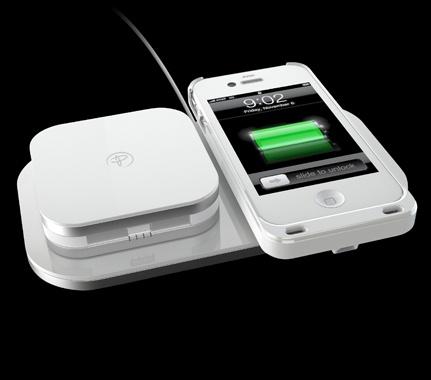
Detailed on Boston.com earlier today, the Seattle-based coffee giant Starbucks is launching a pilot program that will install wireless charging stations at seventeen franchise locations around the city of Boston. Partnering with Duracell, Starbucks management is utilizing inductive charging technology and installing large Duracell Powermats within the tables at retail stores. In order to take advantage of wireless charging, customers will either need to purchase a Power Matters Alliance (PMA) compatible wireless power case or borrow a loaner case from a Starbucks employee. Duracell currently makes PMA-compatible cases for the iPhone 4 and iPhone 4S as well as the Samsung Galaxy S III Android smartphone.

Duracell Powermat wireless chargingWhen asked about the new technology rolling out at Boston locations, Starbucks chief digital officer Adam Brotman stated “We’re building the Powermat technology into some of the tabletops, just to get a sense for how our customers will react, compared to having to plug their mobile devices into the wall. A few weeks into the test, we’ll do some in-store giveaways, and we will have some behind the counter available to loan out.” 

Starbucks plans to roll out a minimum of eight Powermats per store in order to gauge customer demand and the first stores to receive the upgrades are located within Boston’s financial district. As more people start using the wireless charging stations instead of the power outlets within each store, it’s likely that it will free up charging space for customers with laptops or other devices.

AT&T has also started to sell PMA-compatible cases and Delta airlines has started installing wireless charging spots around gates at major airports within the United States. Earlier this year, General Motors announced that the company would be adding a PMA-compatible powermat station into Cadillac, Chevrolet, and Buick automobiles. In addition, popular venue Madison Square Gardens in New York City has added hundreds of wireless charging locations as a service to visitors.  


Source : digitaltrends[dot]com

Oct 24, 2012

Online newspaper publicly shames bad drivers with mobile app

parking on sidewalk

Harnessing the power of mobile smartphones to bring about public humiliation, a digital newspaper in Russia is going after poor drivers.

Created by an online newspaper in Moscow called The Village, people within Russia can use a mobile application called Parking Douche to inform the public about poor drivers that like to park on sidewalks or other areas that aren’t acceptable for parking a vehicle. After someone downloads the application to their Android smartphone, they can start taking pictures of a driver that’s parked their vehicle illegally. The application requires the person to take two pictures of the vehicle. The first picture should be a wide view to demonstrate the car owner’s poor parking skills and the second picture should be a close up photo of the driver’s registration plate.

parking douche appThe application automatically converts the picture of the registration plate to a text field and asks the smartphone owner to check the validity of the registration plate number. In addition, the user can select the exact color of the car using a color field on the touchscreen as well as the general body shape of the car. Using GPS within the smartphone, the exact location of the parked car is also noted by the application.

After uploading all the data to the newspaper, people that live in the immediate area will start to see pop-up advertisements on The Village and other partner sites. While reading an article, a pop-up advertisement shows a replica of the car’s design and color in addition to the exact registration number on the vehicle’s plate. The caption reads “This parking douche annoys you on this site like he does on ‘Street Name’.

The Village then encourages people to share the poorly parked car on Facebook to get rid of the advertisement. In order to avoid annoying readers of the newspaper that don’t live in the immediate area of the illegally parked car, the advertisements are specifically localized by IP address. Only people living in the immediate area will see the advertisement. Due to requests from people in countries like the United States, Japan, Germany and the United Kingdom, management at The Village has made the application open-source software.


Source : digitaltrends[dot]com
Oct 15, 2012

This cellphone makes a better use of a sugar rush than you ever will

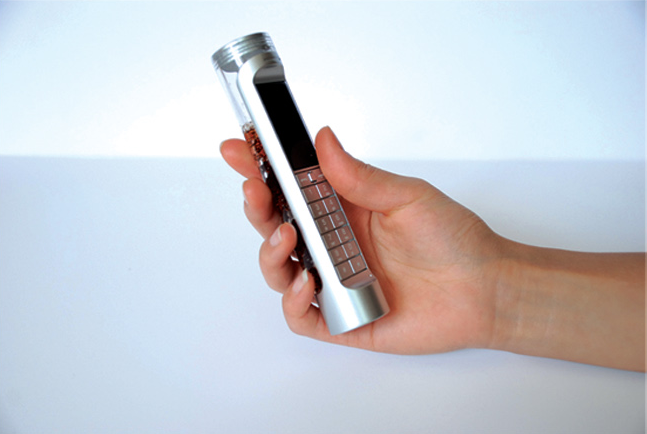
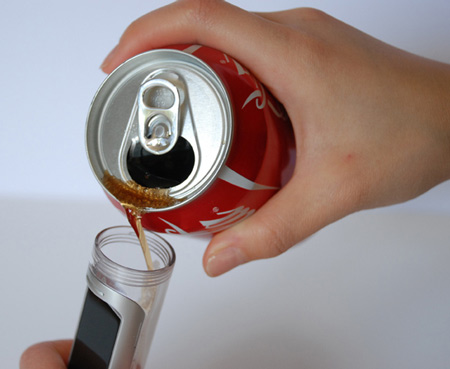
A concept phone utilizes sugary drinks as the power source for a cellphone, making the battery biodegradable.

I’ve been trying to quit soda for the past few weeks thanks to too many hours on Reddit and constant streams of photos that displayed how much sugar was in a can of Coke. As a result, there are untouched cans of soda sitting my fridge with no one to claim them, but it felt irresponsible if I just gave them to the kids next door. If only this eco-friendly concept cellphone existed. The design, by China-based Daizi Zheng, claims that a Nokia phone could be powered solely on sugary drinks. Now there’s an interesting use of leftover Coke that’s much more excitable than cleaning the rust off my pennies.

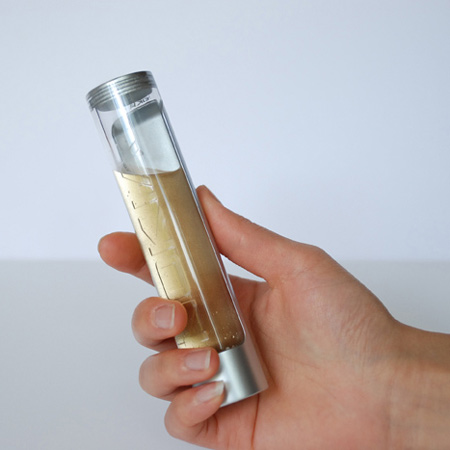
According to Zheng’s thesis, the phone would contain a chemical board that can form a reaction to utilize sugar enzymes and carbohydrates and convert them into electric power. The phone would work with most sugary drinks; in fact, more sugar means longer battery life. When the sugar and carbs are all used up as battery, you’re left over with a liquid that’s biodegradable, and the phone can be cleaned, refilled, and reused once again.

“Bio-batteries are fully biodegradable and have, on a single charge, a potential life-span three to four times longer than conventional lithium batteries,” Zheng writes on his website. Keep in mind, however, this design would be used with a basic, barebone phone, so no sticky touchscreen and apps here.

Coke powered nokia phone leftover liquidSince the design aims to be environmentally-friendly, it’s probably better to use straight sugar water than Coke or other packaged sodas, considering how they tend come in plastic bottles or cans — both of which are already pretty expensive to recycle. Still, it would be cool if the phone doubled as a drink bottle so you can choose to either gulp your soda or conserve it for more phone battery. This rationale would force the user to pick between drinking an unhealthy beverage or forgo it for the sake of your gadget’s usability. However, since the sugar disappears as the phone uses up the battery, it is unlikely that the soda you do end up drinking from the phone would taste any good. We also have to wonder if the fizzy noise would interfere with your sugar high calls.

It’s an interesting approach at multi-purposing a notorious food item, and such a gadget would make a neat science experiment for kids to learn about the wonders (and potential harms) of what sugary drinks means to them, and the chemical world.


Source : digitaltrends[dot]com
Oct 14, 2012

The alleged battery of the upcoming Apple iPad Mini emerges in leaked photos

Alleged photos of the battery unit set to power the yet to be revealed Apple iPad Mini have emerged. The images reveal a 4490mAh battery, packing 16.7Whr of energy, running at 3.72 volts.

The above numbers mean that the alleged battery unit of the upcoming Apple slate is roughly three times larger than the iPhone 5′s battery, and about one third of the third generation iPad’s capacity.

While the images of the battery are not guaranteed to be authentic, the markings on the unit are consistent with the ones of the current Apple products. We will likely get the full scoop at the iPad Mini’s unveiling, which will likely happen on October 23.


Source : blog[dot]gsmarena[dot]com

Oct 1, 2012

Intel details its low-power, next-gen tablet processor, the Atom Z2760 Clover Trail

Intel Atom Z2760 Clover Trail

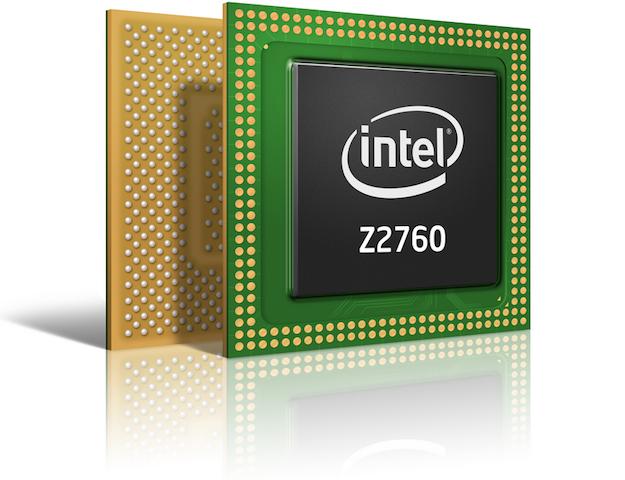
Intel has launched the Atom Z2760 processor, also known as Clover Trail, which is destined for use in power efficient tablets with Windows 8.

Intel has already waged war on ARM with its Medfield Atom processors, and it has now revealed more details on its attempt to derail ARM’s move into Windows 8 tablets too — the Atom Z2760 Clover Trail processor.

Microsoft developed Windows RT, a slightly cut-down version of its new desktop operating system, expressly for use on ARM-based tablets, which in turn was a response to the popularity of cheap-to-buy, long-battery-life Android tablets and the iPad. The full version of Windows 8 also has a home on tablets, but it needs Intel’s X86 architecture to operate, which comes with a considerably higher price tag than Windows RT machines.

The Atom Z2760 is Intel’s answer, and it was the star of an Intel showcase event last week. Intel says the new processor allows manufacturers to build the thinnest and lightest Intel tablets yet, measuring as little as 8.5mm thick and weighing 680 grams. Complete specs are still foggy concerning Windows RT tablets, so as a comparison, the new iPad is 9.4mm thick and weighs 652 grams.

Low power consumption

This isn’t the important part though, as what counts here is the Clover Trail’s ability to provide the full Windows 8 and Windows 8 Pro experience on a tablet, with a quoted three weeks of “connected standby” and “more than 10 hours of HD video playback.” Low power consumption, and therefore longer battery life, is a staple feature of ARM-based devices, and Intel has taken a while to catch up.

With Windows 8 onboard, Clover Trail-powered tablets will offer a greater degree of software support, remote access, Intel’s security features and secure booting too. In other words, these are potentially business-level tablets with ARM-based power benefits at a similar price point.

The Atom Z2760 is built using the 32nm manufacturing process, has dual-cores with a potential clock speed of up to 1.8GHz and Intel’s Burst and Hyper-Threading technology; plus features such as NFC, GPS, 3G and 4G connectivity and the ability to support a pair of cameras.

Considerable manufacturer support

Asus, Lenovo, Dell, Hewlett Packard and Acer have all signed on to produce Clover Trail tablets. We’ve already seen the ElitePad and the Envy X2 from HP and the Samsung 5 Series, but as with everything Windows 8-related, no firm prices have been made public yet.

So, while the features and battery standby time certainly seem to be a match for ARM-based Windows RT tablets, the full Windows 8 support and all the business-use garnish will make Clover Trail tablets attractive to customers who want the best of both worlds. It’s going to be fascinating to compare the two, side-by-side, once all the products and software go on sale.


Source : digitaltrends[dot]com
Sep 10, 2012

Hennessey turns a Cadillac CTS-V Coupe into a 1,200 hp monster

Hennessey VR1200 Twin Turbo Coupe front three-quarter view

With more power than a Veyron and a claimed 242 mph top speed, the VR1200 Twin Turbo Coupe from Hennessey Performance is a supercar in a Cadillac's body.

Most Cadillacs are designed to woo potential buyers away from their BMWs with luxury and sophistication, but the Hennessey VR1200 Twin Turbo Coupe will frighten the competition into submission. Texas tuning legend John Hennessey gave this Caddy 1,200 horsepower.

The VR1200 Twin Turbo Coupe starts out as an already-impressive CTS-V, with a 556 hp, 6.2-liter V8. Hennessey increased displacement to 7.0 liters and, per the car’s name, added a pair of turbochargers.

To keep the engine from destroying itself, The VR1200 sports an air-to-water intercooler, heavy-duty fuel injectors, and reinforced engine internals. Forged aluminum pistons, forged steel connecting rods, and a complete balancing and blueprinting should cause gearheads to salivate.

The result is 1,226 hp and 1,109 lb-ft of torque. That means this Cadillac makes more power than any production car; the Bugatti Veyron Super Sport only makes 1,200 hp.

Putting all that power to the ground is a six-speed manual transmission. Mercedes-Benz AMG likes to say that its cars have too much torque for a clutch, but Hennessey seems to have found one (perhaps it’s made of Unobtanium) that can handle over 1,000 lb-ft. A specially built automatic is optional.

All that power means the VR1200 will probably have traction issues, so Hennessey fitted it with 20×13-inch rear wheels and 345/30-20 rear tires that could have been taken off Batman’s Tumbler.

With its bulging hood and hunkered-down stance (the car is lowered one inch), the VR1200 looks like a Batmobile, especially in black.

Hennessey Performance’s motto is simply “Making Fast Cars Since 1991,” and this Cadillac doesn’t let the side down. After all, with over 1,000 hp, one would expect a car to be fast. Hennessey says the VR1200 will do 0 to 60 mph in 2.9 seconds, within spitting distance of a Lamborghini Aventador. It will also cover the quarter mile in the coveted 10 second range; 10.2 seconds at 141 mph, to be exact.Hennessey VR1200 Twin Turbo Coupe rear three-quarter view

However, Hennessey’s biggest claim involves the VR1200’s top speed. The company says their crazy Caddy will hit 242 mph, making it faster than the McLaren F1 and nearly every other supercar.

In fact, there are only three production cars that can beat 242 mph: the Bugatti Veyron 16.4, SSC Ultimate Aero, and the aforementioned Veyron Super Sport. Being a modified CTS-V, the VR1200 isn’t really a production car, but if it really can hang with these machines, it would be the king of modified cars.

How much will the king of modified cars cost? With all the bells, whistles, and turbochargers, the VR1200 will cost roughly $295,000. That may seem like a lot for a Cadillac CTS, but if Hennessey’s performance claims are true, it will be a relative bargain compared to supercars like the Aventador, which starts at $406,000, and the $1,000,000 Veyron.

Those who want to taste the insanity of 1,200 hp should hurry: Hennessey is only making 12 VR1200 Twin Turbo Coupes.


Source : digitaltrends[dot]com

Aug 31, 2012

Facebook to allow advertising based on phone number, user ID, e-mail

facebook

Facebook’s list of advertising offerings is getting bigger. Inside Facebook reported Thursday that some Power Editor users were temporarily granted access to a new Facebook advertising function. The feature allows businesses to upload individual or sets of contact information to create an advertising audience. This provides a new way for advertisers to use information they’ve collected from users in the past, and marry it with that user’s Facebook profile. Advertisers can use email addresses, Facebook user IDs, or phone numbers in search of their audience. TechCrunch reports that the features have been tested by some and that they will be rolled out to “managed” advertisers next week.

In terms of security, Facebook states on the feature’s page that any information uploaded by the advertiser would be hashed, or encoded, so that Facebook will not be able to use it, and will not have additional usable data about users. Businesses will not be provided any additional user data in the process either, just the ability to target those specific users with tailored advertisements. Businesses will further be able to refine the audience for these ads by selecting specific demographic groups based on gender, age or other characteristics.

Businesses will find a myriad uses for this feature. Its core functionality is that it is no longer limited to targeting advertisements based on qualifiers Facebook (you) allows them to select. An advertiser could use phone numbers, user IDs, or email addresses that they’ve matched with other information already. For example, if you provided a business with your phone number (and permitted them to use it for advertising purposes) and purchased products from that company, they might deliver Facebook advertisements about the particular products you tend to like. As TechCrunch points out, another advantage is the ability of the advertiser to identify existing customers or fans who have not Liked the company’s Facebook page and use the new advertising feature to encourage those users to become fans on Facebook.

This feature allows advertisers a powerful new level of targeting at a time when the efficacy of Facebook’s advertisements is under scrutiny. The option opens the door to new, highly specific advertisements. We can’t grumble too much, however, as they’re only using information we’ve given them.


Source : digitaltrends[dot]com

Aug 23, 2012

One Laptop Per Child (7 Years Later) Infographic

One laptop per child is aimed at providing each child with not just a laptop that is low cost, low power and connected but a rugged one for that matter as stated in their mission statement, OLPC’s mission is to empower the world’s poorest children through education. I can personally recall seven years ago when this project was launched, it seems like yesterday, One laptop per Child was built on 5 major principles:

  1.  Focus on early education
  2. No One gets left out
  3. Connect to the internet
  4. Free to grow and adapt
  5. The Kids keep the laptops

Nearly seven years ago, Nicholas Negroponte unveiled his plan for a $100 laptop computer for children in developing countries. This developed into the One Laptop Per Child project, which produces low-cost laptops for developing countries. What has been accomplished since then? The interesting infographic below is from Muhammed Saleem of OnlineColleges.net, it gives you idea of what has happened since the last seven years and I hope you’ll find it interesting

One Laptop Per Child 7 Years Later
Compiled By: OnlineColleges.net


Source : techtalkafrica[dot]com