Pages

Showing posts with label hardware. Show all posts

Oct 25, 2012

Photos of purported Samsung Nexus 10 quick start guide reveal the slate’s design

Alleged photos of the Samsung Nexus 10 quick start guide have popped up giving us a glimpse of the slate’s design and hardware controls layout.

This is by far the most solid evidence of the slate’s existence after a purported photo taken with it appeared on Picasa.

Nexus 10 will be manufactured by Samsung and just like the company’s recent tablets (the Galaxy Note 10.1 and Galaxy Tab 2 10.1) features two speakers at the front. At the back, there’s a prominent Nexus logo and above the display resides a front-facing camera and an ambient light sensor.

The main camera is at the back coupled with LED flash. The rest is really not that surprising — there the usual array of power/lock and volume rocket buttons at the top and Samsung’s proprietary charging port at the bottom.

And here comes the surprising part that got us skeptical. According to the booklet, the Nexus 10 sports a microUSB and microHDMI ports in addition to Samsung’s proprietary charging port at the bottom. This doesn’t seem right, but who knows.

Anyway, the Nexus 10 is expected to be announced at Google’s special event in New York on Monday, October 29. We’ll be there and will bring you all the news as the event progresses.


Source : blog[dot]gsmarena[dot]com

Windows Phone Store reaches 125,000 apps, but report shows growth has slowed

Windows Phone Store

A new report indicates that Microsoft's Windows Phone Store has reached 125,000 apps, just ahead of Windows Phone 8's launch. However, despite incoming new hardware, growth has slowed over recent months.

A report published by AllAboutWindowsPhone.com shows Microsoft’s Windows Phone Store now contains more than 125,000 applications, up from 100,000 at the beginning of May.

The exact, official figure may be slightly lower, as according to the report, the amount of apps available depends on how you count them, as not all are live or available in all locations.

Regardless, 125,000 is a respectable figure, but it’s a long way short of the 675,000 apps in its Google Play store and Apple’s 700,000 available in the iTunes App Store, a figure it confirmed during the iPad Mini event this week. Apparently, the Windows Phone Store is growing at the rate of around 215 apps per day, and there are 30,000 currently active developers too.

Microsoft hasn’t confirmed these figures, but has the ideal opportunity to do so on October 29, when it will officially launch Windows Phone 8. While a growing app store is essential for the success of a mobile platform today, the rate of new apps being added has slowed over the past few months, which as the report points out, will be due to Windows Phone 8’s impending release.

Looking at the “Items Added” chart, the difference is startling. In December last year — the store’s high point, just after the release of Windows Phone 7.5 Mango — more than 12,000 apps were added, but fast forward to July 2012 and less than 5,000 made their debut. August was much the same, as is October so far, but a spike to around 6,500 came in September.

We know what you’re thinking, with just weeks to go before sparkly new Windows Phone 8 hardware goes on sale, why aren’t developers busily submitting new apps to capitalize on the rush? Microsoft has made things difficult in this area, as it still hasn’t released the Windows Phone 8 SDK to all developers, an essential piece of software to create and test new apps.

It should make an appearance on October 29, right after Microsoft reveals everything it has held back about Windows Phone 8, so November and December should see a big increase in apps being submitted and released. At least, Microsoft better hope it does.


Source : digitaltrends[dot]com

Oct 23, 2012

Tim Cook tells Apple’s story so far – in numbers

Apple CEO Tim Cook rolled out some big product-related numbers prior to the announcement of new and refreshed hardware at Tuesday's special event in San Jose, California.

An Apple event wouldn’t be an Apple event without its CEO first trotting out some product-related stats.

At the Californian Theatre in San Francisco on Tuesday morning, prior to the unveiling of the iPad Mini, as well as news of updates to other Apple products, Tim Cook took to the stage to let everyone know what everyone already knew – that things are going pretty well for the Cupertino-based tech titan.

Cook kicked off proceedings by confirming that, indeed, the iPhone 5 is the fastest-selling iPhone among its six iterations in its five-year history, selling 5 million units in its first weekend of sales in September.

Last month also saw the introduction of a new iPod Touch and Nano, selling alongside the Shuffle and Classic models. Cook said the company has sold 3 million iPods since its last special event on September 12.

As for iOS 6, also released in September, 200 million mobile devices are now running the new operating system, with Cook describing it as the “fastest upgrade rate in history.”

Apple’s iCloud service, which allows users to store their music and other content on the company’s servers and access it from any of their Apple machines or devices, appears to be garnering interest, with 125 million documents now stored remotely using the service.

Cook said 300 billion messages have been sent using iMessage, or 28,000 per second. “Maybe even more now,” the Apple boss quipped just prior to the unveiling of the iPad Mini.

Game Center, which makes it easy for gamers to share scores and compete against each other, has seen the creation of 160 million accounts, while 70 million images have been shared using the new shared photo streams feature launched with iOS just a month ago.

Turning to the app store, Cook said there are now 700,000 apps on sale in the store, including 275,000 for the iPad. “These [iPad apps] are not stretched out smartphone apps,” Cook was keen to point out, adding, “These are apps that have been custom designed to take advantage of iPad’s big beautiful canvas.” The app store has now seen 35 billion downloads since it opened for business back in 2008, with a total of $6.5 billion paid to developers in that time.

As for iBooks, Cook said over 1.5 million books are now available through its online store, with downloads exceeding the 400 million mark.

Leading up to the launch of the smaller iPad, the Apple boss said that two weeks ago the company sold its 100 millionth iPad – not bad going for a product that’s been on the market less than three years.

According to Apple, iPad currently accounts for 91 percent of web traffic share involving tablets, while 94 percent of companies in the Fortune 500 are now testing or deploying the iPad.

It’s going to be interesting to see what stats the company pulls up about the iPad Mini at its next special event. Are more superlatives on the way?


Source : digitaltrends[dot]com

Oct 17, 2012

HTC J butterfly promo video is out, shows off the 1080p screen

The promo video for the freshly announced, Full HD display-packing HTC J butterfly has been released. Naturally, the short video clip is focused on the handset’s design and hardware highlights, with the 5″ 1080p getting the most attention.

It is needless to say that we are quite jealous that this monster of a smartphone is exclusive for the Japanese carrier AU/KDDI for the time being. We are however, more than certain that we will see its brand new, stunning Super LCD3 display, as well as its new internals make their way to more HTC devices in the nearest future.

Here goes the video itself.


Source : blog[dot]gsmarena[dot]com

Oct 16, 2012

Romotive returns to Kickstarter with a faster, stronger, smarter Romo

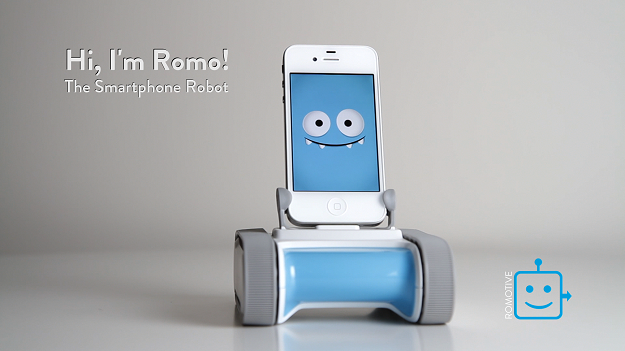
Romo, the smart personal robot by Romotive, is returning to get Romo 2.0 into the hands of the creatives and hackers of Kickstarter.

Romotive is one of the many hardware startups that have embraced Kickstarter and been a part of as well as enjoyed the platform’s overnight success. The first version of the robot was hand-assembled, or sent in disassembled kits and shipped from the team’s apartment in Las Vegas. Romo 1.0 was just thirty pieces, sported a transparent base, a protruding audio cord, and assembled like a puzzle. Still, it was an innovative product and raised $114,769, more than 3.5 times the pledge goal of $32,000. Having learned from its first Kickstarter project, the team is returning and setting out to win the support of Kickstarter again with a smarter and improved Romo, this time with a project goal of $100,000.

The new Romo is better in just about every aspect. It’s compatible with iPhone 4, 4s, as well as the fourth and fifth Gen iPod TouchThis means to drive Romo, you can use just about any iOS device, or even a computer supporting Chrome, Safari, Firefox, or any Mac computer running OS 10.6 or later (it deserves to be mentioned that the iPhone 5 won’t work with the gadget). While Romo 1.0 supported Android, Keller Rinaudo, CEO and co-founder of Romotive told me that the majority of the issues that the team faced with the first project were entirely from Android users. The team isn’t looking to make that same mistake this time around and strictly supports iOS devices for now. An Android-based Romo 2.0 is in the works, but it won’t be arriving for awhile.

Design-wise, you can’t help but notice Romo’s new, much easier-on-the-eyes You can plug in your iOS device into the 30-pin dock, and unlike its previous version, all you have to do to install the Romotive app is to physically connect your phone to Romo, and then the app will automatically download.

Under the hood, the latest Romo has been rebuilt from scratch. The circuit board is more complex , enabling your phone to download the Romotive app automatically. And the app itself has a new, robust suite of features that enables remote two-way video feeds, facial recognition, and autonomous navigation.

Romotive is looking to “build the world’s first affordable personal robots,” says Rinaudo, but the team also wants to foster an ecosystem where developers unfamiliar with robotics can use Romotive’s open SDK to create new functions – for instance, taking a photograph using Romo and uploading that it to a social network — based on the  foundation Romotive has created.

This platform focus will also include the ability for Romo owners to personalize their robot with custom features. For example, non-developers will be able to select their robot’s personality through its graphical programming interface, while programmers can hack together new apps or features using Romo’s SDK. The latest version is “ten times better” Rinaudo assures me. For instance, Rinaudo told us the new iteration of Romo has the ability  to navigate to its own charging station.

Given all the new features, the new Romo will cost double that of the first generation device. It’ll cost $150 to back the project, while Romo 1.0 was half that at$75, but the team undervalued the cost of manufacturing the parts and ended up with a net loss. Luckily Romotive was funded shortly thereafter by seed investors.

In addition to the Romo 2.0, Romotive is also announcing a $5 million round of Series A funding. Backing the company are esteemed tech investors including Sequoia Capital, Crunchfund, SV Angel, and Felicis Ventures. Neimen Marcus will also be adding Romotive to its holiday catalog for those who don’t want to take a gamble on Kickstarter.

Given all this, you might wonder why Romotive has decided to return to Kickstarter. Rinuado’s reasoning is simple:It’s the Kickstarter community of creatives, hackers, hardware, and robot enthusiasts that you can’t find anywhere else. These are the types of people, Rinuado explains, that Romotive wants to give first access to.

In fact, the latest Romo is already coming off the assembly lines in China and the team is ready to ship the product. Between 4,000 and 8,000 are being manufactured per week to meet the demands of Kickstarter backers, large (unannounced retailers), and those individuals purchasing multiple Romo robots from Romotive.com. If you’re planning on backing the project, Rinuado told us exclusively, you’ll receive a Romo before the January 2012 ship date that the team had listed on its Kickstarter page, soyou’ll likely have a Romo in your hands by December.


Source : digitaltrends[dot]com

Sep 28, 2012

Microsoft demands the return of Xbox dev kits from the 38 Studios liquidation sale

Curt Schilling -- San Diego Comic Con

Debtors of Curt Schilling's 38 Studios hope a liquidation auction will help them retrieve their money. Microsoft however, wants its hardware back.

If you’ve been following the gaming industry over the past year, you’ll likely recognize the name “38 Studios.” The games developer, formerly known as “Green Monster Games,” was initially notable for being founded by former Major League Baseball star Curt Schilling (seen in the image above at right), but stumbled on more recent fame due to its spectacular public collapse. While we still await the results of official investigations launched into the firm by the state of Rhode Island and the FBI (the Rhode Island attorney general’s office recently announced that it would not pursue criminal charges against 38 Studios or its founders), the company’s assets are being sent to the auction block in an effort to raise money to pay off the $75 million loan the company received from the good people of Rhode Island.

According to this listing on the website of industrial liquidation specialist SJ Corio Company, the vast majority of hardware used in 38 Studios’ day to day operations, as well as its games development plans, will be available for purchase. This will be carried out over the course of two sales (one on October 16 in Timonium, MD, and one on October 23 in Providence, RI), and prospective buyers will be given access to huge lots of office equipment, computer accessories and, most crucially for this story, an unspecified number of “Xbox 360 XDK consoles.”

Though little information is publicly available on these items, intelligent speculation holds that these were the same Xbox 360 development kits used by 38 Studios in the creation of 2012′s Kingdoms of Amalur: Reckoning, and possibly any unannounced projects that 38 Studios may have had in the development pipeline. If you’re an average gamer, you might never have seen one of these development kits, as Microsoft tends to closely guard this technology. After all, owning one of these things means that a person is able to run unsigned code on the machine, thus opening up all kinds of opportunities for piracy or the creation of Xbox 360 software that makes the console behave in ways that Microsoft would really rather it didn’t. Thus, when news broke that these kits would be going on sale to what is effectively the general public, Microsoft jumped into action to retrieve the machines.

“Xbox 360 Development Kits (XDK) are the property of Microsoft and are only licensed to authorized studios and may not be assigned or sold to any third party without the written consent of Microsoft,” reads Microsoft’s official statement on the situation. ”We will be contacting the appropriate parties involved in the auction of 38 Studios’ assets to remove the XDK units from the auction listing and to secure the return of the consoles to Microsoft.”

Whether or not Microsoft has legal recourse to retrieve the kits is currently up in the air, but it seems quite likely that due to the trade secrecy of the information inherently contained within an Xbox 360 development kit, that the company could claim, in court, that the sale of such a machine to an unknown third party could theoretically impugn the company’s ability to continue doing business as it has been since the console’s launch. Of course, that’s for the lawyers to hash out, and regardless of the outcome, those of you living in Maryland or Rhode Island suddenly have a chance to score some cut-rate office equipment that was once used by a famous pitcher. Good luck.


Source : digitaltrends[dot]com

Sep 6, 2012

Amazon upgrades Kindle Fire, presents a brand-new Kindle Fire HD

Amazon didn’t forget the Kindle Fire tablets either. The old Kindle fire gets a hardware upgrade – a new faster processor, double the RAM and longer battery life. With the new parts the Kindle Fire is now 40% faster. It costs $159 and will hit the shelves on September 14.

Amazon also announced Kindle Fire HD. It’s a powerful tablet with an 7.0 or 8.9-inch 1920×1200 IPS display. It’s based on the TI OMAP4470 chipset with a 1.5GHz dual-core ARM Cortex-A9 processor and PowerVR SXG544 graphics plus a separate dedicated 2D graphics core.

The display on the Kindle Fire HD offers 25% less glare and full spectrum color at all angles.


More info about the screen

Kindle Fire HD also comes with stereo speakers plus exclusive Dolby Digital Plus audio engine for excellent audio output. There is dual-band (two antennas) Wi-Fi on board as well. The internal memory is 16GB.


Some of the new features

The new features already introduced within the Kindle Paperwhite for the ebook reader will be here too. But here will be even more – like the X-Ray for movies (IMDB-powered). You can touch on some of the actors while watching a movie and see their names and bios.


More features

You can now sync game saves with the Whispersync so you can continue playing where you left off regardless of the device. A few new apps will come in help too – Facebook, Skype (video-chats will be possible thanks to the front-facing HD camera) and updated email client.

The 7-inch Kindle Fire HD will launch on September 14 for $199, while the 8.9-inch model will become available on September 20 for $299.


Source : blog[dot]gsmarena[dot]com

Sep 4, 2012

Steam Box Resurrection? Valve enters the hardware business

valve steam console

Valve's year of expansion continues as the company seeks an industrial designer to bring the Steam company into hardware.

It hired a full-time economist named Yanis Varoufarkis. It opened a Kickstarter-style service to promote indie games named Greenlight, letting people choose which games they want on Steam. It announced last month that it would start selling non-gaming apps. Valve has expanded in expected but profound ways across 2012, but up until this week, it has insisted that it won’t start selling its own hardware.

Not anymore though. Valve is taking on Alienware, Apple, and every other PC maker on the market according to a new job listing on its site. In the past, Valve has said that if it ever produces any official hardware, it would work with a partner. As with so many other things, Valve has decided to strike out on its own after all. In a job posting seeking an industrial designer, Valve explained that the reticence of other companies to innovate is forcing its hand.

“Valve is traditionally a software company. Open platforms like the PC and Mac are important to us, as they enable us and our partners to have a robust and direct relationship with customers. We’re frustrated by the lack of innovation in the computer hardware space though, so we’re jumping in. Even basic input, the keyboard and mouse, haven’t really changed in any meaningful way over the years. There’s a real void in the marketplace, and opportunities to create compelling user experiences are being overlooked.”

Rumors ran wild in March that Valve was preparing its very own console or gaming-centric PC called the Steam Box. Rather than just a vessel for its own Steam community and digital retail businesses, Valve’s machine would support other digital retailers like Electronic Arts’ Origin service. At the time, Valve’s console was said to sport 8GB of RAM, a Core i7 CPU, and a NVIDIA GPU. It would also support HDMI output so as to be living room ready.

The company staunchly denied that it was looking to make such a device itself. Valve founder Gabe Newell said at the time that Valve would rather let a third party handle manufacturing and design. “We’d rather hardware people that are good at manufacturing and distributing hardware,” said the outspoken designer, “We think it’s important enough that if that’s what we end up having to do, then that’s what we end up having to do.”

This job posting is hardly confirmation that Valve will actually release a Steam Box console. Maybe Valve is interested in the sort of innovation that Phantom has traded in these past few years. The posting is, however, the start of even bigger changes at the house of Half-Life.


Source : digitaltrends[dot]com

Steam to enter the gaming hardware market

There have been rumors floating around that Steam is planning on entering the gaming hardware market, either by making their own console or a gaming PC. Now Steam has finally come forth and confirmed that it does indeed plan on entering the gaming hardware segment.

Steam mentions that they are frustrated with the current lack of innovation in the computer hardware space, which is why they have decided to jump in. You can find the entire statement from the company after the break.

Valve is traditionally a software company. Open platforms like the PC and Mac are important to us, as they enable us and our partners to have a robust and direct relationship with customers.

We’re frustrated by the lack of innovation in the computer hardware space though, so we’re jumping in. Even basic input, the keyboard and mouse, haven’t really changed in any meaningful way over the years. There’s a real void in the marketplace, and opportunities to create compelling user experiences are being overlooked.


Source : blog[dot]gsmarena[dot]com

Sep 3, 2012

Nokia Lumia 920 and 820 to include wireless charging

nokia lumia 920 and 820

Leaked hardware specs for the Nokia Lumia 920 and Lumia 820 indicate the smartphones will sport wireless charging capabilities.

At the Nokia World event on September 5, Nokia will announce the debut of two smartphones: The Lumia 920 and Lumia 820. The Verge has the scoop on the hardware specs, and it looks like wireless charging will debut as a primary feature of both devices. 

Confirmed images of the Lumia 920 have been circulating around the Internet for some time now. And from what we can tell, the Lumia 920 would sport a 4.5-inch HD display, but other details have remained behind closed doors. Today, The Verge was the first to report the latest Lumia 920 specs. The Lumia 920 will have a 1.5 GHz dual-core processor, 1GB of RAM, and come with 32GB of storage. The 4.5-inch display has also been confirmed.

As for the smartphone’s camera, Nokia calls it a “Pureview camera,” which debuted in the Nokia Pureview 808. That device boasted an impressive 41 megapixel camera (which in reality takes 35 and 38 megapixel photographs). But that megapixel monster will not be in the Lumia 920. Instead, the device will be outfitted with an 8 megapixel rear camera. The front facing camera will be fitted with a 1.3 megapixel camera.

The Lumia 820, on the other hand, whose images have also been leaked, will come with a 4.3-inch screen, 8GB of storage that can be expanded with a microSD card, a 1.5 GHz dual-core processor, and 1GB of RAM. In other words, the Lumia 920 and 820 are very similar handsets.

Interestingly, the devices will be equipped with a wireless charging strip that will enable the Lumia 920 and its Lumia 820 to be charged wirelessly. The technology that Nokia will be reportedly using for wireless charging is the Qi wireless power standard, which makes it compatible with other Qi wireless charging accessories.

It’s unclear at this time whether wireless charging has been built in or users will be required to purchase an external cover for the feature to work. We’re leaning toward the former, and expect the wireless charging pad to come pre-packaged with the smartphones.

We’re expecting that both Nokia smartphones will begin selling to consumers sometime after the Windows Phone 8 launch on October 26.

See pictures of the wireless charging pad below:

nokia lumia 920 chargingnokia lumia charging


Source : digitaltrends[dot]com

Sep 2, 2012

HP keeps its promise, launches beta of Open webOS

Open webOS beta running in Ubuntu

HP finally does right by webOS, giving it a home as an open source platform.

Though it gave up on any plans to continue its Pre and TouchPad hardware collection, HP has managed to keep webOS alive. We’ve known for a while that HP wanted to introduce an open source version of webOS, but its recently made it official by finally releasing the beta version after keeping us waiting for eight months.

The news was released via a blog post on an Open webOS branded site. The website looks like it features the original webOS font (nice touch) and includes some documentation pertaining to the new software. If you’re interested in looking it over, the source code can be found on the site and on Github. An example of Open webOS beta can be seen above, running on a Ubuntu machine. The screenshot captures the trademark card view that made multitasking on webOS such a pleasure.

“It has taken a lot of hard work, long hours and weekend sacrifices by our engineering team to deliver on our promise and we have accomplished this goal,” the developers write in the post.

Open webOS comes with two different build environments: a desktop build and an OpenEmbedded build.

The desktop build provides a way for developers to play around with new features and technologies bundled with the OS on a Ubuntu PC. The OpenEmbedded build, on the other hand, allows webOS to be ported to “new and existing devices.” There are no specific devices named in the article, but hopefully this will be clarified sooner rather than later. However, it would make sense for Open webOS to play nice with Android — its open source peer — and perhaps even make it super simple to revamp Android apps to run on Open webOS. 

Although there is one piece of hardware that’s definitely able to run the beta software. The webOS-Ports team have come together to make Open webOS simple to install on the short-lived TouchPad using Preware software. If you’re still using a TouchPad and for some reason don’t want it to run Android, the update may be worth it you. Apparently the beta version includes a bunch of new features, gestures, and card-based functions.

According to the blog, the beta release of Open webOS comes with 54 components and totals over 450,000 lines of code. It all falls under the Apache 2.0 license, which the developers call “one of the most liberal and accepted in the open source community.”

All in all, Open webOS may breathe new life into the ailing platform. Just don’t expect to see it be picked up with the same ferocity as Android once was. Sadly, those days are well behind us.


Source : digitaltrends[dot]com

Redesigned Apple earbuds rumored to accompany iPhone 5 release

Rumored new iPhone 5 earbuds

It's only a rumor at this point, but Apple may be bundling a brand new set of earbuds with the upcoming iPhone 5.

Apple has a lot of great hardware offerings, built and designed with attention and care. In comparison, its ill-fitting, flimsy, and awful-sounding earbuds currently being packed alongside the iPhone 4S are a bit of a nightmare. And while you’re probably sick of hearing about the iPhone 5, we think you’ll be happy to hear Apple might, possibly, probably not, but maybe have a new set of earbuds to accompany its latest iOS device.

Vietnamese site, Tinhte.vn recently posted a video claiming to feature the redesigned headphones in all their glory. Tinhte even compares the alleged new version to the old in case you don’t have your own pair lying around. After taking a listen to the new buds, Tinhte said the sound quality is superior to Apple’s previous offering with more powerful bass, though the overall volume has been reduced. Apparently they are much more comfortable to wear for longer periods of time.

It’s impossible to tell if these are the real thing, but Apple’s unibody signature seems to be present. Plus, there’s the following phrase printed on the cord: “Designed by Apple in California Assembled in Vietnam”. Tinhte claims the buds feel like a cohesive unity with no parts in danger of detaching or falling apart. They’ve also been made more compact, with oval tips replacing the large, round tips that barely funnel sound into your ear. The earphones are cut at an angle so they can slide more easily into the canal and focus their sound. Fabricated wire and other quality finishing materials certainly have Tinhte convinced they’re the real deal. Tinhte also has a proven track record of gaining access to pre-release and prototype Apple devices.

Old iPhone earbuds compared to new earbudsBut despite the large number of evidence pointing to the contrary, these rumored earbud replacements could easily be the work of a clever imitator. A lack of in-line microphone and volume control is probably the most compelling evidence against their authenticity, but there’s no way to tell whether the mic has been embedded into the buds somehow. Also, removing a feature that’s been such an integral and useful part of Apple’s original earbuds is like taking a step backward, which doesn’t ring true for Apple.

If they do end up being more than wishful thinking, Apple will finally resolve a glaring flaw in its otherwise well-built products. But as with most rumors, be prepared for all of this to be a distant memory once the truth emerges. It won’t be a long wait at least, with the iPhone 5 announcement rumored to be less than two weeks away.


Source : digitaltrends[dot]com

Aug 28, 2012

Tim Cook pulls Bob Mansfield out of retirement, will stay on at Apple to “work on future products”

Bob Mansfield Apple

Despite announcing his retirement in June, Bob Mansfield will now stay on at Apple to "work on future products," according to Tim Cook.

Apple’s Senior Vice President of Hardware Engineering, Bob Mansfield, announced his retirement at the end of June, and that the job would be passed to then VP of iPad Engineering Dan Riccio.

Mansfield had been with Apple for 13 years, having joined soon after Steve Jobs’ return, and has worked on most of Apple’s high-profile hardware projects since then. His departure was speculated to be due either in part to Jobs’ death, or to the $58 million-worth of shares he was said to have cashed out over the past three years.

However, the reason is now moot, as an Apple press release has stated that Mansfield will not be retiring after all, and will stay with the company.

None other than Tim Cook is quoted as saying Mansfield will “remain at Apple” and that he will “work on future products,” but a job title isn’t mentioned. In all probability, Mansfield never got around to leaving Apple, as he was staying on until later in the year to ensure the Riccio’s transition went smoothly.

Bob Mansfield: Job title TBA?

The press release confirms that Dan Riccio has been promoted to the lofty role of Senior VP of Hardware Engineering, and that Craig Federighi has become Senior VP of Mac Software Engineering.

If you head over to Apple’s wall of leadership, you’ll notice that Mansfield is still listed as Senior Vice President of Hardware Engineering, the same as Riccio. It’ll be worth keeping watch to see if this changes in the near future.

Bob Mansfield’s departure would have been a high-profile one, as he is one of Apple’s old-guard who worked closely with Steve Jobs — therefore he understands the all-important Apple culture, in the same way as other long-standing employees. Amongst the twelve executives, he is one of eight who joined the company in the 90s.

His decision to stay reflects well on Tim Cook, who clearly wants to avoid any major shake-ups, particularly at the executive level, in order to help maintain the company’s incredible momentum.

That said, we’re sure the possibility of a $60 million stock bonus being paid out to Apple’s senior executives in 2016 was a very tempting carrot-on-a-stick too.


Source : digitaltrends[dot]com